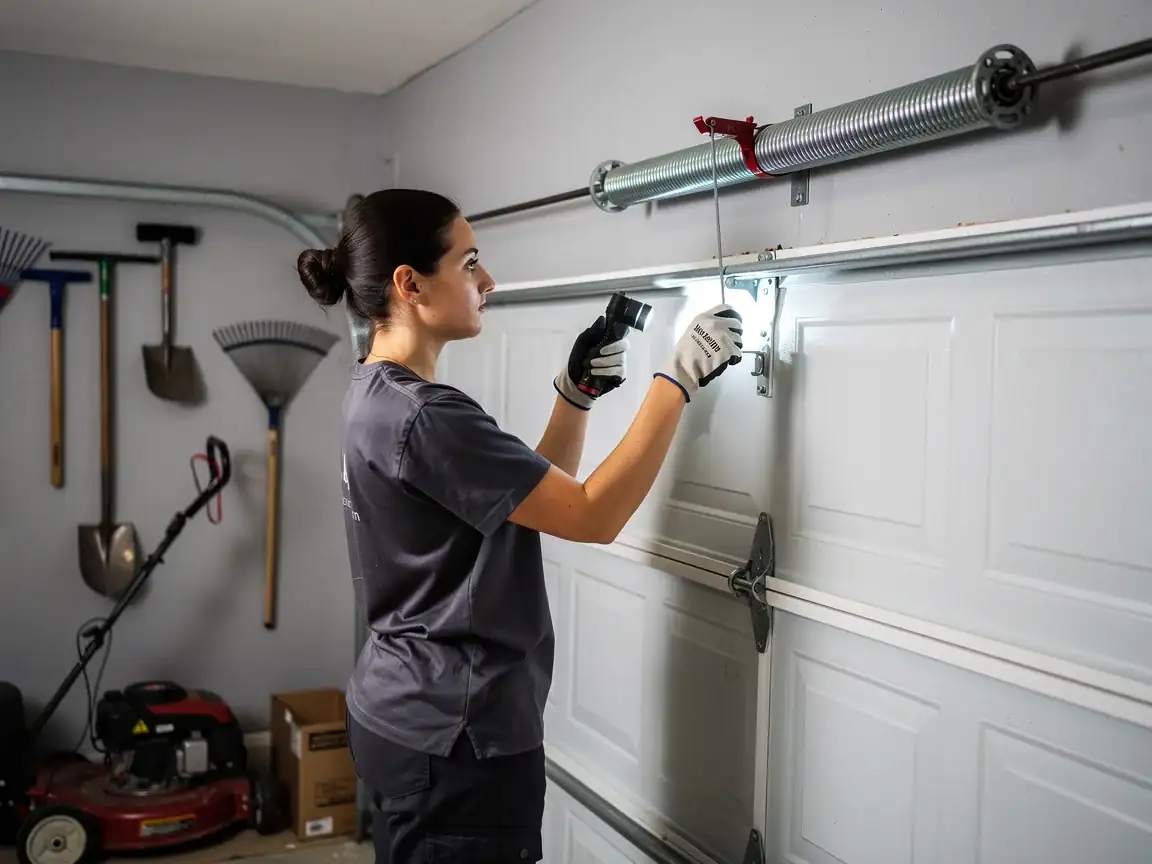
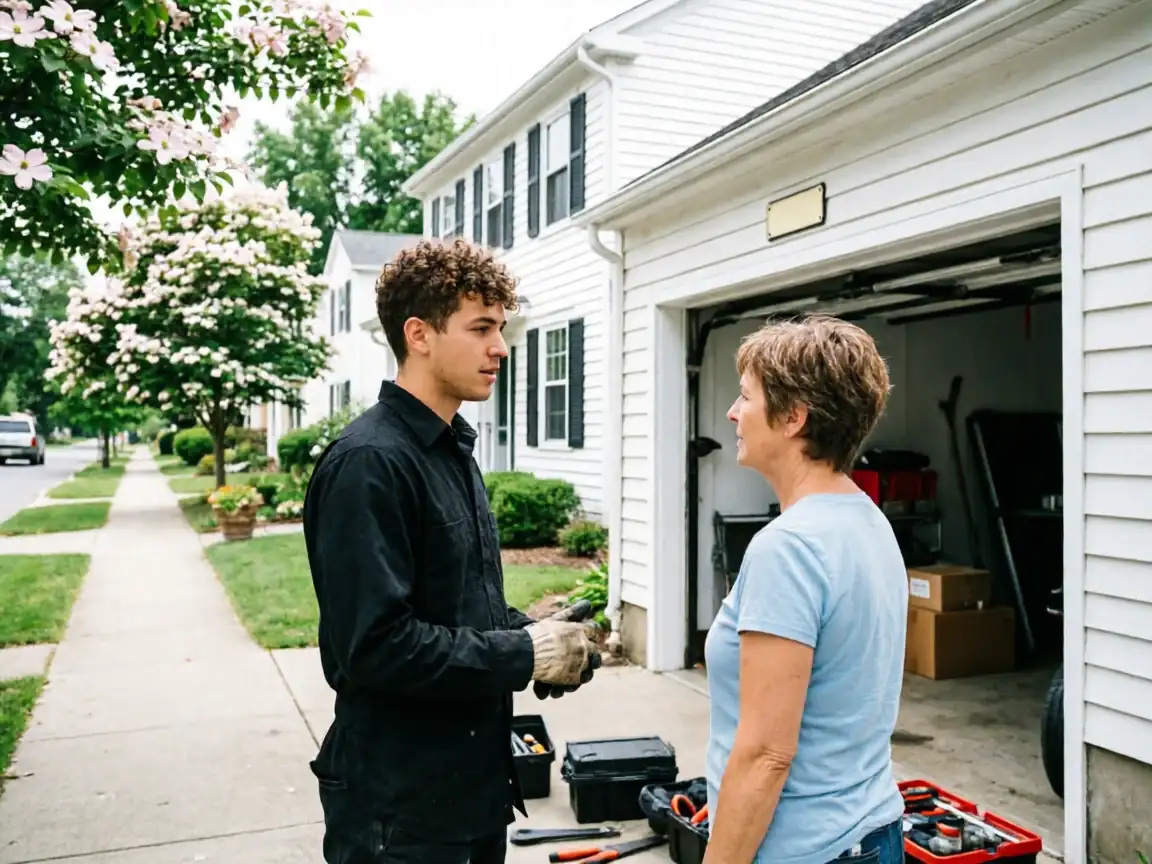
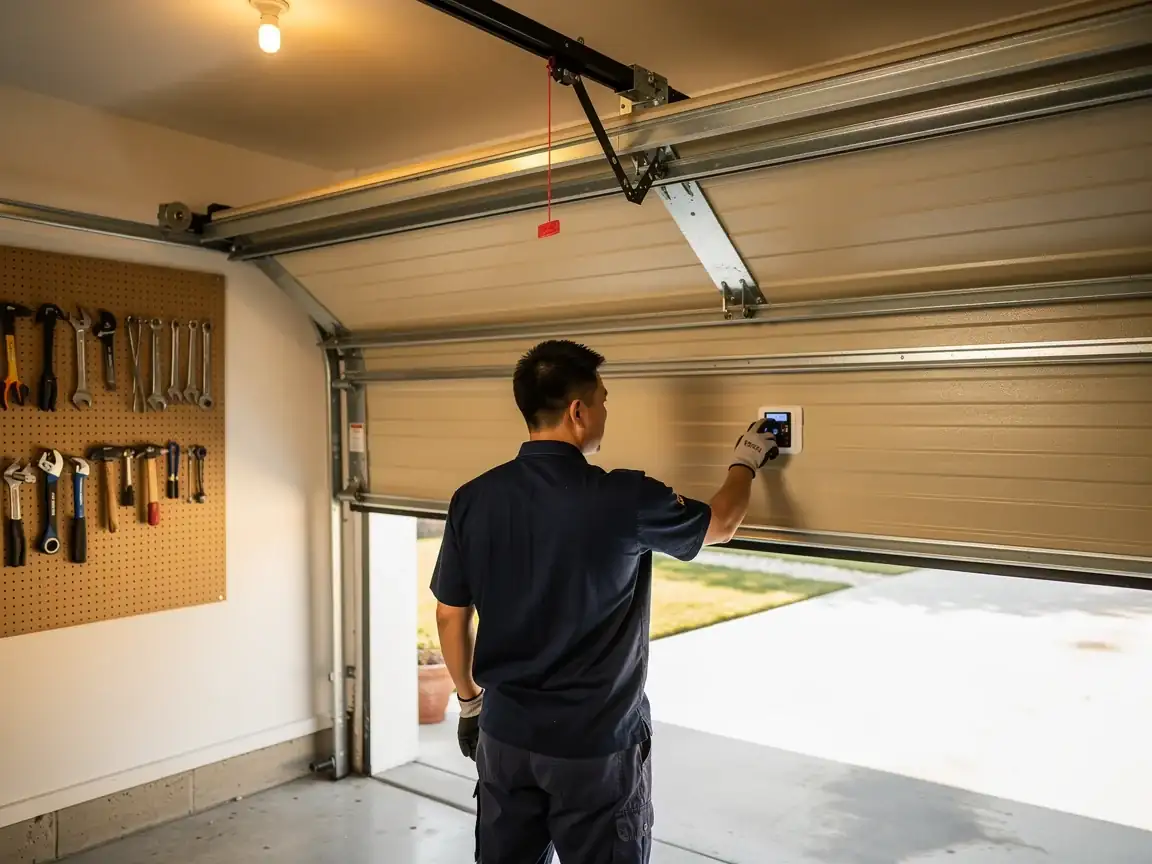
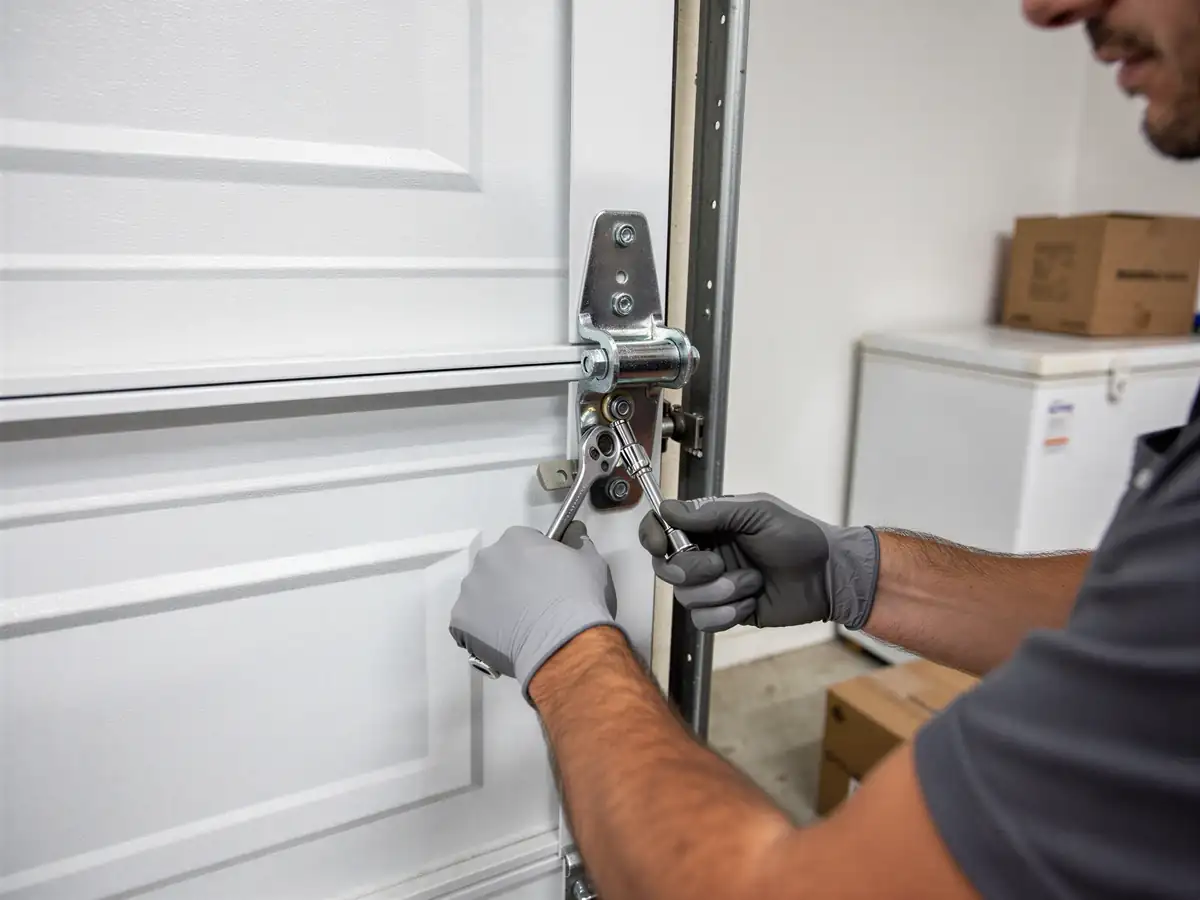
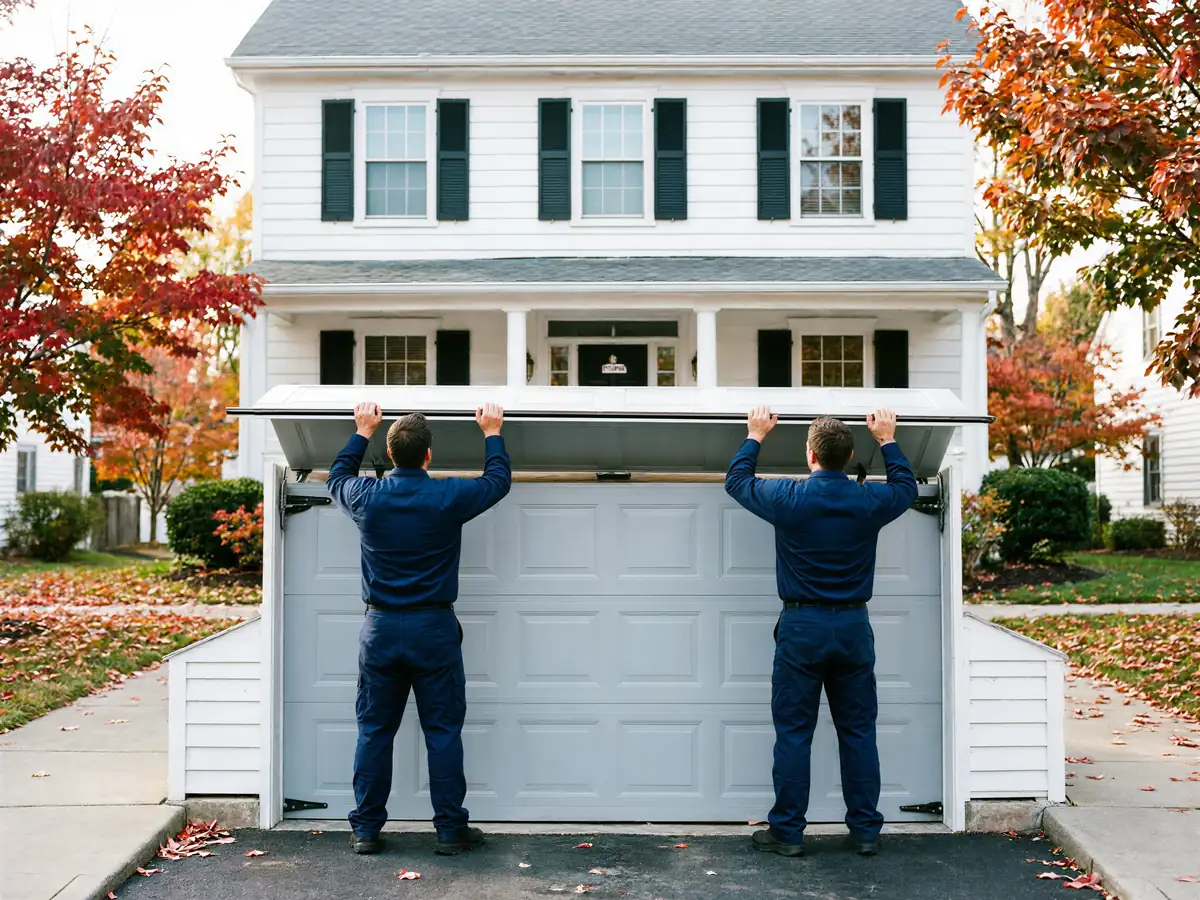
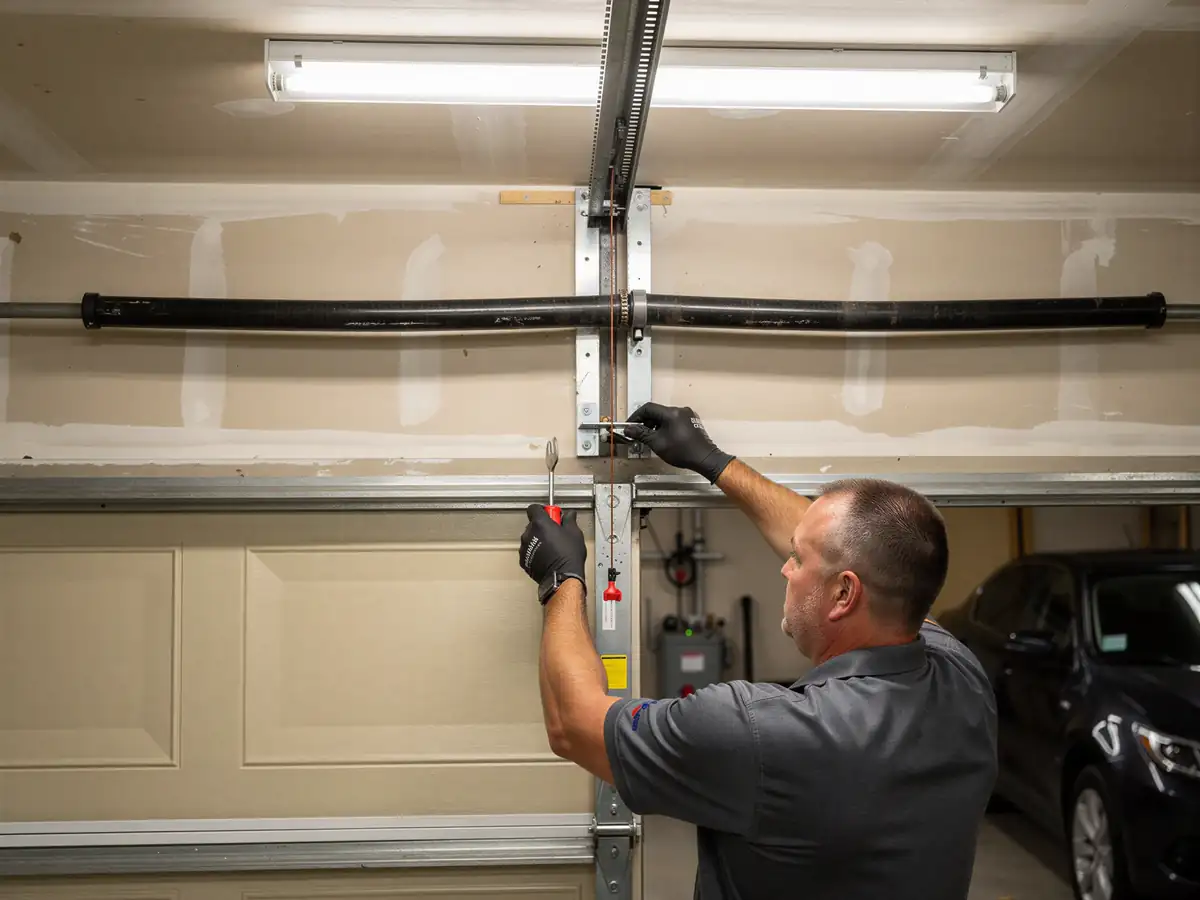
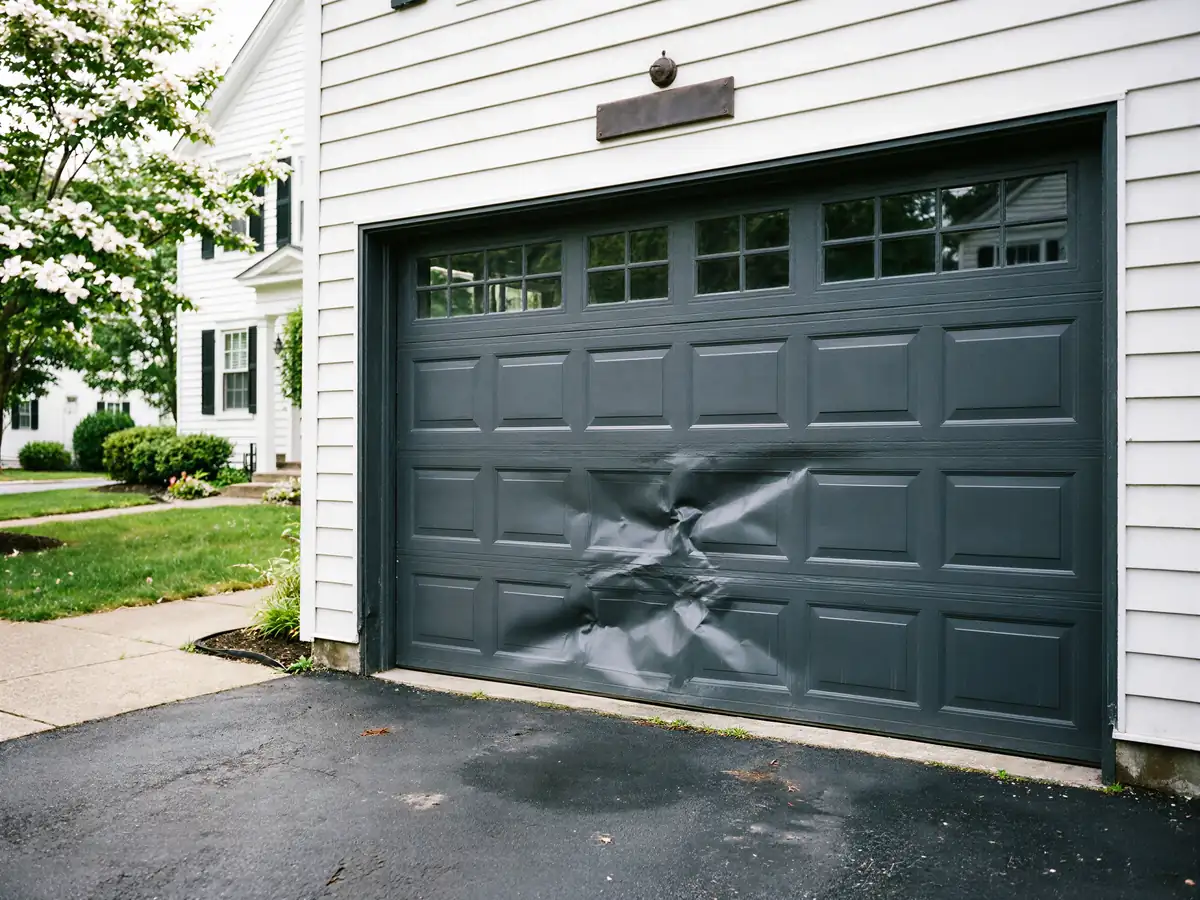
Most homeowners think a service call means one guy looks at the spring, tightens a bolt, and leaves. That's not what happens, and it's not what should happen. Housing in the Frederick area was built between 1938 and 2015, with the median home going up in 1991, and most of the stock across the 33 named areas we cover dates to the 1980s and 90s. That matters because a door installed in 1988 has different hardware, different spring tension, and different failure points than one installed in 2010. A real service call checks the track alignment, the spring wind, the cable condition, the opener's force settings, and the rollers - because on a 30-plus-year-old door, any one of those can be the actual problem even if the symptom looks like something else. Skipping that check and just guessing at the spring is how people end up paying for the same repair twice. We walk every door through the same list regardless of what the homeowner thinks is wrong, because on stock this age, the obvious answer is wrong often enough to matter.
The Situation
We work a service area that runs through roughly 63,380 households, about 34,735 of them owner-occupied houses, spread across Frederick and the towns within a dozen or so miles - Ballenger Creek, Walkersville, Spring Ridge, Braddock Heights, Middletown, New Market, Jefferson, Urbana, and the rest out to Thurmont and Emmitsburg. Median household income here runs $115,972, which tells you something about the kind of doors we see: a mix of original builder-grade units from the 80s and 90s next to higher-end insulated steel doors in the newer developments closer. A service call in an older section near Braddock Heights or Walkersville often means sourcing a torsion spring size that isn't stocked on the truck as standard, because the door was never replaced. A call in a newer Urbana or Spring Ridge build is usually an opener or sensor issue instead. Same job title, different parts bin.
What It Costs
We're not going to put a number here that doesn't hold up once a tech is standing in front of your door. What drives the cost on any given call is the age of the door and whether the parts are still common. A standard torsion spring swap on a door from the 1990s is a different job than finding hardware for an original one-piece door that's never been touched since it went up with the house. One honest limitation: we can't quote a firm price over the phone before we see the door, the drums, and the cable routing, because on housing this age the spec on paper and the spec actually bolted to the wall don't always match. What we can tell you is that the call itself - inspection, diagnosis, and a written estimate before any work starts - doesn't change based on what we find.
What the Weather Here Does to It
Frederick sits in a cold-climate band with severe winter conditions, and that shows up in specific ways on a service call. Steel panels contract in sustained cold, which tightens tolerances on tracks that were already slightly out of alignment - a gap that's invisible in July becomes a binding roller in January. Torsion springs lose a measurable amount of lifting force as temperatures drop, which is why a door that opened fine all summer suddenly feels heavy or won't fully close once the cold sets in. On older stock from the 1980s and 90s, grease in the bearings and hinges also thickens, adding drag that makes the opener work harder than it's rated for. A service call during cold months always includes a check of spring tension against current temperature, not just a visual look - because on a door built decades before current weatherization standards, the margin for error is already thin before the cold takes its cut.
How it works
From “it’s stuck” to “it’s fixed”
01
Tell us what’s wrong
Describe the symptom - won’t open, loud bang, opener runs but the door won’t move.
02
On-site diagnosis
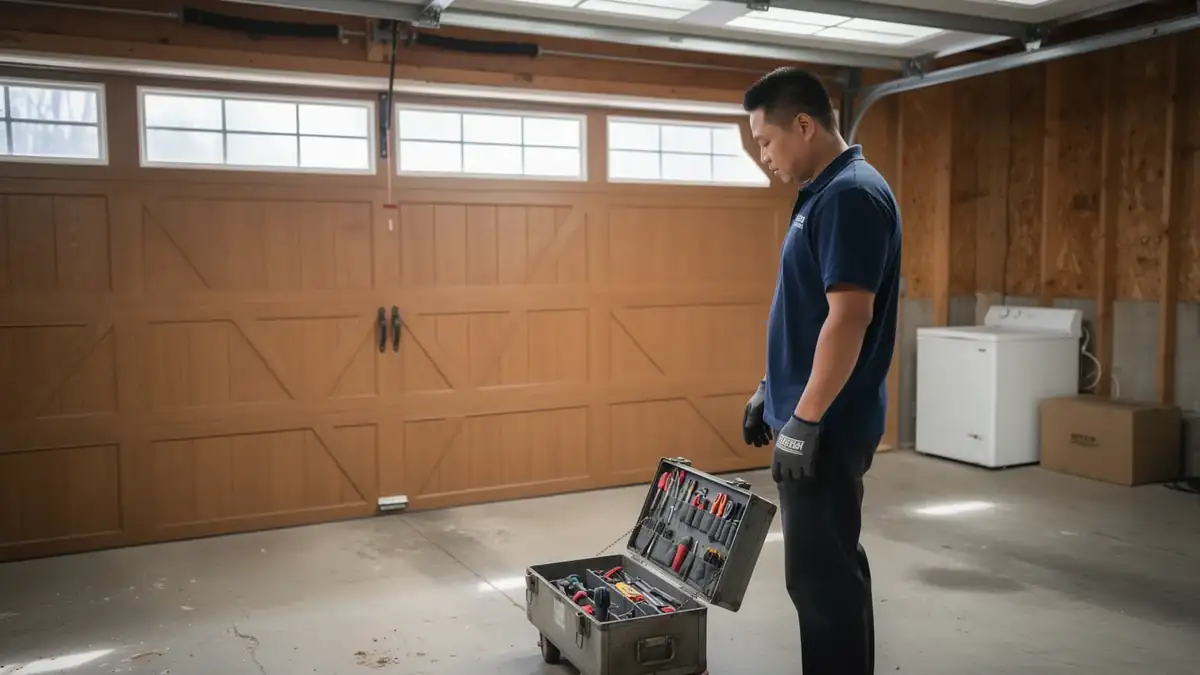
A technician tests the door under power and by hand and finds what actually failed.
03
Clear, up-front plan
You get the fix that’s needed and what drives the cost - before any work starts.
04
Repaired & tested
The repair is done, the door is set true and tested, and the work area left clean.
Not sure which repair your door needs in Frederick, MD? Describe what it’s doing - every job starts with a diagnosis.
Straight answers about garage door repair in Frederick. Still unsure? Ask us directly.
Does a service call include checking the opener, or just the door itself?
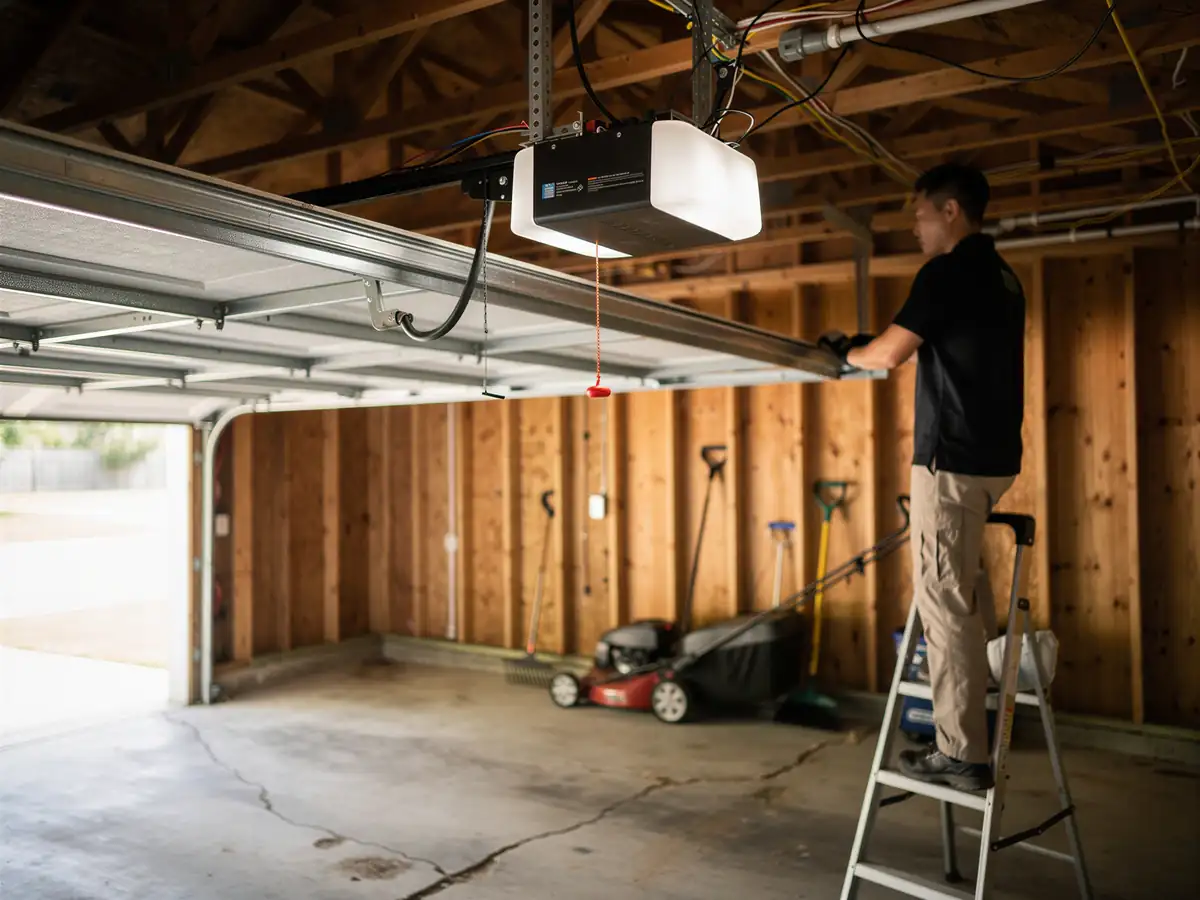
Yes, both. On houses built from the 1980s through the 2000s in this area, the opener and the door hardware are often different ages - the door may be original while the opener was swapped once already. We check force settings, sensor alignment, and the drive mechanism along with the spring and track, because on mixed-age setups like this one piece failing often masks a problem with the other.
Why does my older home need different spring parts than my neighbor's newer one?
Housing in this area spans 1938 to 2015, with most of it built in the 1980s and 90s. Spring sizing and drum configuration changed over those decades, so a door from an older build in Braddock Heights or Walkersville may need a spring size that isn't on every truck as a default stock item, while newer builds closer to Urbana or Spring Ridge use more standardized current hardware.
Can you tell me a price before you see the door?
Not a firm one. We'll give you a realistic range based on what you describe, but the actual cost depends on the spring size, cable condition, and whether parts are standard stock - things we can only confirm by inspecting the door. Every call includes a written estimate before work starts, so there's no guessing once we're there.