Frederick homes built from 1938 to 2015 carry openers from several eras. See why that mix, plus our cold winters, drives most opener replacement calls here.
The opener hums but the door doesn't move, or it moves a few inches and stops
Sometimes the light blinks a code and nothing else happens. Sometimes the remote works from the driveway but not from the car in the street. None of these are small glitches you wait out. An opener that's straining is usually a motor or logic board near the end of its life, and the longer you run it in that state, the more likely it is to drop the door on a travel limit failure rather than just quit cleanly.
02
Across the Frederick service area we cover
63,380 households, 34,735 of them owner-occupied houses - the opener failures we see split pretty evenly between two groups: original units in houses built before the mid-90s that have simply worn out, and newer chain-drive units installed as a cheap swap that were never matched to the door's weight. Both show up as the same symptom at the panel: the unit runs but doesn't deliver.
63,380 households
34,735 owner-occupied
03
If your opener trips the breaker, smells hot, or has started reversing on its own without anything in the door's path
Stop running it. That's a motor or capacitor issue, not something a remote reset fixes.
Doing It Yourself
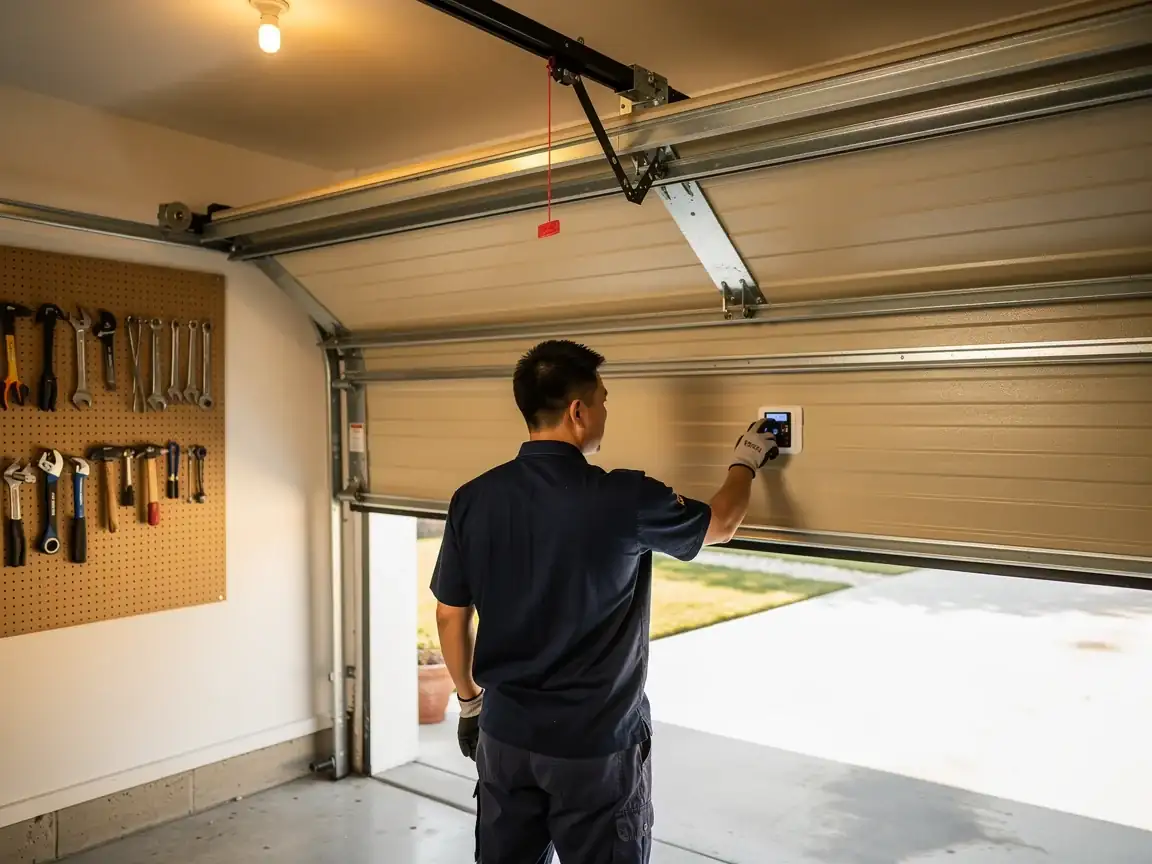
A DIY opener swap is a real option if you're comfortable with a ladder, a drill, and reading a wiring diagram, and if your door is a standard single or double panel door with torsion springs already in good shape. Boxed kits come with mounting rail, a logic head, and a wall console, and most install in an afternoon.
Where it goes wrong is the force and travel-limit setup. Set the down-force too high and the opener will keep closing against a frame or a car bumper instead of reversing - that's a liability problem, not a convenience one. Set it too low and the door won't seat against the weatherstrip, which matters more here given how cold the winters run; a gap at the bottom lets wind straight into the garage.
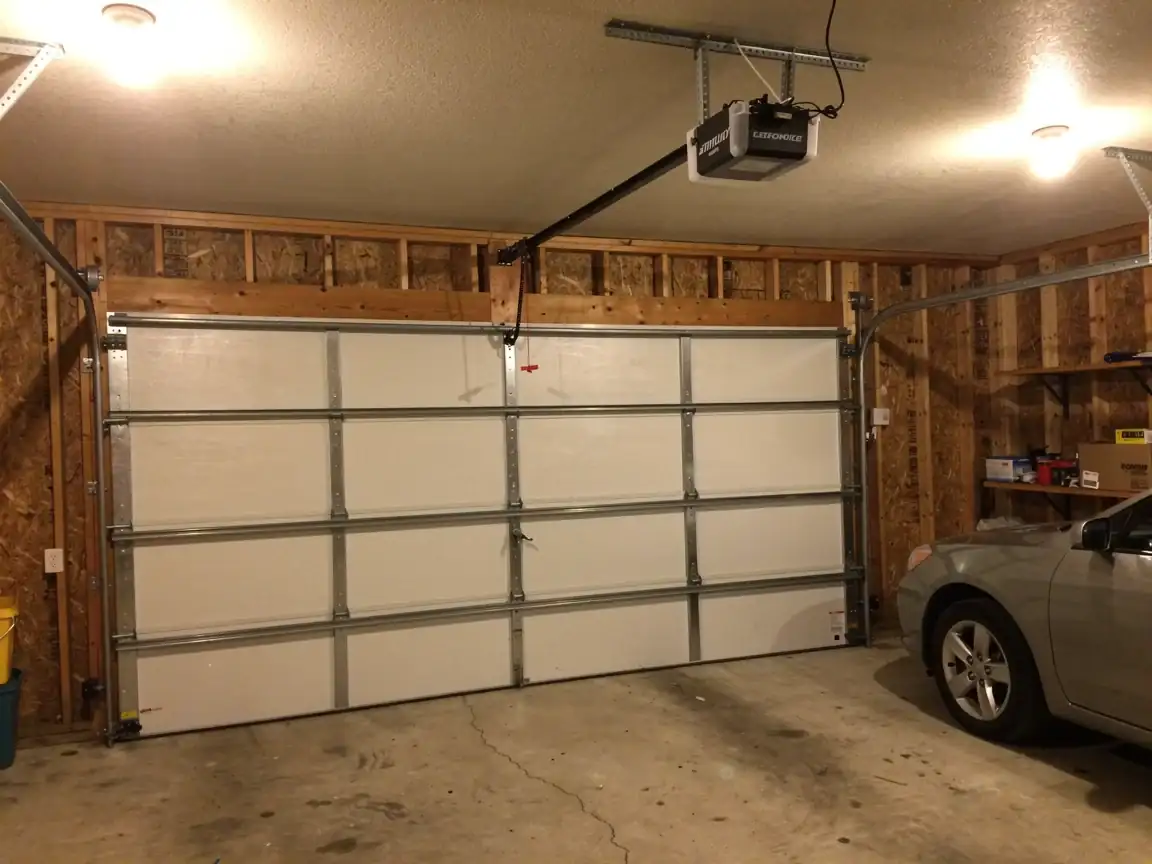
The other place DIY installs stall is the header bracket. Houses built in the 1980s and 90s - the bulk of the stock across the 33 named areas we serve - often have headers that were never reinforced for a heavier belt-drive unit, so the bracket needs blocking before the rail goes up. If you hit that, it's worth a call rather than forcing lag bolts into a header that can't take them. We don't push a service call on every DIY job, but we won't talk you out of one either.
What Causes It Around Here
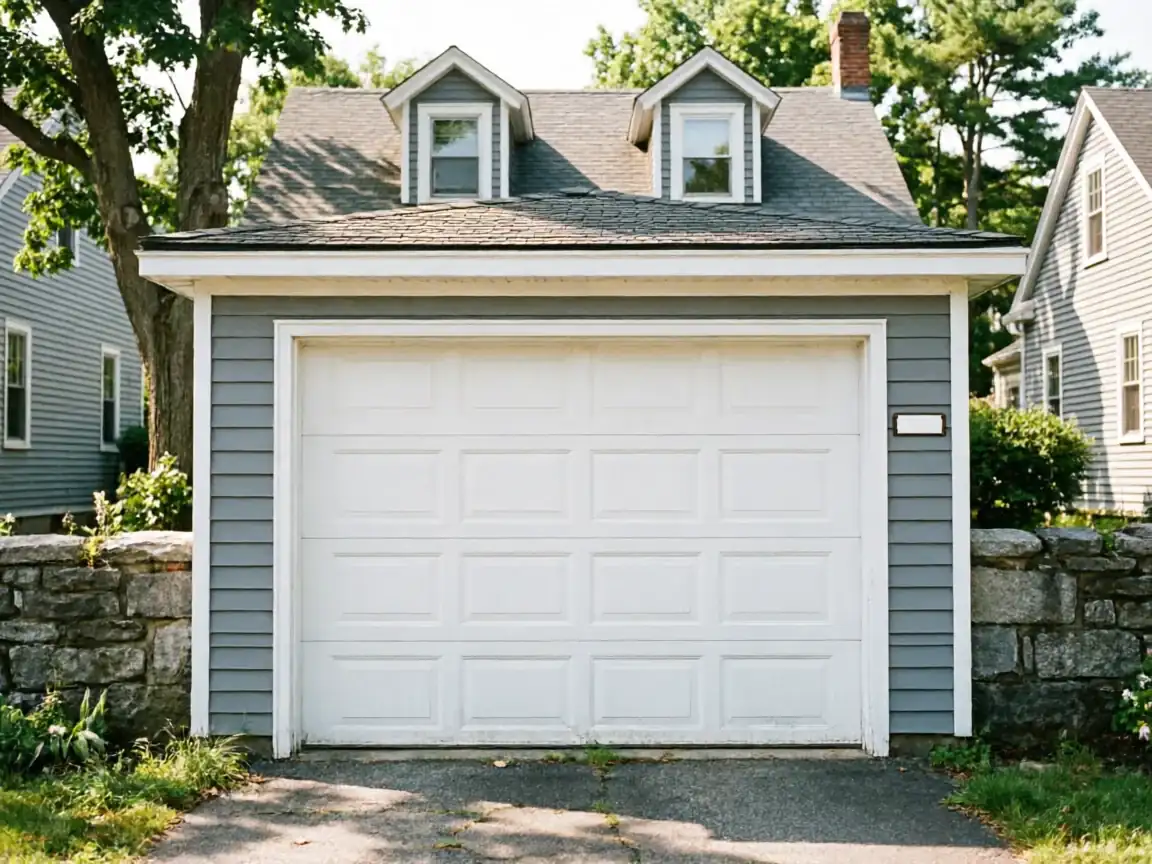
Three things line up in this area that make opener failure more common than a opener textbook would predict. First, the housing stock itself: homes here were built anywhere from 1938 to 2015, with the median landing around 1991, so a huge share of openers in service right now are original units from that same window, now 30-plus years old and past any realistic repair.
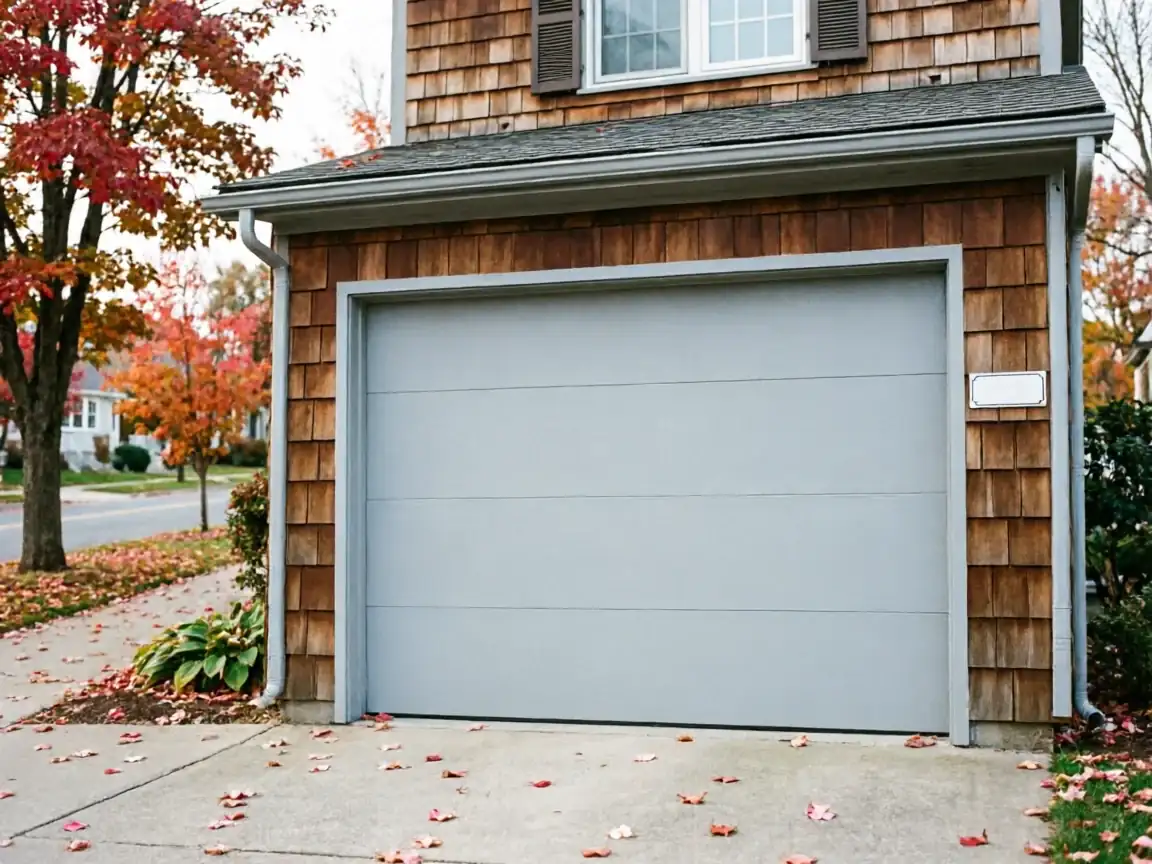
Second, this is a cold-climate area with severe winter conditions, and cold is hard on opener electronics and on the grease in older screw-drive and chain-drive units. A motor that strains to overcome stiffened lubricant in January puts more wear on its gears than the same motor would see in a mild climate, so openers here tend to show wear earlier than their rated cycle count would suggest.
Third, median household income in this area sits at $115,972, and a lot of homeowners at that income level upgraded their doors - heavier insulated panels, sometimes a second car bay - without upgrading the opener to match. A light-duty unit from the 90s moving a heavier modern door is doing more work every cycle than it was built for, and that mismatch is behind a good share of the installs we quote.
How Long It Takes
01
A standard single-door opener replacement
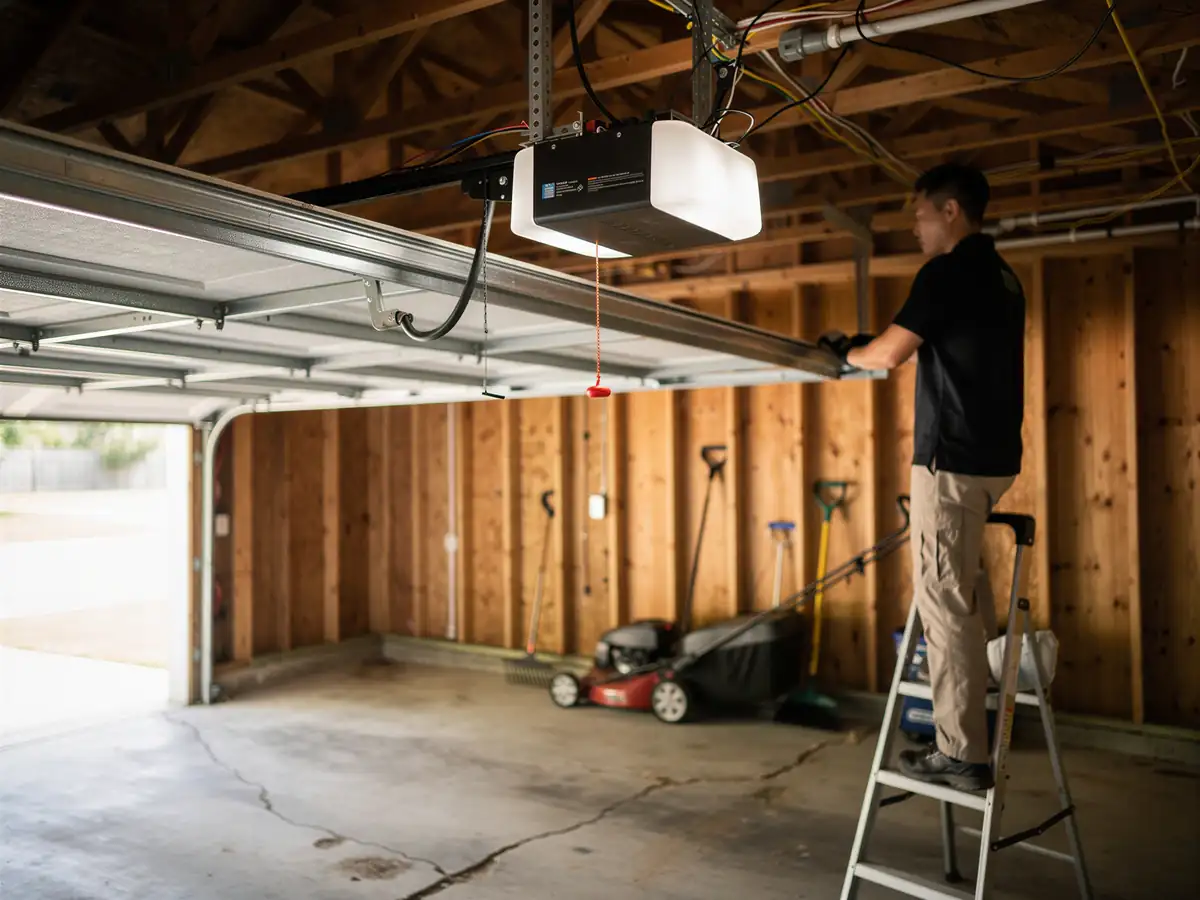
Where the header bracket and wiring are already sound, is typically a one-visit job. Double doors or units that need header reinforcement because of the older 1980s-90s framing common in this area take longer on the same visit, since the bracket work has to happen before the rail and motor go up.
02
We don't have a posted price or a fixed response-time window to quote you here
That depends on the unit you pick and what's on the truck that day - but we can tell you on the phone what the visit will likely involve once we know your door type and roughly how old the current opener is.
How it works
From “it’s stuck” to “it’s fixed”
01
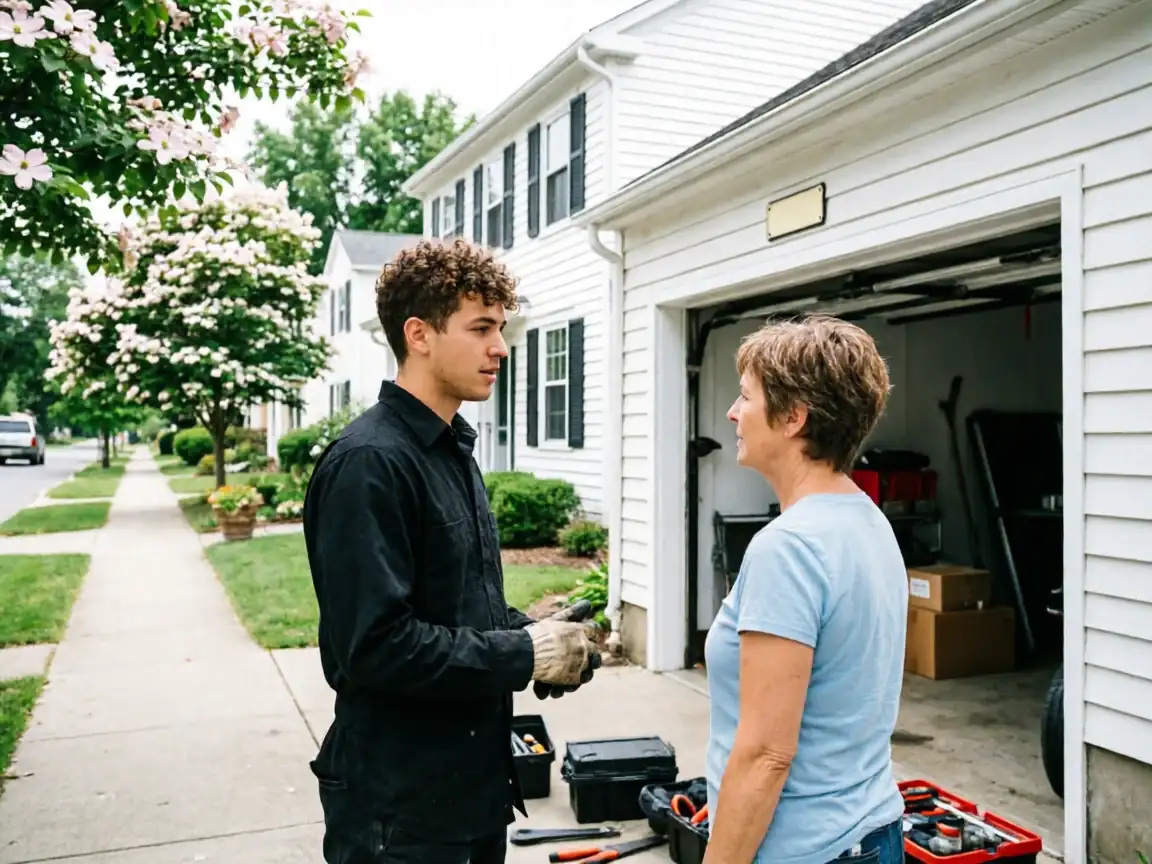
Tell us what’s wrong
Describe the symptom - won’t open, loud bang, opener runs but the door won’t move.
02
On-site diagnosis
A technician tests the door under power and by hand and finds what actually failed.
03
Clear, up-front plan
You get the fix that’s needed and what drives the cost - before any work starts.
04
Repaired & tested
The repair is done, the door is set true and tested, and the work area left clean.
Not sure which repair your door needs in Frederick, MD? Describe what it’s doing - every job starts with a diagnosis.
Straight answers about garage door repair in Frederick. Still unsure? Ask us directly.
Can I put a new opener on an old garage door?
Usually yes, as long as the door's springs and tracks are in decent shape. The opener doesn't lift the door on its own - a properly balanced door should lift by hand with little effort. If yours doesn't, fix the spring balance first or the new opener will wear out fast carrying weight it shouldn't have to.
Why does my opener struggle more in winter?
Cold stiffens grease in the gears and drive screw, and cold makes the steel in the door itself slightly less flexible, so the opener has to push harder to get the door moving. In a severe-winter area like ours, that extra strain shows up as premature motor and gear wear well before the rated cycle count.
Is a belt-drive or chain-drive opener better for my house?
Belt drives run quieter and work well for garages near living space. Chain drives cost less and hold up fine in a detached or unfinished garage. Neither choice fixes a header or spring problem underneath it, so the door condition matters more than the drive type.