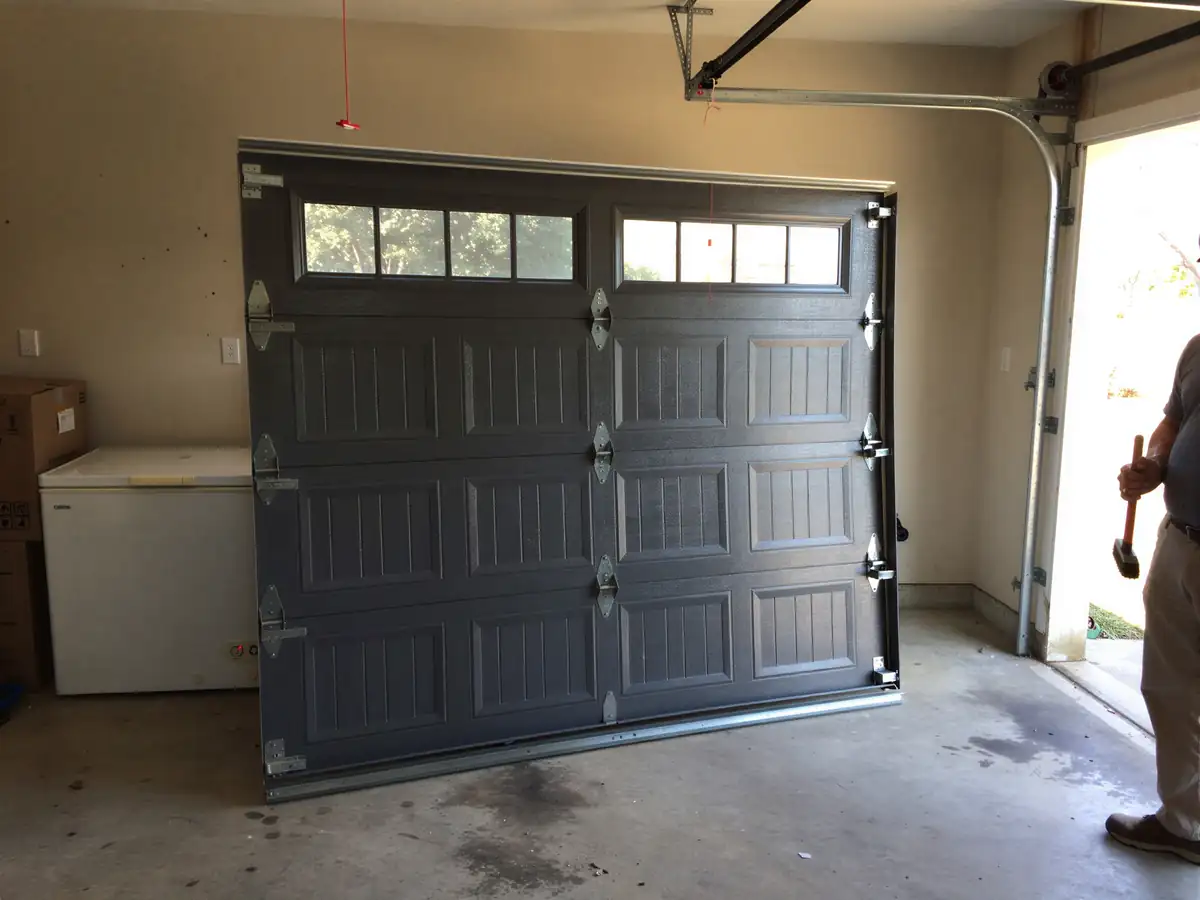
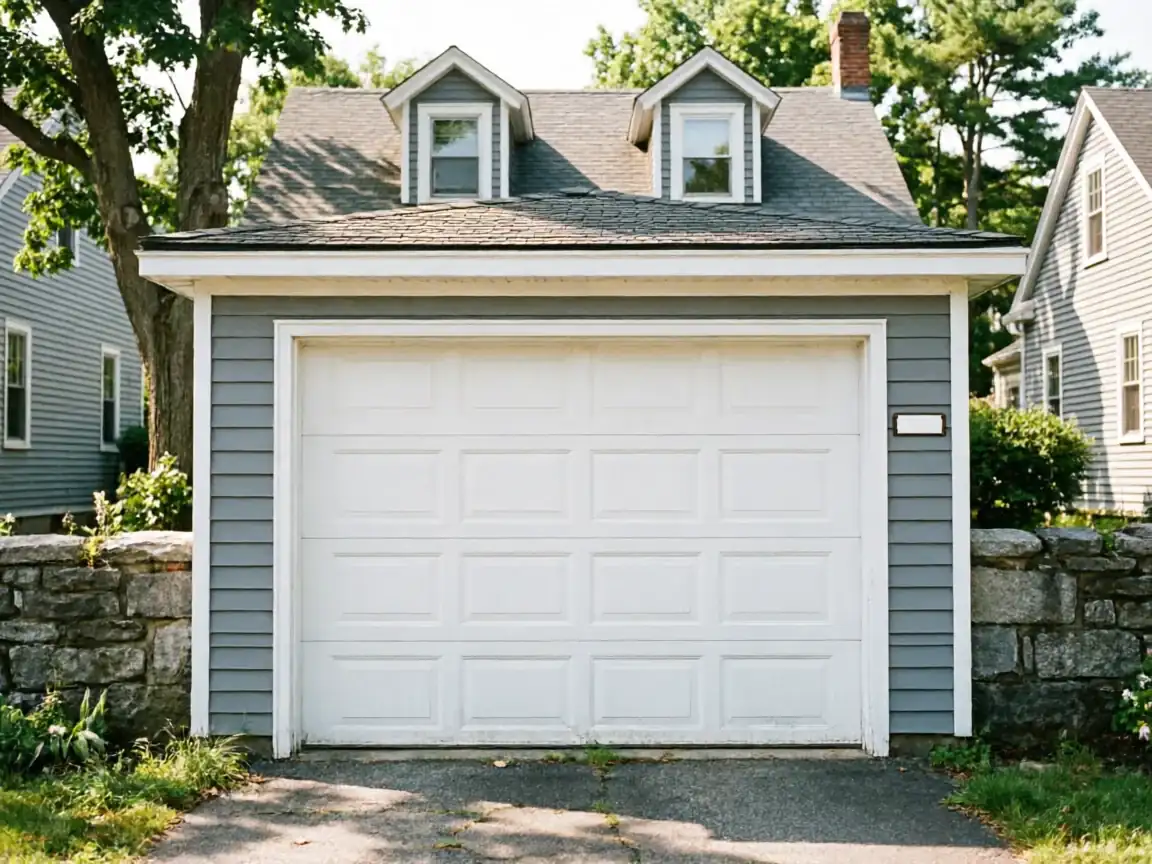
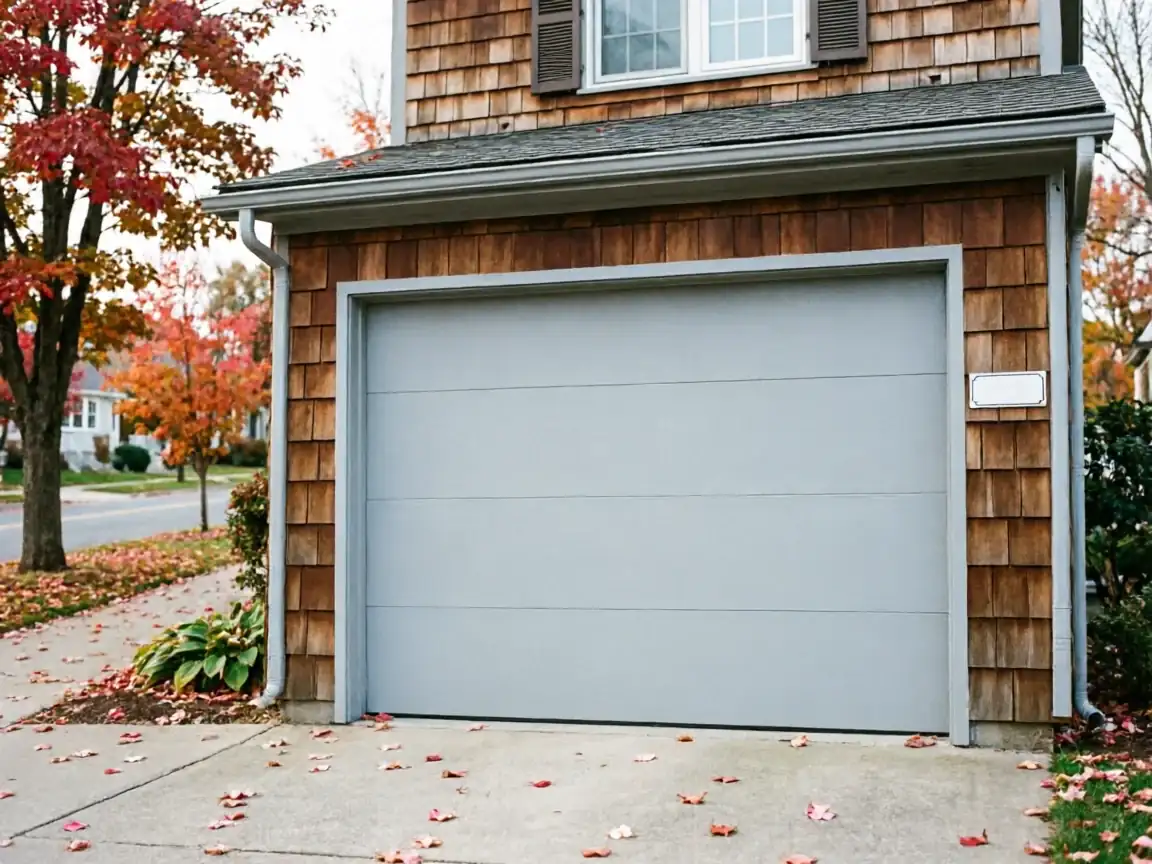
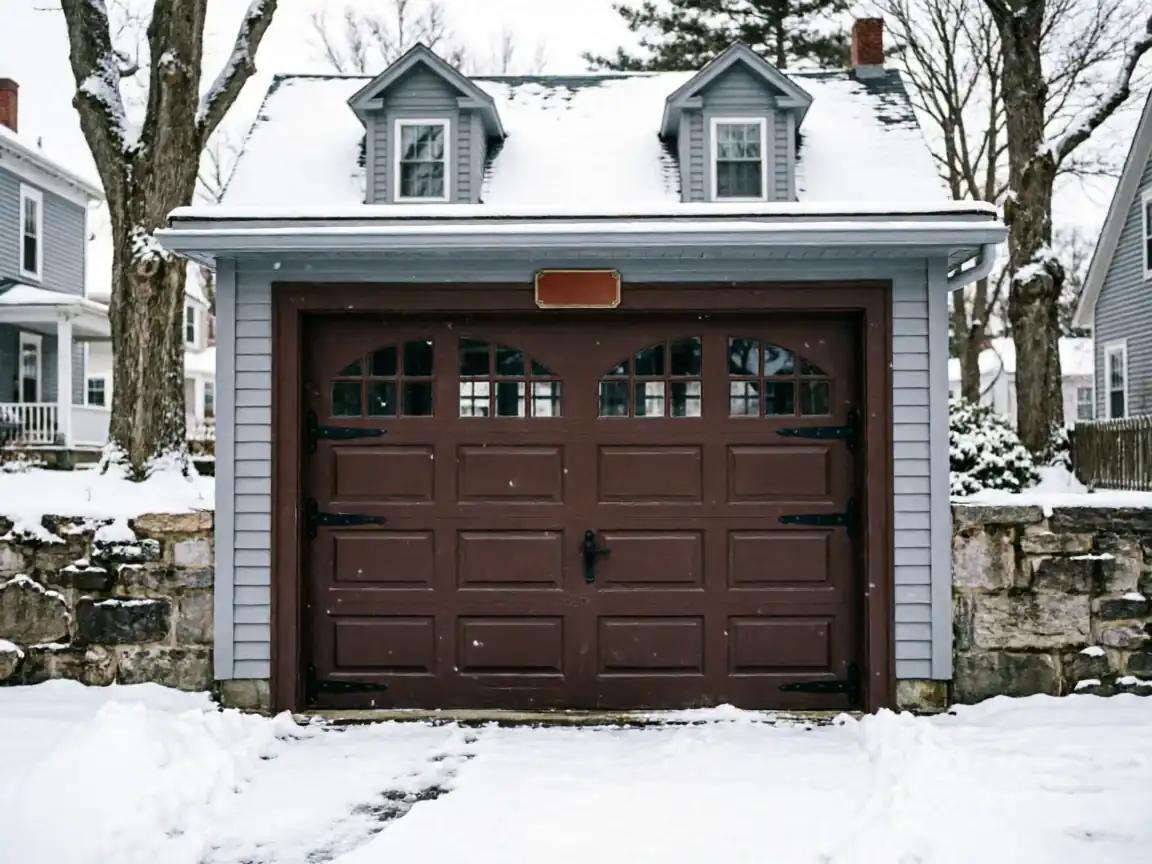
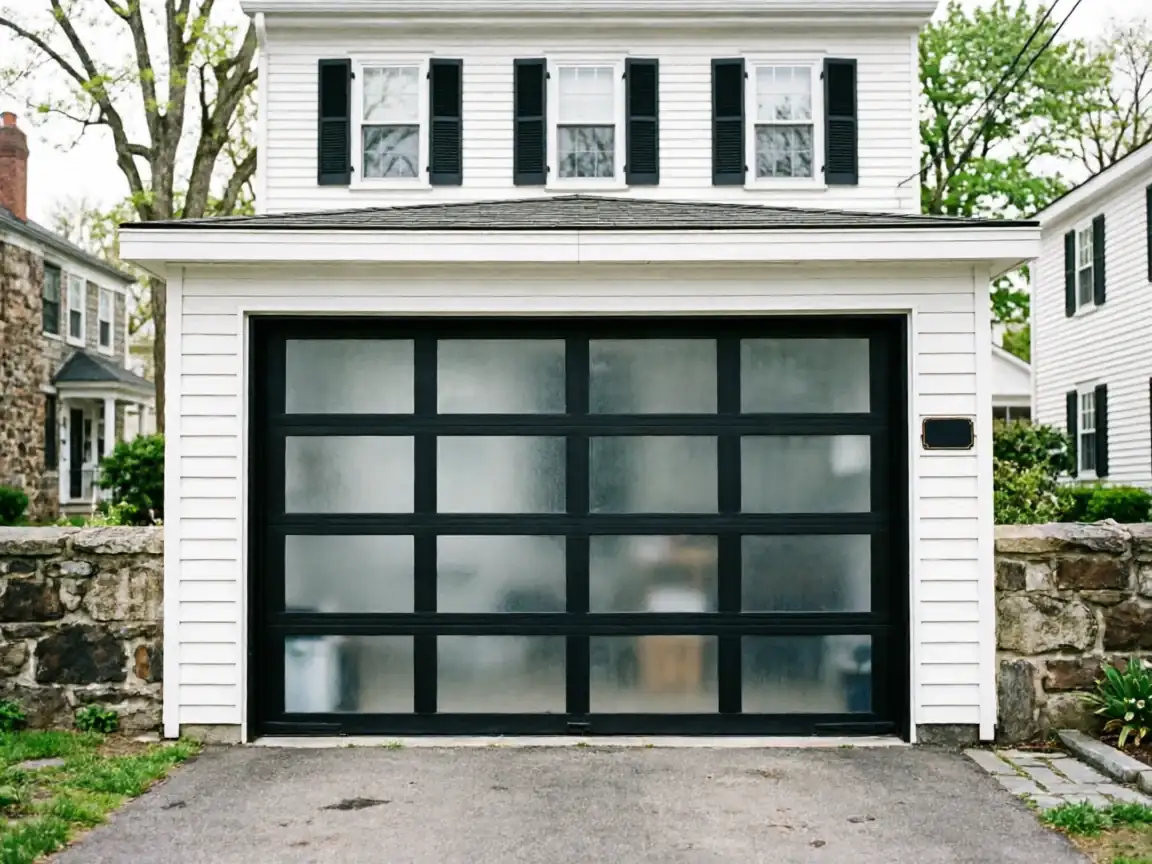
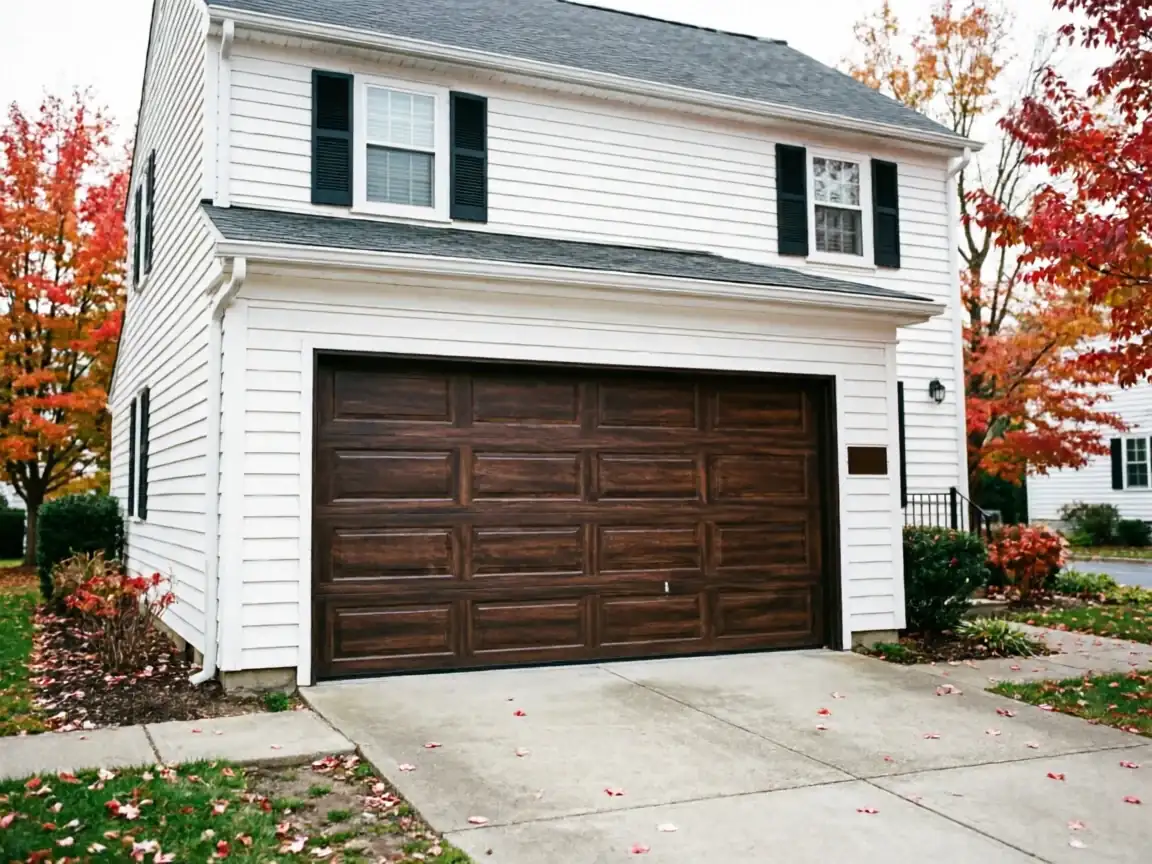
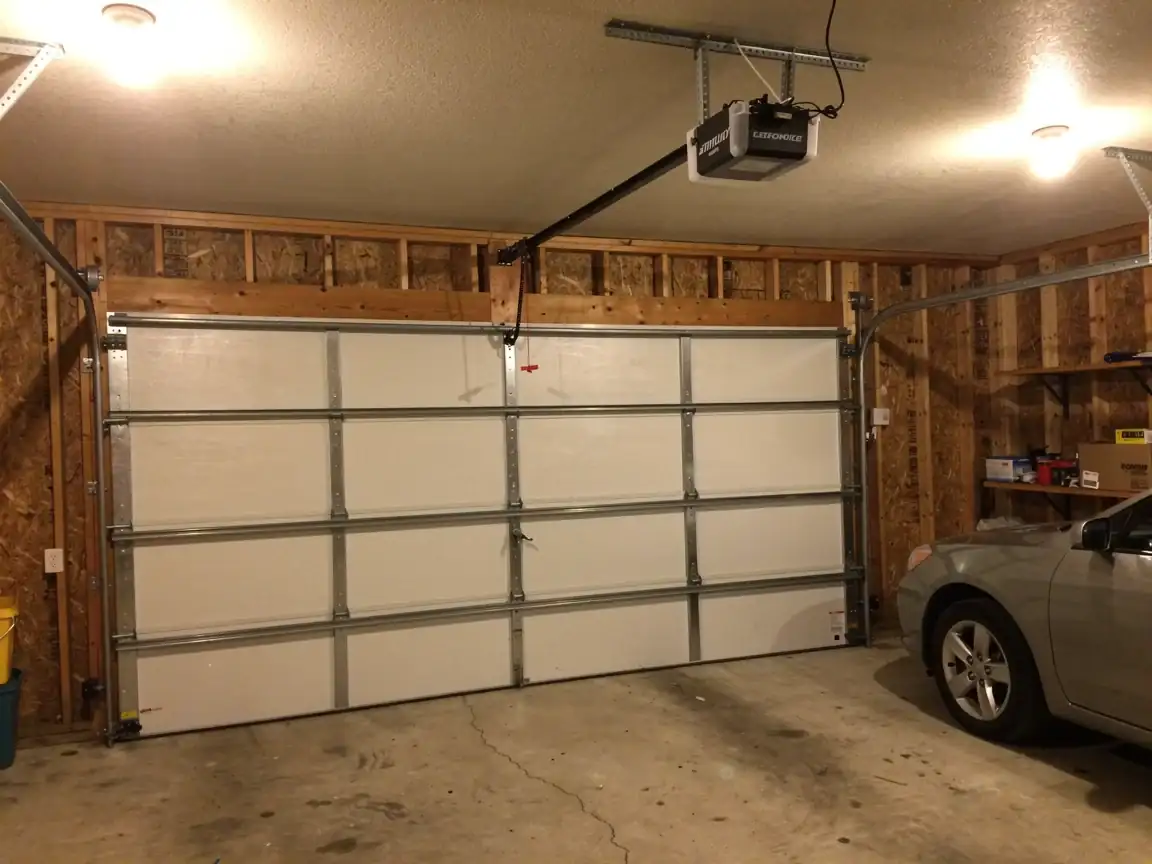
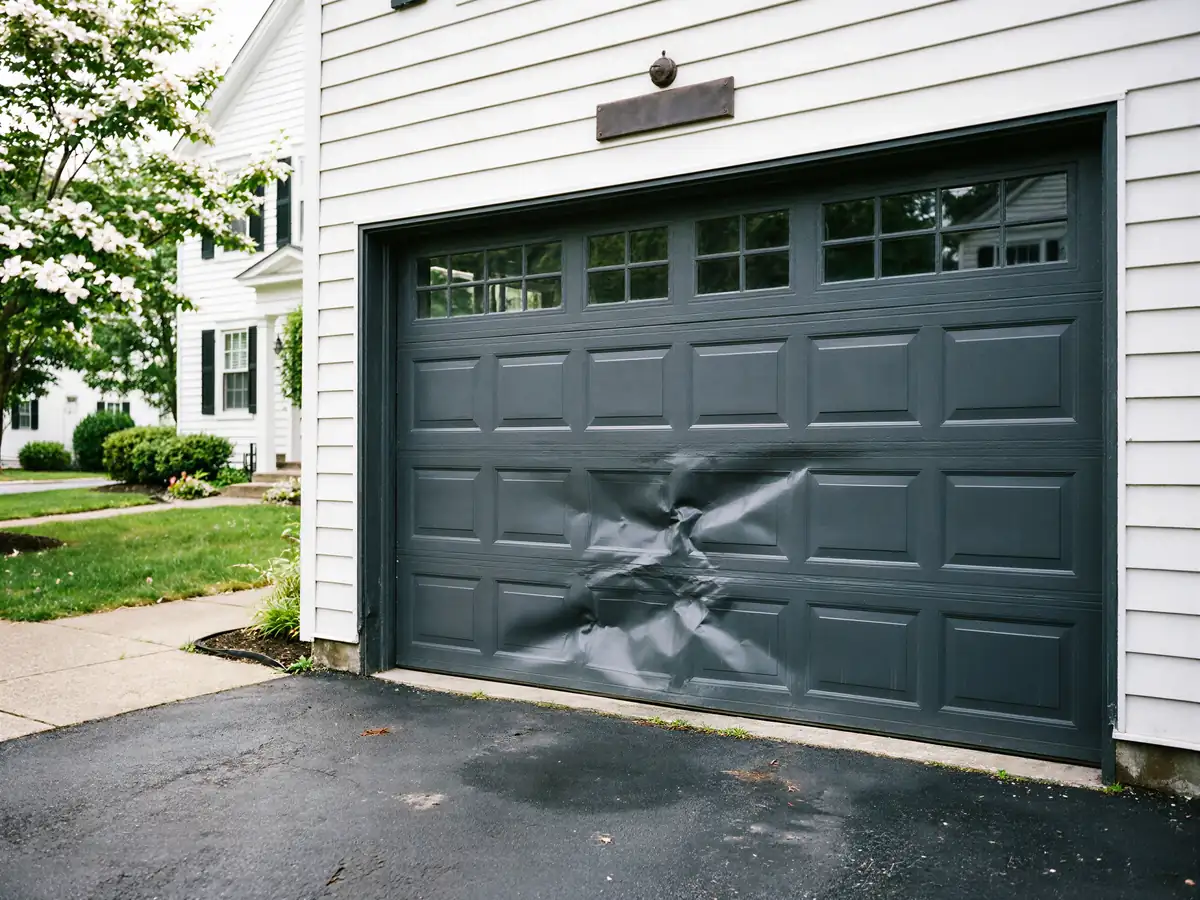
Sometimes it's a panel hanging crooked, a roller sitting outside the rail, or the door stopping halfway with a grinding sound instead of sliding shut. Other times it's obvious: the bottom panel is cocked at an angle and the door won't move at all without binding.
02
In Frederick's service area
Where housing spans construction from 1938 up through 2015 with a median build year around 1991, a lot of what we see comes down to age-mismatched hardware. A door and opener installed decades apart, or a track bent just enough that nobody noticed until it finally slipped. Don't force it. A door jammed half off its track can come down fast if a cable or roller gives way, and we'd rather you call than push through it.
03
If the door is still partly on the track and moving under its own weight, that's a different, more urgent situation than one that's simply stuck
Either way, the fix starts with figuring out whether the track bent, a roller broke, or a cable came loose - because those are three different repairs, not one.
Doing It Yourself
There's a narrow set of things a homeowner can safely check before calling anyone. Look at the track brackets along the wall - if one has pulled away from the framing, you can sometimes see daylight behind it. Check for anything on the floor track: a chunk of ice, a dropped tool, debris that knocked the door sideways.
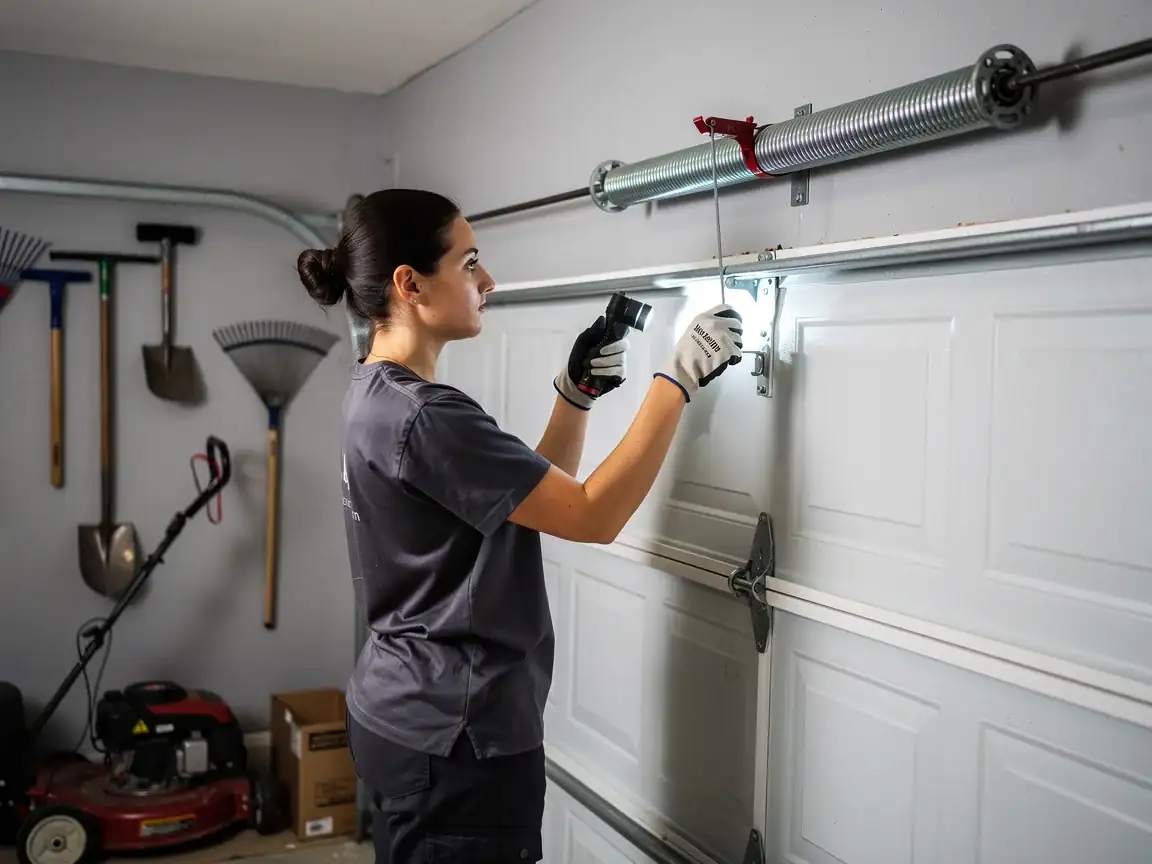
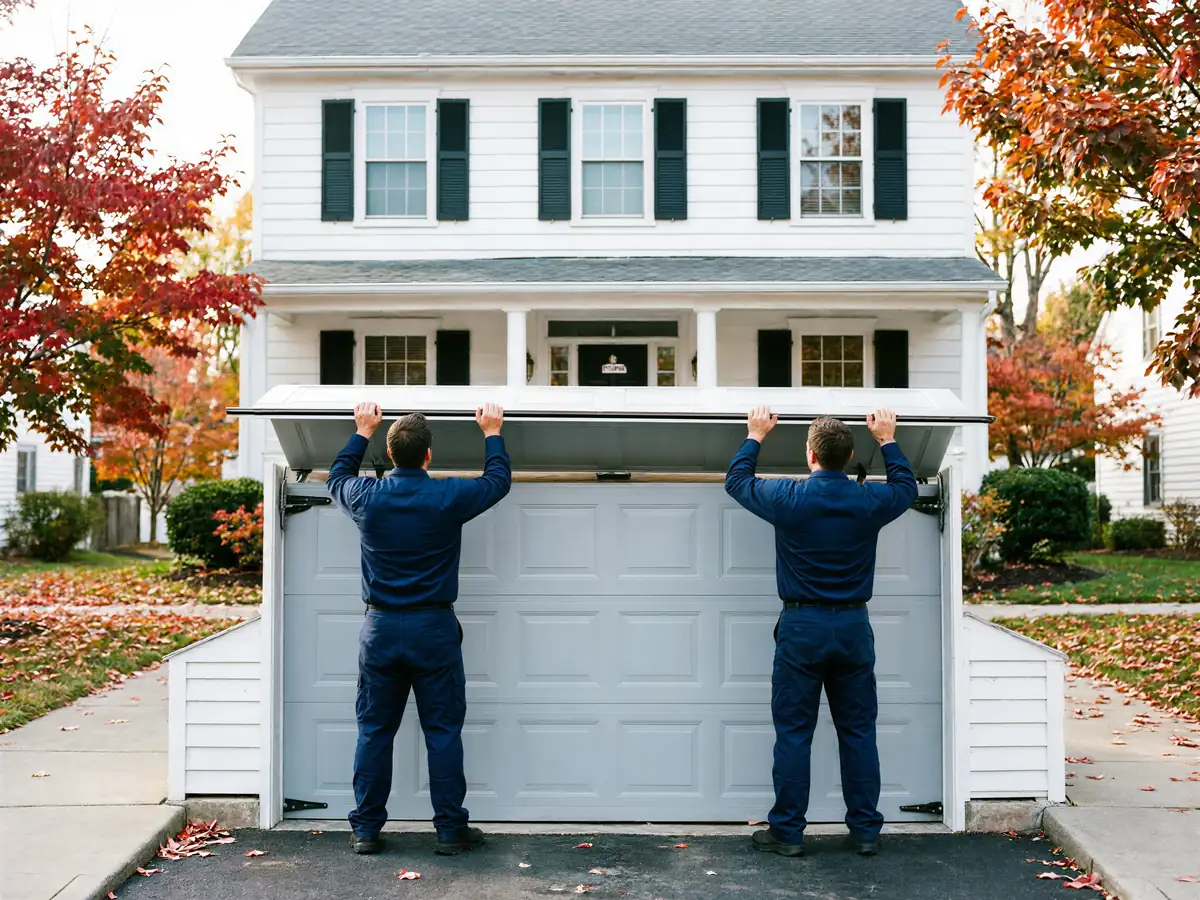
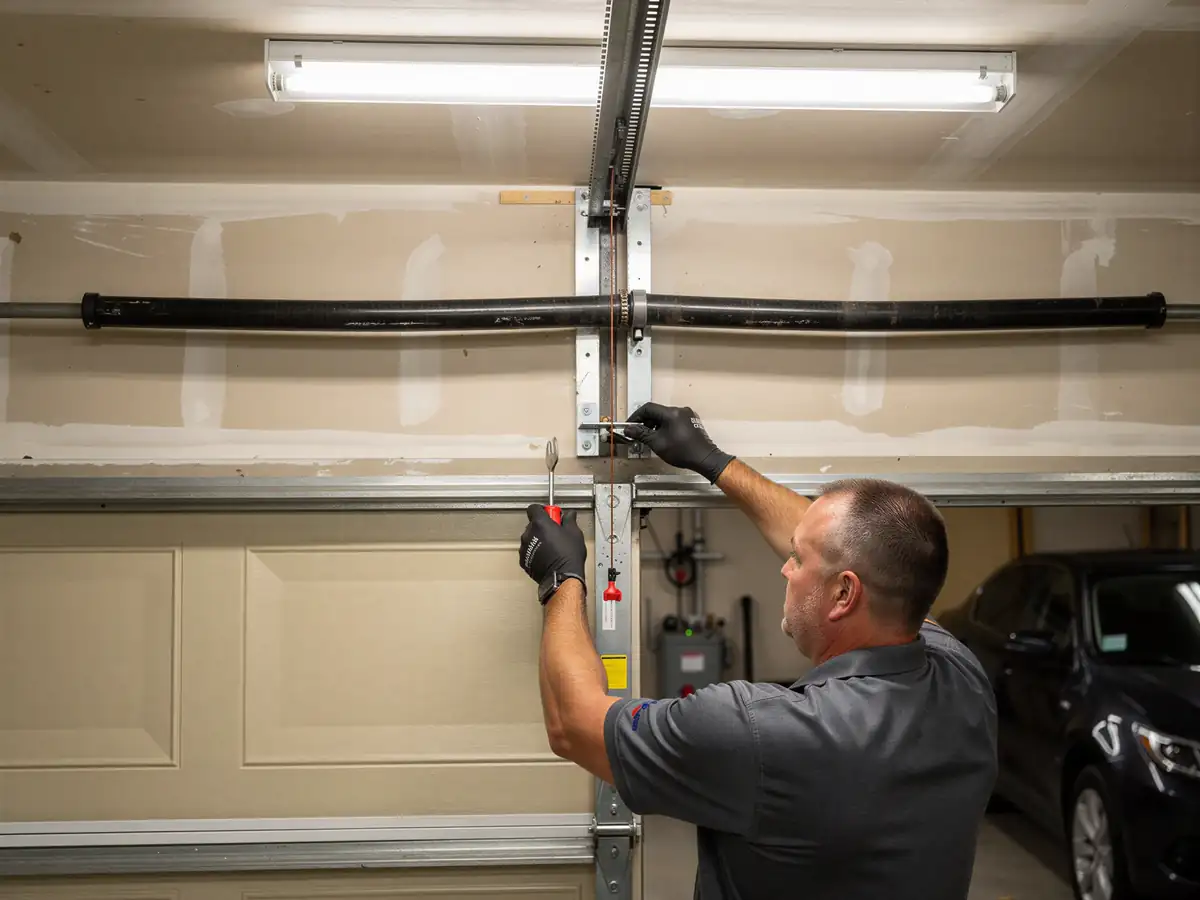
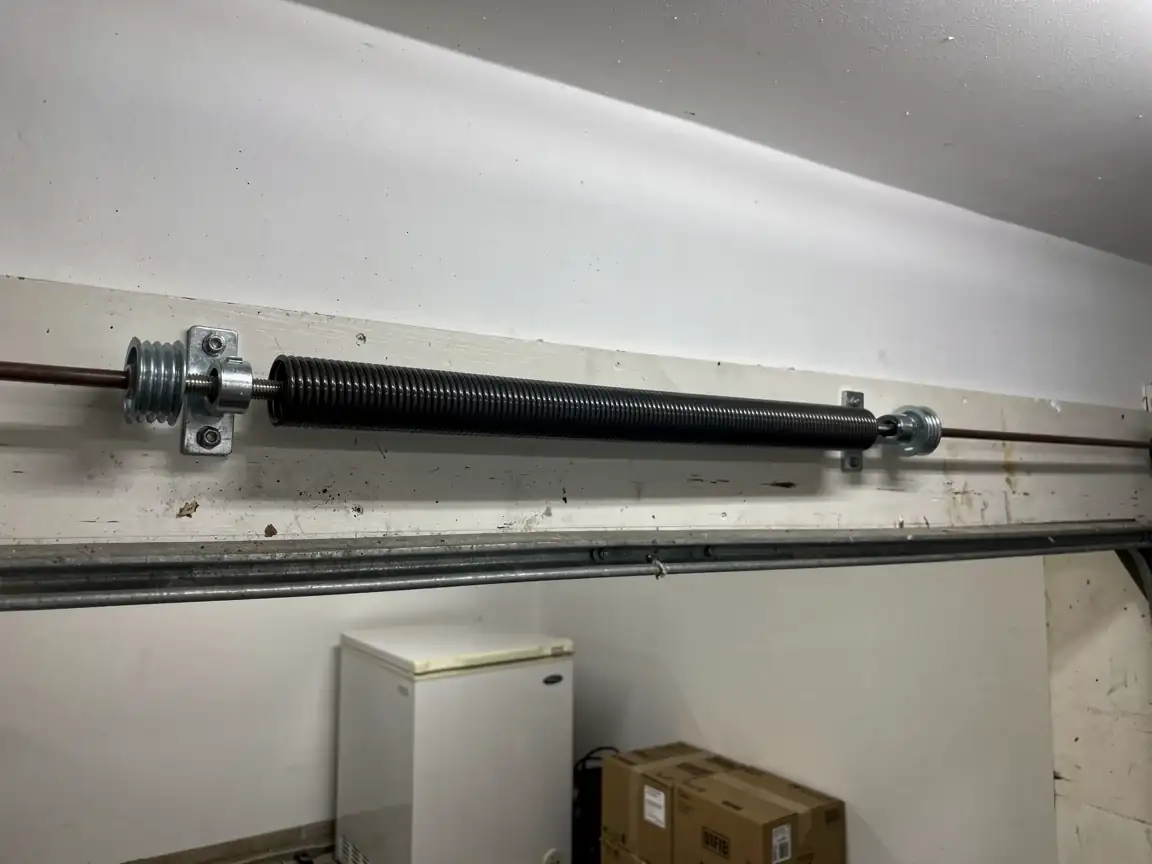
What you shouldn't do is try to force the door back onto the track yourself, especially on a double door with torsion springs overhead. Those springs hold enormous tension, and a track that's bent from impact rather than age usually needs to be straightened or replaced with the door properly supported first - not muscled back into place. If the opener is still trying to pull a door that's partly derailed, unplug it or disconnect the trolley before anything else, so it stops cycling and making the misalignment worse.
We're honest that this is one of the few garage door problems where DIY has a real ceiling. A bent track, a snapped roller, or a cable off the drum all look similar from across the garage but need different tools and different fixes, and guessing wrong usually costs more than calling in the first place.
What Causes It Around Here
Three things line up in this area to make off-track doors more common than you'd expect. First, the housing stock: construction here runs from 1938 through 2015, with most of the service area's 33 named communities built out in the 1980s and 90s. That means a lot of original track and hardware that's thirty-plus years old, softer steel that's had decades to loosen at the brackets, and rollers worn down from use long before anyone replaces them.
Second, the climate. This is a severe cold-winter region, and metal track contracts in hard freezes the same way it expands in summer heat. A bracket that's slightly loose in July can work free enough in a January cold snap for the track to flex under the door's weight and let a roller pop out. We see this pattern repeat on doors that were otherwise fine the rest of the year.
Third, scale. With roughly 34,735 owner-occupied houses across this service area, a meaningful share of them are sitting on original 30-to-40-year-old track right now, which is exactly the hardware most likely to let go under a cold snap or a hard stop.
How Long It Takes
01
Most off-track calls are a same-visit repair once we're looking at the door
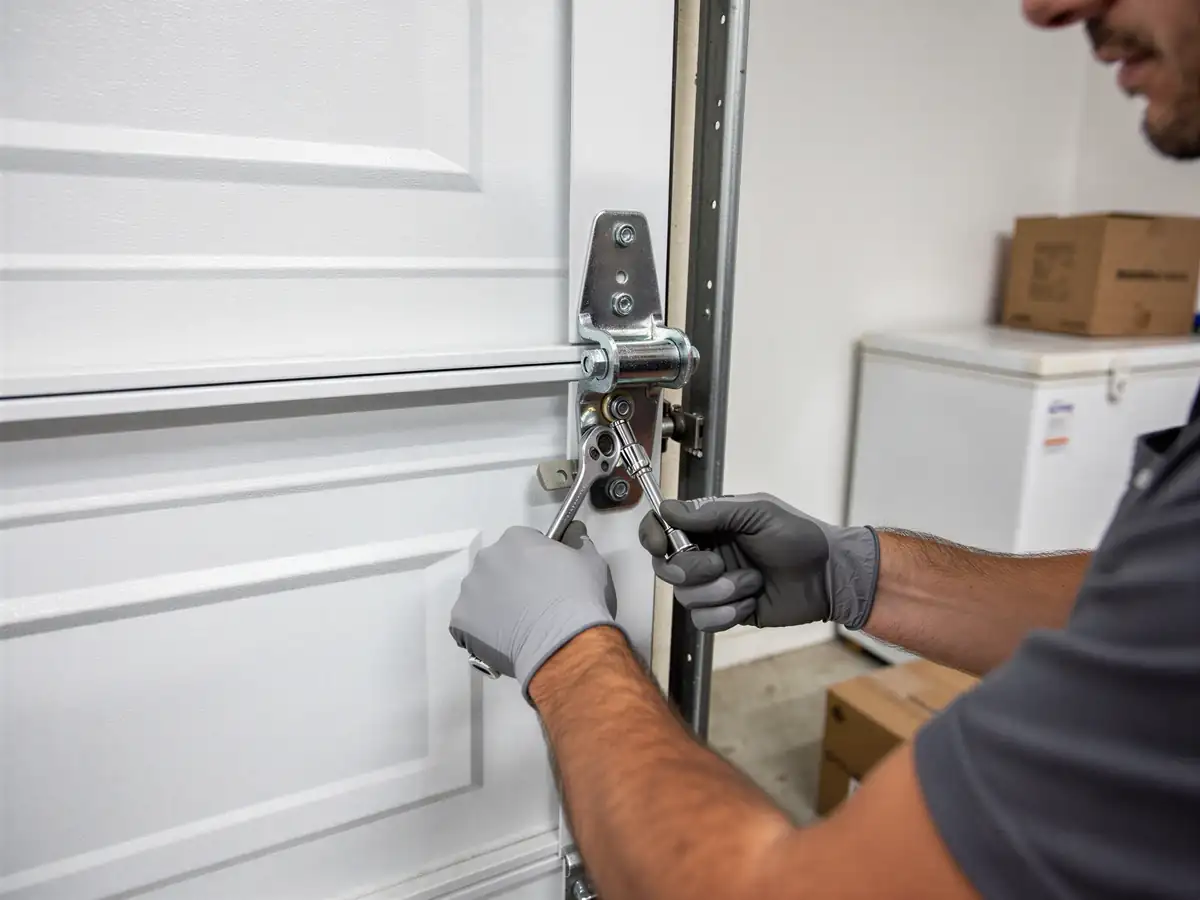
Re-seating rollers and realigning a track that's simply worked loose from its brackets is quick work - tightening fasteners, squaring the track to the door, checking the opener's travel limits afterward. If a roller is broken or the track itself is bent, replacing that section takes longer but is still typically a single visit.
02
Where it stretches out is when the track damage is tied to something else
A broken spring that let the door drop unevenly and twist the track, or a cable off the drum that let one side fall faster than the other. Those jobs involve more than straightening metal, and the honest answer is it depends what we find once the door's open.
03
We won't quote a firm number of hours before we've seen it
Because a loose bracket and a torsion spring failure that bent the track are not the same repair, even though they can look identical from the driveway.
How it works
From “it’s stuck” to “it’s fixed”
01
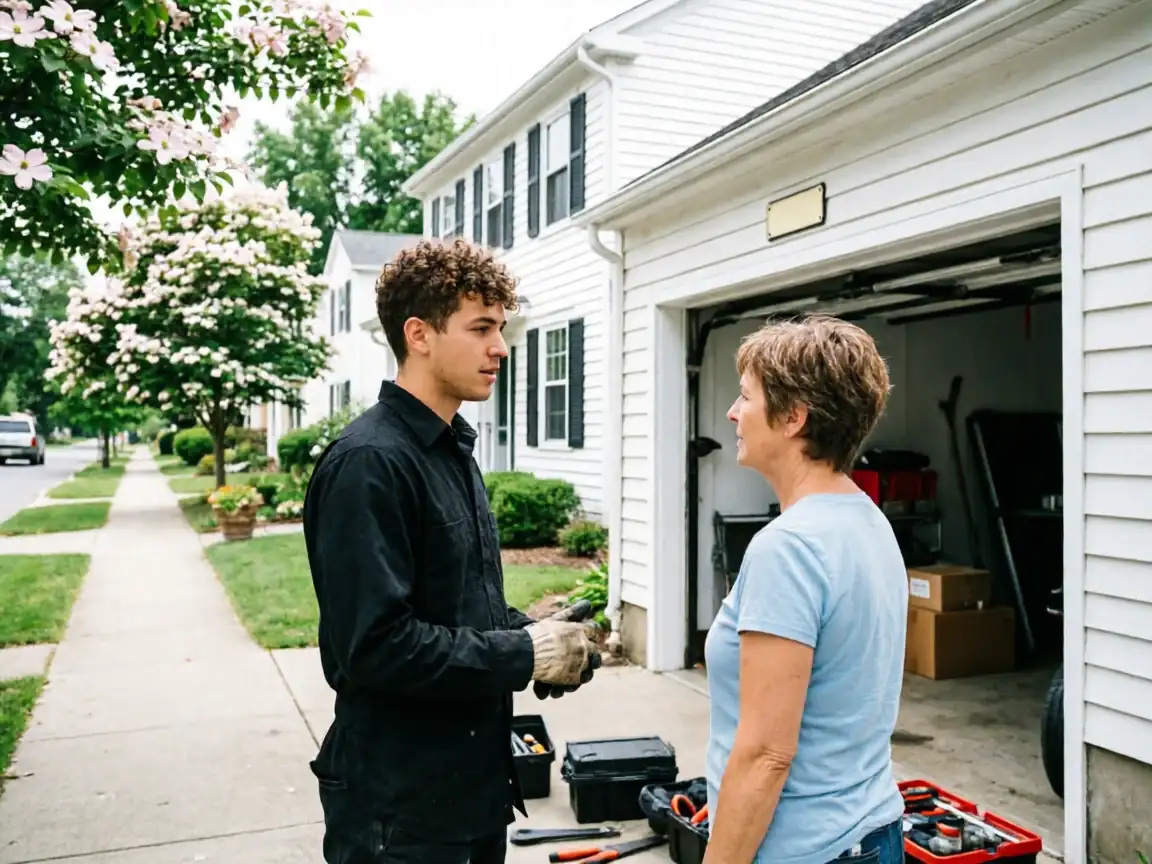
Tell us what’s wrong
Describe the symptom - won’t open, loud bang, opener runs but the door won’t move.
02
On-site diagnosis
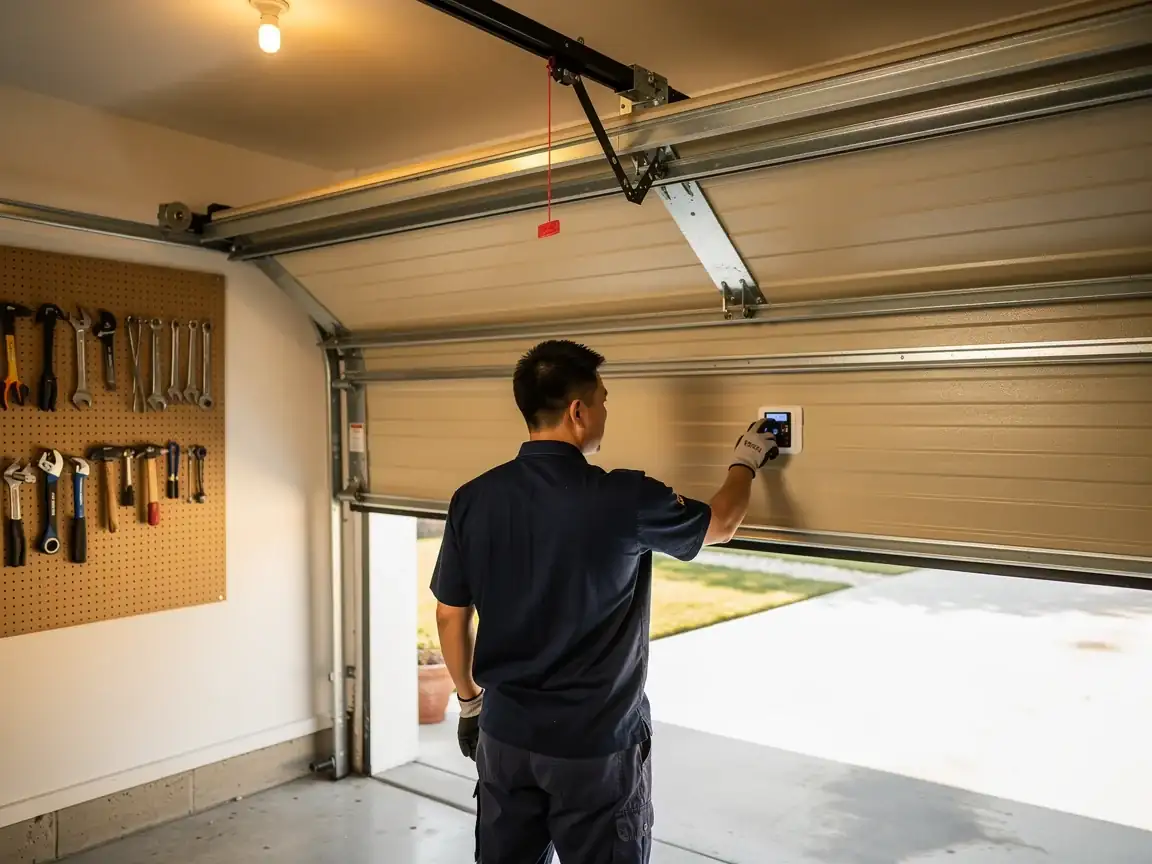
A technician tests the door under power and by hand and finds what actually failed.
03
Clear, up-front plan
You get the fix that’s needed and what drives the cost - before any work starts.
04
Repaired & tested
The repair is done, the door is set true and tested, and the work area left clean.
Not sure which repair your door needs in Frederick, MD? Describe what it’s doing - every job starts with a diagnosis.
Straight answers about garage door repair in Frederick. Still unsure? Ask us directly.
Can I drive my car out if the garage door is off track?
Only if the door is fully open and not resting on anything. If it's stuck partway, off track, or sagging, don't try to lift or force it manually - the cables or springs could still be under tension and the door can drop unexpectedly.
Why did my door come off track overnight with no warning?
Usually it wasn't really sudden - a bracket or roller had been loosening for a while, and a cold snap or a hard stop finally let it slip. Temperature swings common to this area's winters often push an already-worn track past the point it can hold.
Is a door off track always a track problem?
No. Sometimes the track is fine and the real issue is a broken roller, a cable off the drum, or a spring that let the door drop unevenly. We check all of it before quoting a repair, since fixing only the symptom you can see doesn't always fix the cause.