When the Door Won't Move: Emergency Repair for Frederick-Area Homes
Spring snapped or door stuck off track in Frederick? We work on homes built 1938-2015 across the area, in weather that stresses old torsion hardware hard.
A garage door that won't budge usually announces itself the same way
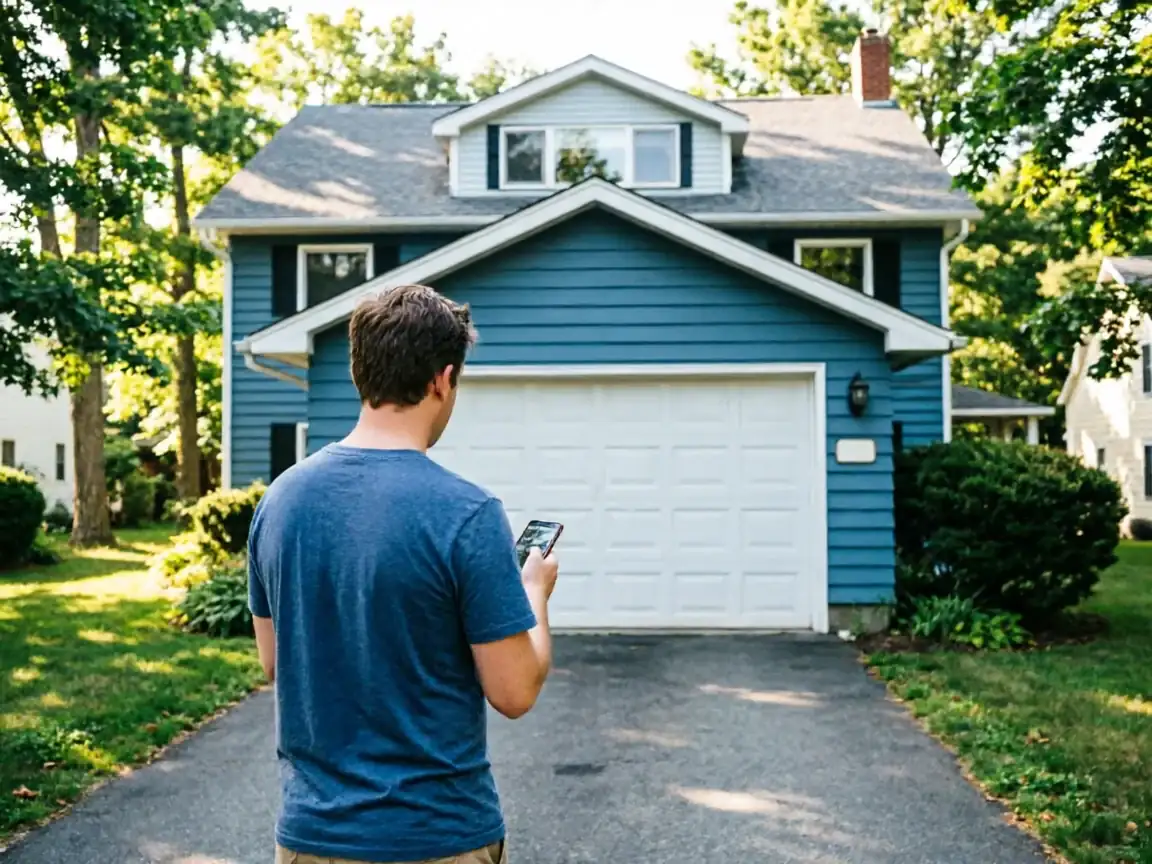
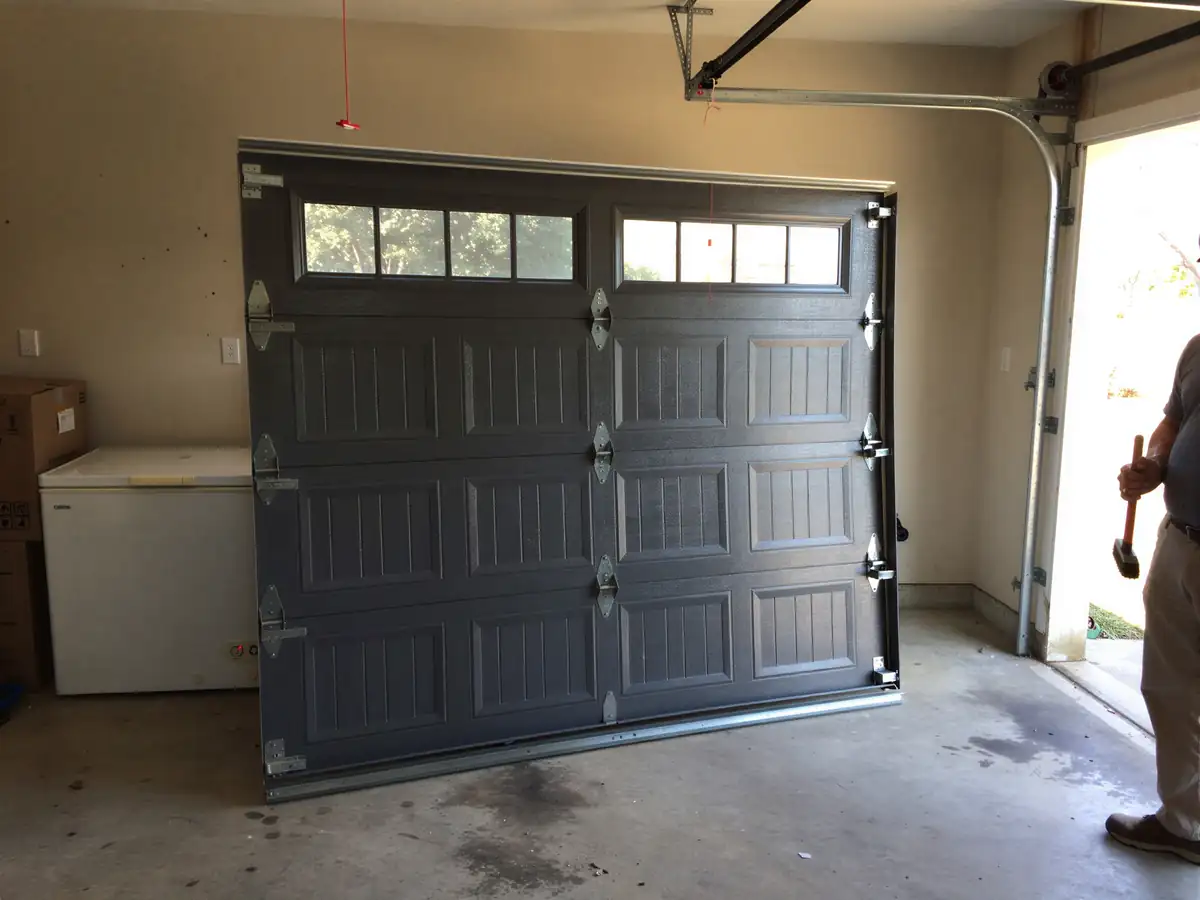
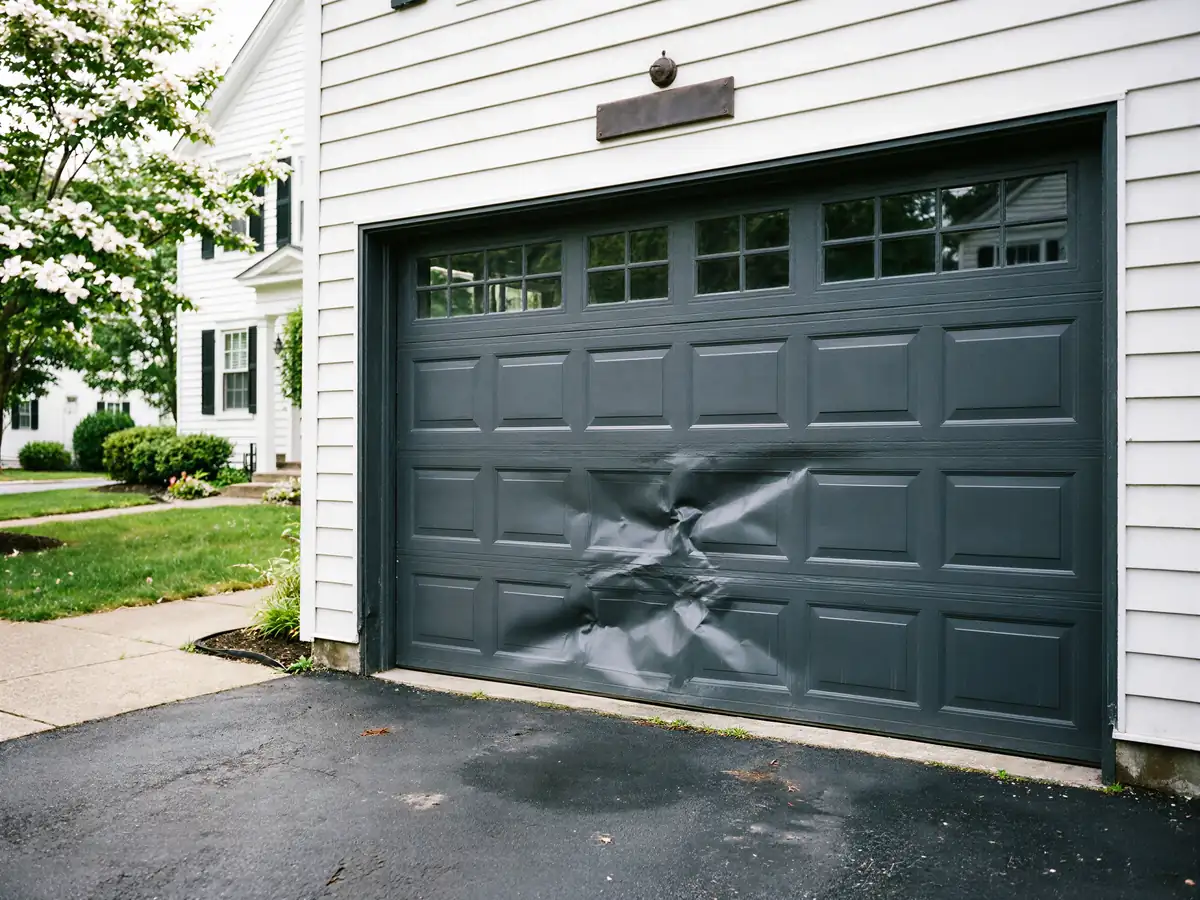
You hit the opener button and nothing happens, or the door jerks a few inches and stops, or you hear a loud bang from the garage and now the door won't open at all. Sometimes it's quieter - the door is heavier than it used to be, the opener strains, and a cable has gone slack on one side.
02
In the Frederick area
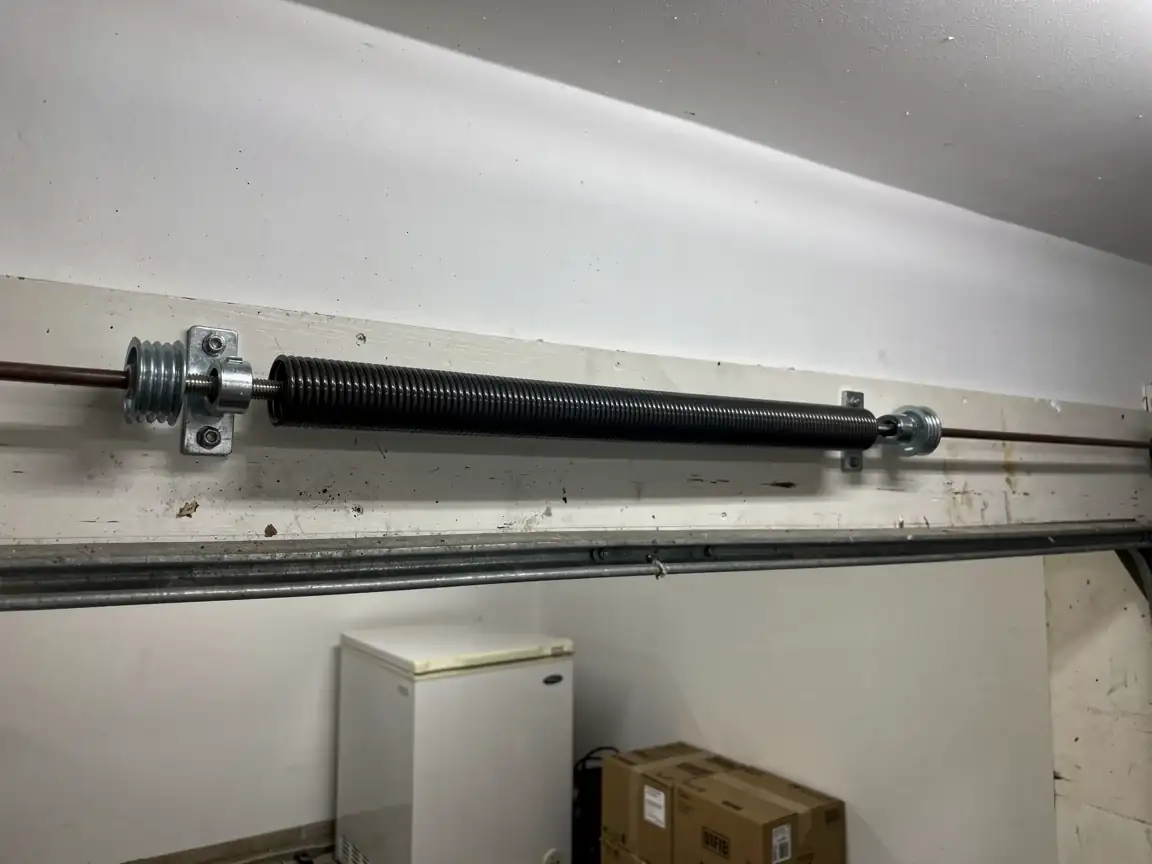
Where housing spans construction from 1938 up through 2015 with a lot of stock built in the 1980s and 90s, the symptom looks slightly different depending on the house. Older homes often still run original torsion springs that were never upsized, so the failure is a sudden snap - the bang, then dead weight. Homes from the 80s and 90s boom years more often show worn rollers or stretched cables rather than a clean spring break, because that generation of hardware is now 30-plus years old and wearing out gradually instead of all at once. Either way, a door that won't move safely under its own springs is not a cosmetic problem - it's a few hundred pounds of door held up by metal that has already told you it's failing.
Doing It Yourself
There's a short list of things worth checking before you call anyone. If the door won't respond to the opener at all, check that it's actually plugged in and that the wall switch and remote batteries aren't the issue - it happens more than people admit. If the door moves partway and reverses, the photo-eye sensors near the floor track may be dirty, knocked out of alignment, or blocked by something in the garage.
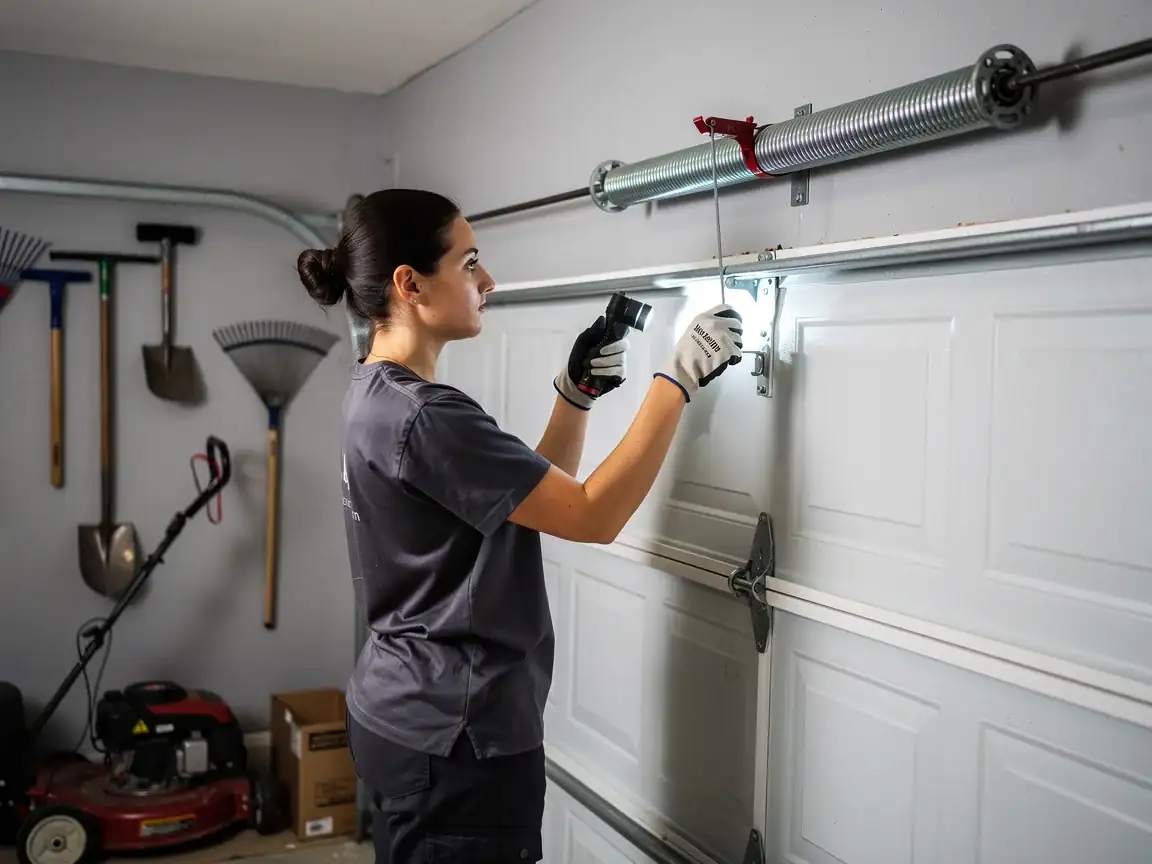
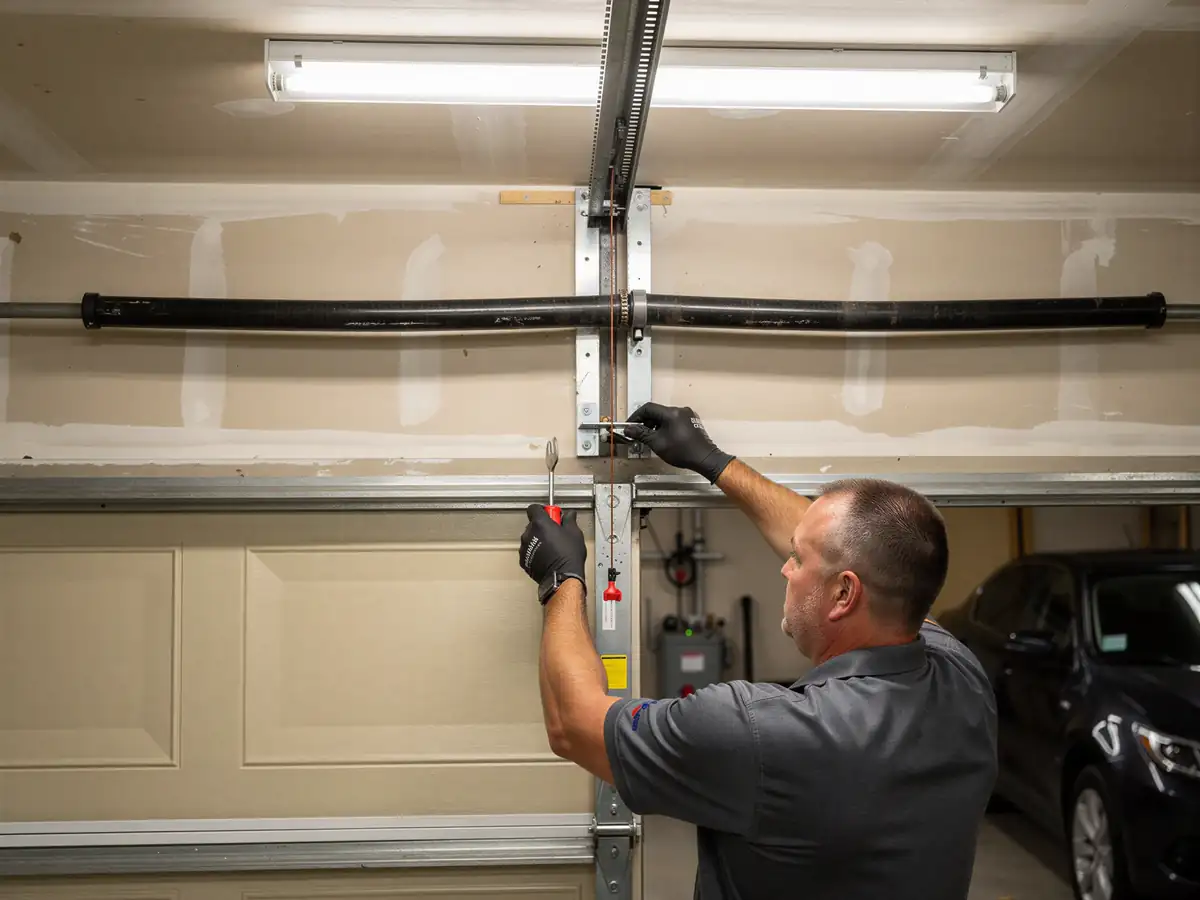
What you should not do is touch the springs. A torsion spring under tension holds enough stored energy to break fingers or worse, and the cables running from the bottom brackets are under the same kind of load. If you can see a spring that's visibly separated, or a cable hanging loose instead of taut, leave the door down, unplug the opener so nobody tries it by remote, and don't force it by hand. That's the one piece of this job that isn't a do-it-yourself project, full stop - not because it's complicated to explain, just because the margin for a bad outcome is too high for a first attempt.
What Causes It Around Here
Frederick sits in a cold-climate band with real winter severity, and that matters more for garage doors than most people expect. Steel contracts in the cold, lubricant thickens, and a spring that's already near the end of its cycle count is more likely to let go on a 15-degree morning than a mild one. We see a seasonal pattern tied to that, not to any one street or subdivision.
The other driver is simply age distribution. With homes going up as far back as 1938 and the median closer to 1991, a large share of the garage doors across the service area are original or close to it - meaning torsion springs engineered for the lighter insulated doors sold decades ago, now carrying heavier replacement panels or just worn past their rated cycles. Houses from the 1980s-90s building wave, which makes up a big share of the 33 communities in this service area, are hitting that same wear point around now as a group, which is part of why spring and cable calls cluster the way they do rather than spreading evenly.
How Long It Takes
01
We can't promise an exact number of minutes before we've heard what's wrong and looked at the door
And we won't pretend otherwise - a stuck opener and a snapped torsion spring on a double-wide door are not the same job, and guessing a time on the phone does nobody any favors. What we can tell you is that most emergency calls are diagnosed on site in minutes, because the failure modes are limited and the symptoms above tell us most of what we need before we open the garage.
02
The honest limitation is parts
Standard torsion springs and common cable sizes are stock items we carry, but an unusual door - an odd width, an older imported panel, a spring size that isn't common anymore - can mean a short wait while we source the right part rather than putting on something that doesn't match the door's weight. We'd rather tell you that up front than install the wrong spring and have you calling again in a year.
How it works
From “it’s stuck” to “it’s fixed”
01
Tell us what’s wrong
Describe the symptom - won’t open, loud bang, opener runs but the door won’t move.
02
On-site diagnosis
A technician tests the door under power and by hand and finds what actually failed.
03
Clear, up-front plan
You get the fix that’s needed and what drives the cost - before any work starts.
04
Repaired & tested
The repair is done, the door is set true and tested, and the work area left clean.
Not sure which repair your door needs in Frederick, MD? Describe what it’s doing - every job starts with a diagnosis.
Straight answers about garage door repair in Frederick. Still unsure? Ask us directly.
Is it safe to open the garage door by hand if the opener won't work?
Only if the spring itself is intact. If you can see a visible gap in a coiled spring above the door, or a cable hanging loose, don't force the door by hand - the springs carry the weight, not the opener, and a broken one means the door could drop. If the spring looks normal, manually releasing the opener and lifting by hand is usually fine.
Why did my spring break in cold weather with no warning?
Steel gets more brittle and less flexible as it cools, and a spring that's already near the end of its cycle life is more likely to fail on a cold morning than a mild one. Across Frederick's cold-climate winters, we see this pattern show up most on older torsion springs that were due for replacement anyway.
My house was built in the 1990s - why is the door hardware already failing?
A lot of the housing stock in this area dates to the 1980s and 90s, which means a large share of original garage door hardware is now 30-plus years old. Torsion springs are rated for a number of open-close cycles, not a calendar age, and most residential springs from that era are well past their rated count by now.
Do you stock the spring size my door needs?
We carry common torsion spring and cable sizes used on standard residential doors. Less common widths or older imported panels sometimes require ordering the exact match, which can add a short wait - we'd rather source the right part than install one that doesn't match the door's weight.