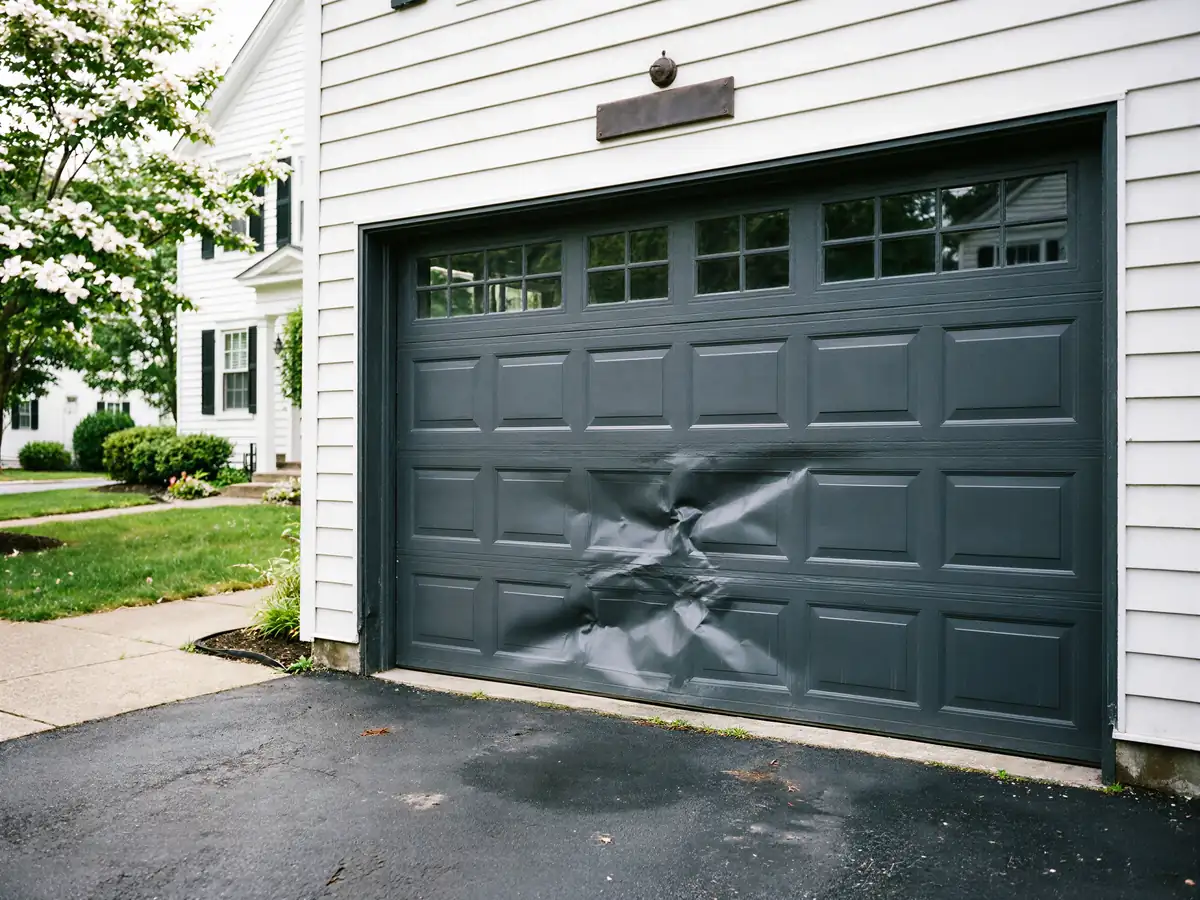
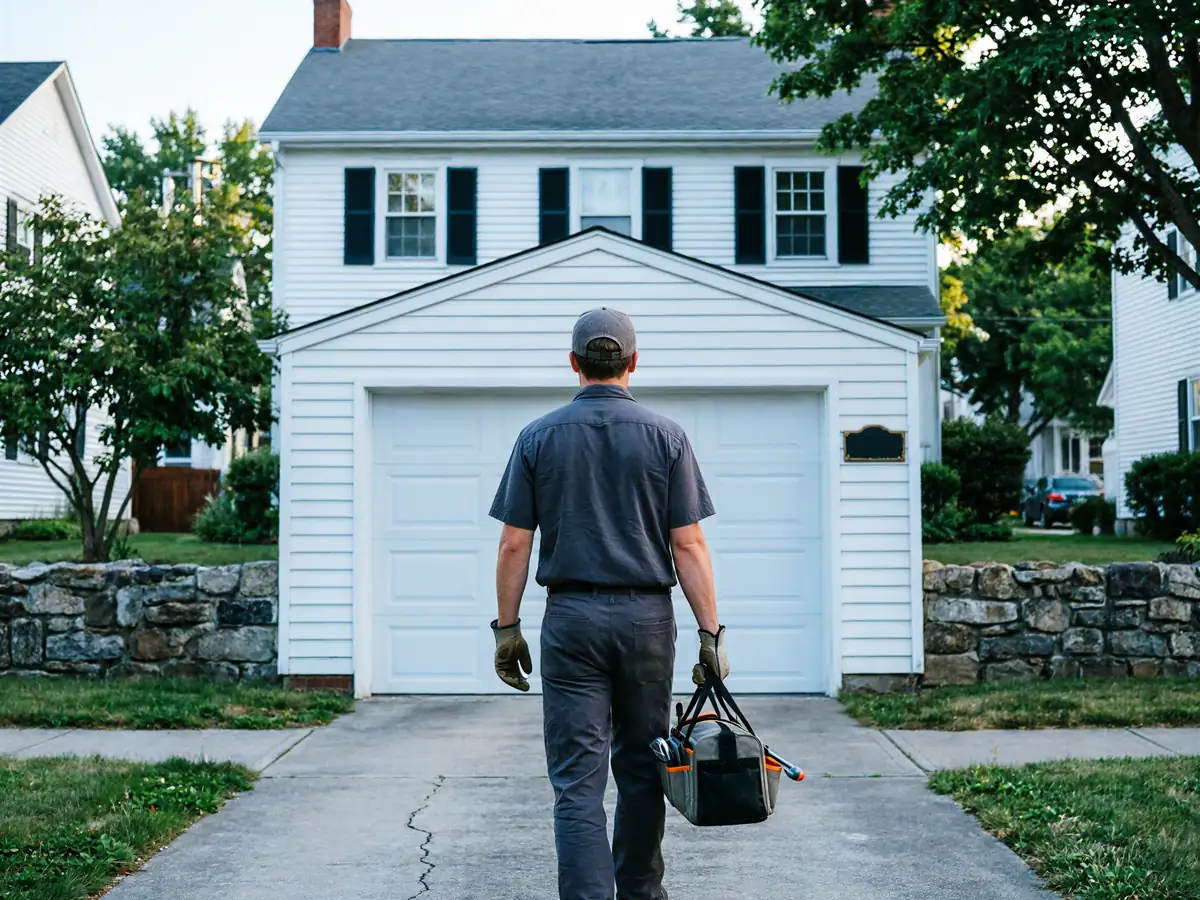
Frederick's housing stock and cold winters put specific stress on garage door track. Here's what actually knocks a door off track and what it takes to fix it.
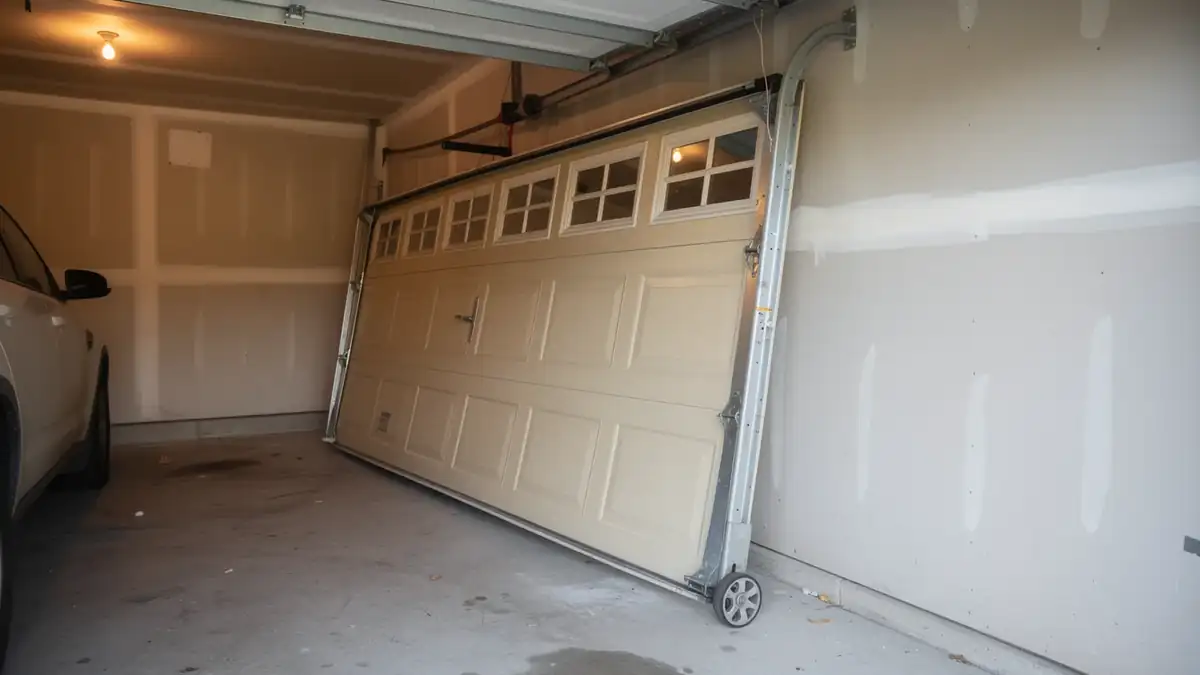
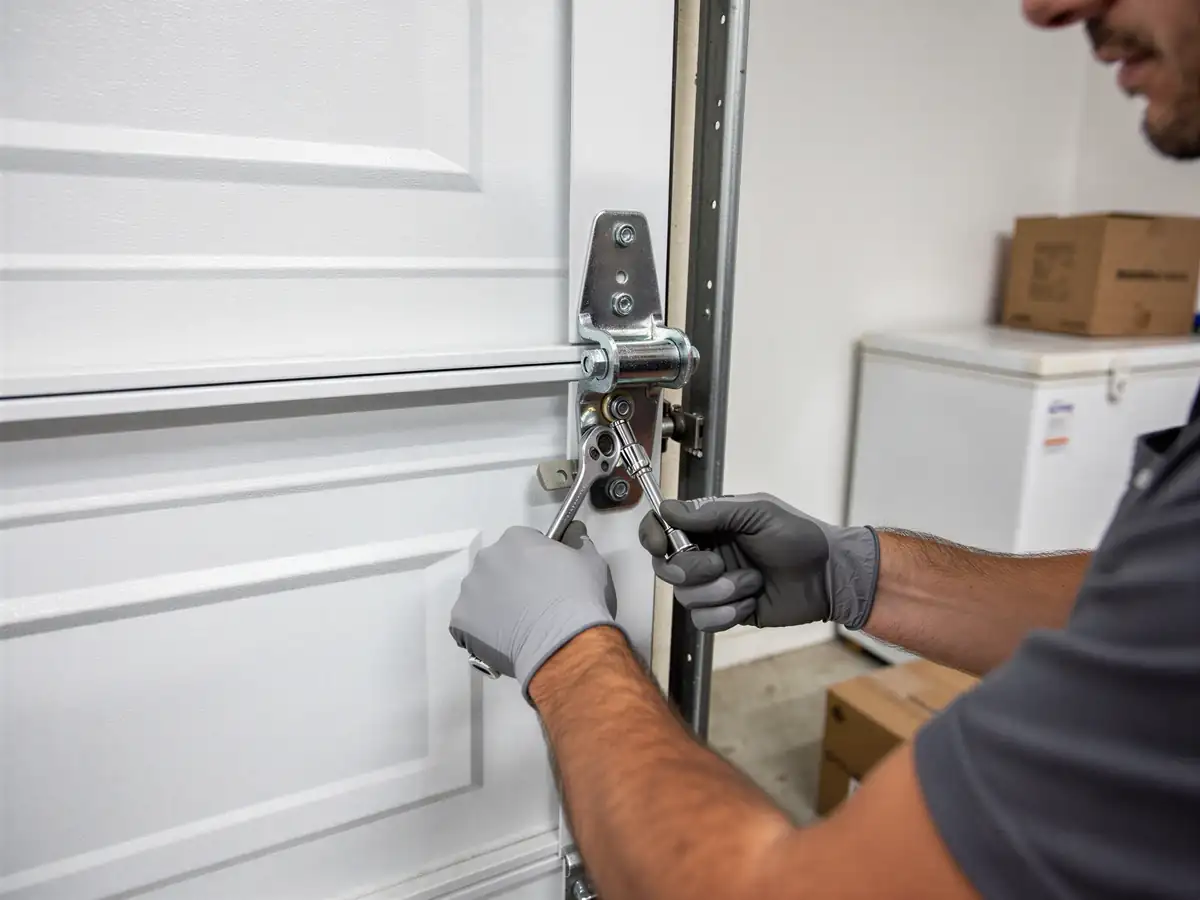
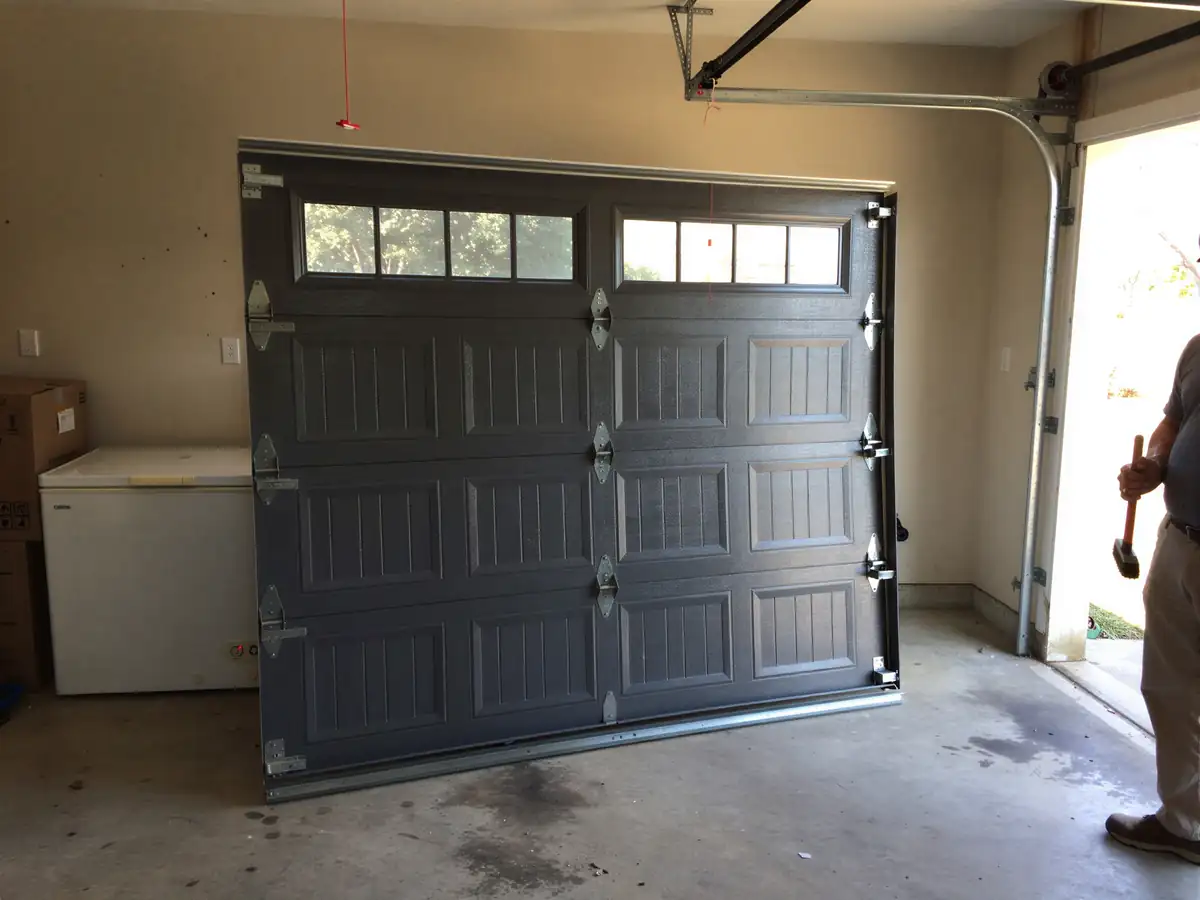
Most owners assume a door that's jumped the track needs a new track. Usually it doesn't. What's actually bent is almost always the bracket holding the track to the frame, or the roller itself has worn down enough that it rides up and out of the channel on the next heavy swing. Frederick's housing stock skews older than people think - homes here were built anywhere from 1938 to 2015, with the median landing around 1991, and a big share of the service area is 1980s and 90s construction. That means a lot of original builder-grade track and hardware still in service, sized for lighter doors than what people are hanging on them now after an insulated-door upgrade. The other common mistake: people hear a scrape or a clunk, see the door is crooked, and start cranking on the track bolts to straighten it by eye. That almost always makes the misalignment worse, because the problem usually isn't the track's position - it's a bent roller stem or a stretched cable pulling one side down faster than the other. If you can't tell which side is low without a level, don't guess at the fix.
The Situation
The service area around Frederick covers a wide mix of housing ages and styles. With 63,380 households and 34,735 owner-occupied houses spread across that territory, track problems show up differently depending on the neighborhood's age. Homes from the earlier end of that 1938-2015 build range tend to have older steel track that's seen decades of expansion and contraction. Newer construction closer to the 1990s median more often has track that's fine structurally but was installed slightly out of plumb from the start, which only becomes obvious once rollers wear enough to expose the gap. Either way, a door going off track here is rarely a single cause - it's usually one worn part finally letting a pre-existing alignment issue show itself.
What It Costs
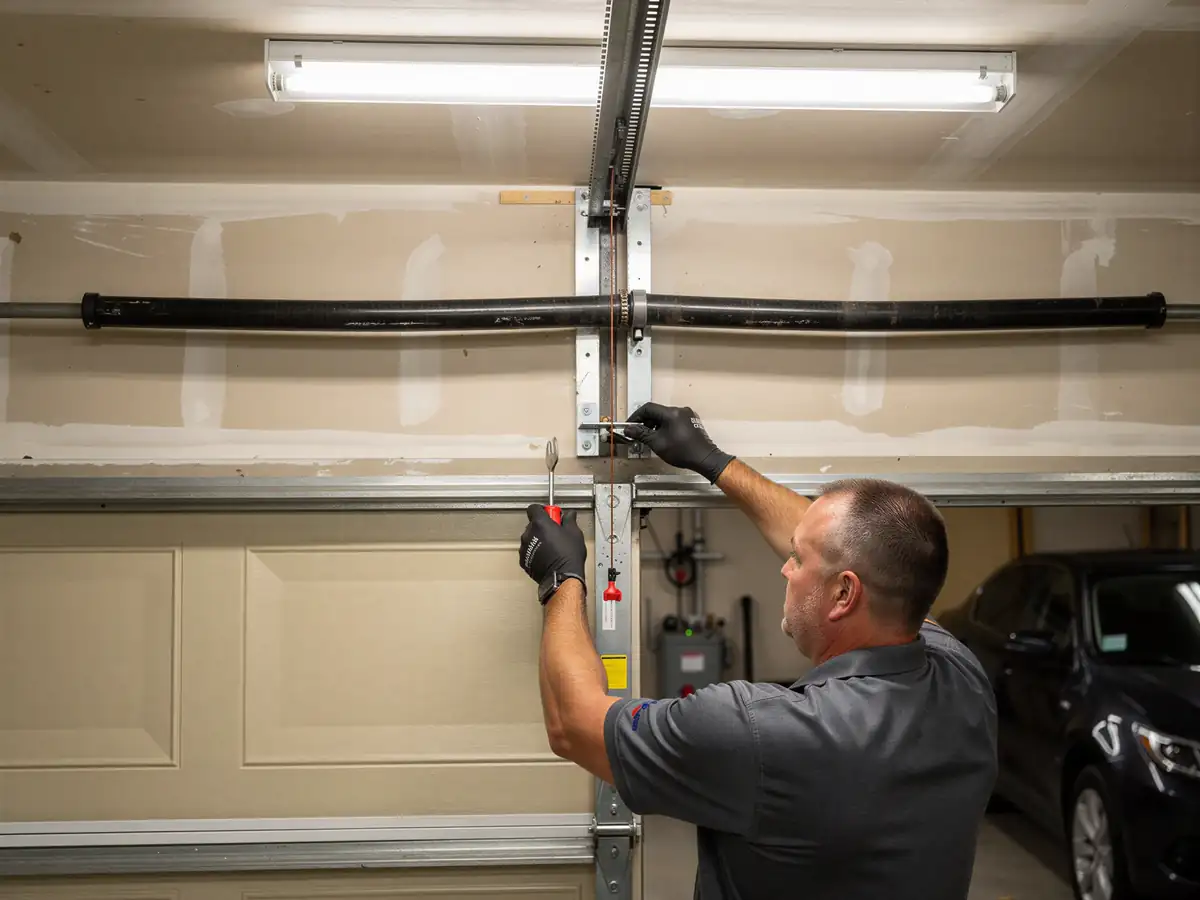
We don't have a flat number to give you here, because the honest answer depends on what's actually wrong once we get the door open and look at the track, rollers, and brackets. A bent bracket and a worn roller on one side is a straightforward fix. A cable that's stretched unevenly and pulled the whole assembly out of square is more labor, and if the track itself is dented or the drum has worn a groove, replacing the section is cheaper long-term than trying to bend it back. With median household income in the area over $115,000, most owners here choose to fix track issues properly rather than patch them - but we'll tell you straight if a repair isn't worth it. If the opener has been fighting a misaligned door for months, the motor and gears may have taken damage too, and that's a separate conversation before we start on the track.
What the Weather Here Does to It
This area sits in a cold-severe climate band, and that matters more for track alignment than most owners expect. Steel track and aluminum brackets contract in deep cold, and on an older install - especially track dating from that 1980s-90s stretch of the housing stock - the fasteners holding the track to the jamb have already loosened slightly over the years. Cold snaps tighten that gap further, and a door that was running fine in October can start catching or popping a roller once temperatures drop hard in winter. Add a few freeze-thaw cycles and any moisture that's worked into the track channel turns to ice, which is often what people feel as sudden resistance right before the door jumps the rail. We see more off-track calls here in the cold months than any other season, and it's rarely the opener's fault - it's the track hardware responding to temperature swings it's been absorbing for twenty or thirty years.
How it works
From “it’s stuck” to “it’s fixed”
01
Tell us what’s wrong
Describe the symptom - won’t open, loud bang, opener runs but the door won’t move.
02
On-site diagnosis
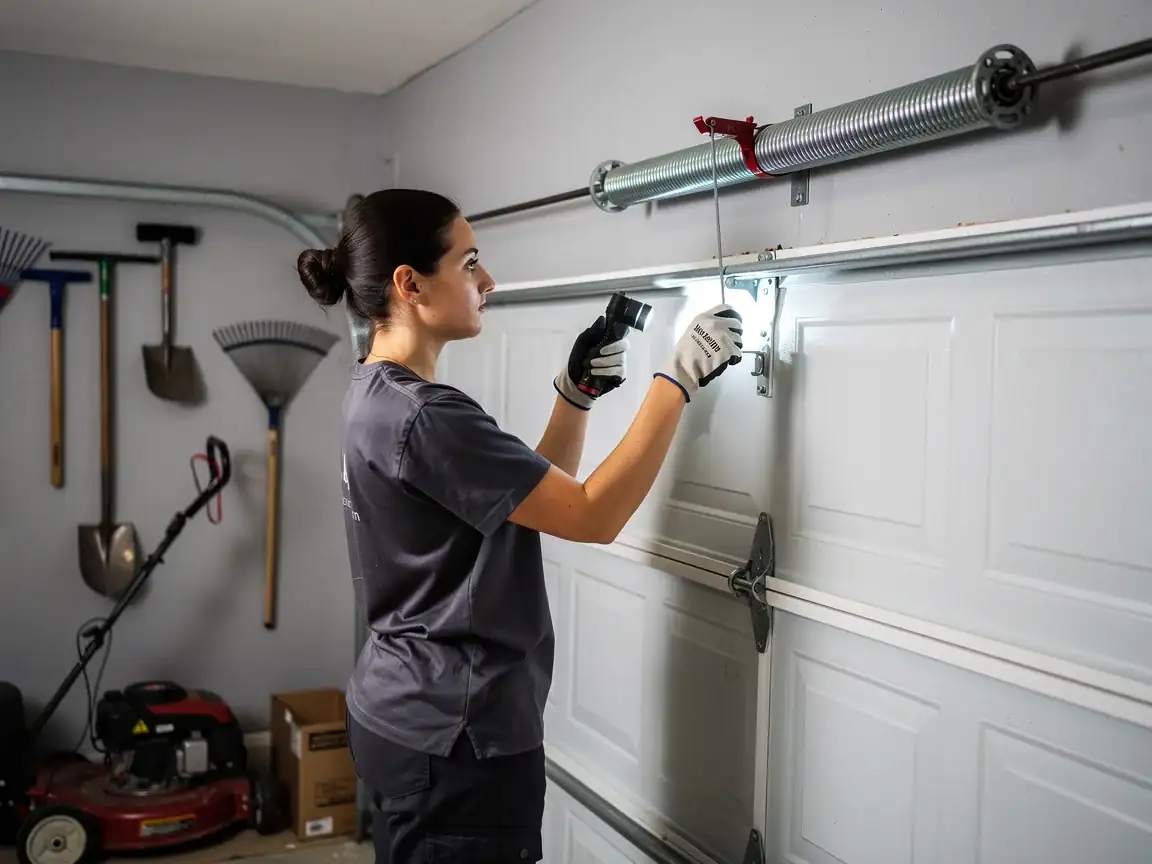
A technician tests the door under power and by hand and finds what actually failed.
03
Clear, up-front plan
You get the fix that’s needed and what drives the cost - before any work starts.
04
Repaired & tested
The repair is done, the door is set true and tested, and the work area left clean.
Not sure which repair your door needs in Frederick, MD? Describe what it’s doing - every job starts with a diagnosis.
Straight answers about garage door repair in Frederick. Still unsure? Ask us directly.
Why did my door suddenly go off track with no warning?
It usually wasn't sudden - a roller or cable was already worn, and a cold snap or one hard stop finally pushed it past the point where the track could hide the problem. Given how much of the housing stock here dates to the 1980s and 90s, worn original hardware is the most common hidden cause.
Can I push the door back onto the track myself?
You can sometimes reseat a roller that's barely off, but forcing a door back on when a bracket is bent or a cable is uneven risks bending the track further or dropping the door on someone. If it's off more than an inch or won't move freely, call it in rather than force it.
Is it the track or the opener that's usually the problem?
Track and alignment issues cause most of what looks like an opener problem. The motor will keep straining against a door that's binding on bent track, which can damage the gears over time, so fixing the alignment first often saves the opener too.
Does cold weather really affect the track itself?
Yes. In a cold-severe climate band like this one, metal track and brackets contract, loosening fasteners that were already worn on older installs. That's a big part of why off-track calls spike here in winter rather than staying steady year-round.