Emergency Garage Door Repair for Middletown, MD Homes
Middletown homes mostly went up after 1998, later than Frederick's overall median. That newer stock means different springs and openers. We cover the 6-mile run from Frederick.
Middletown's housing stock skews newer than Frederick's overall median. Across the wider service area homes date back to 1938 and the midpoint lands around 1991, but Middletown itself centers closer to 1998. That matters for what breaks. You're less likely to be dealing with the old one-piece slab doors and exposed extension springs that show up in Frederick's older pockets, and more likely to have a sectional steel door on a torsion spring system installed sometime in the late 90s or 2000s. Those springs are rated for a set number of cycles, and a door that age is usually at or past the point where the original spring is due. The cold snaps this area gets - this is a severe cold climate zone - stiffen lubricant and metal both, so a spring that's already fatigued is more likely to let go on a hard morning than a mild one. Openers from that era are also starting to fail on logic boards and drive gears rather than just belts, which changes the diagnosis.
How We Fix It
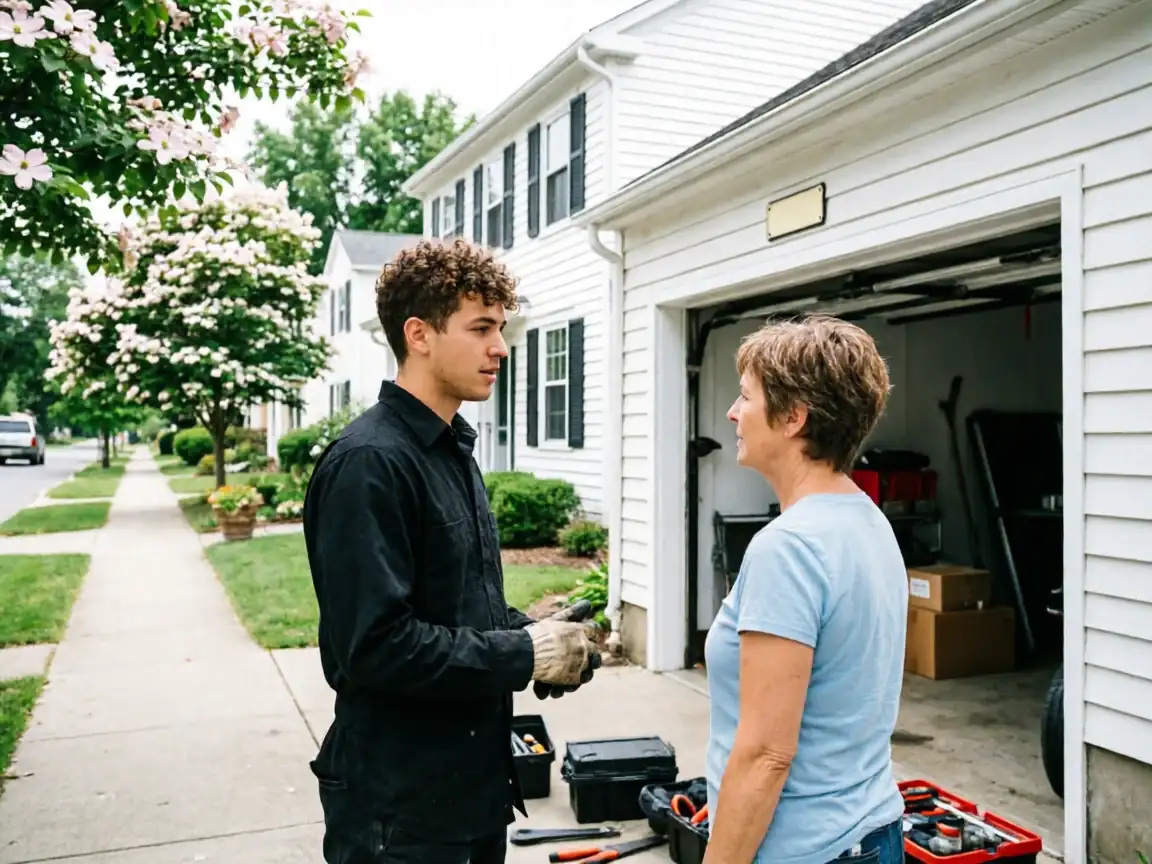
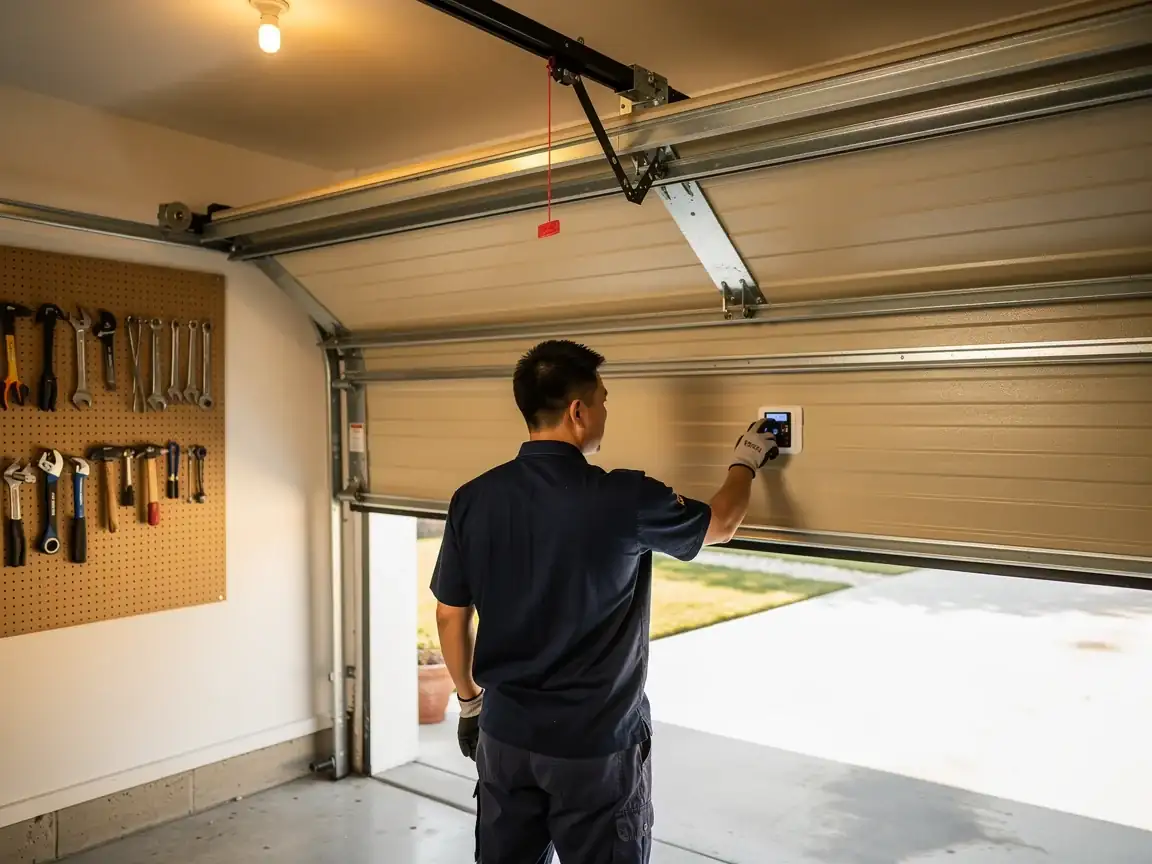
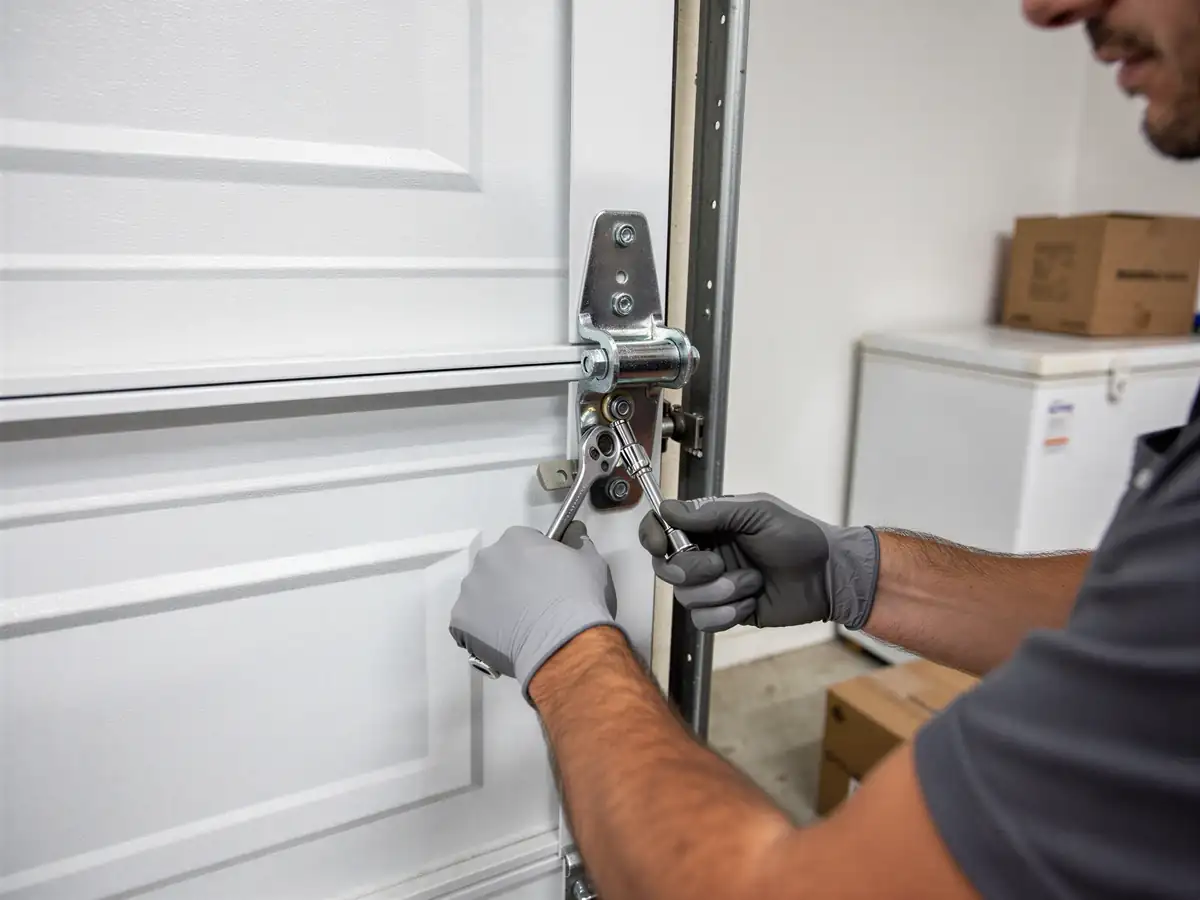
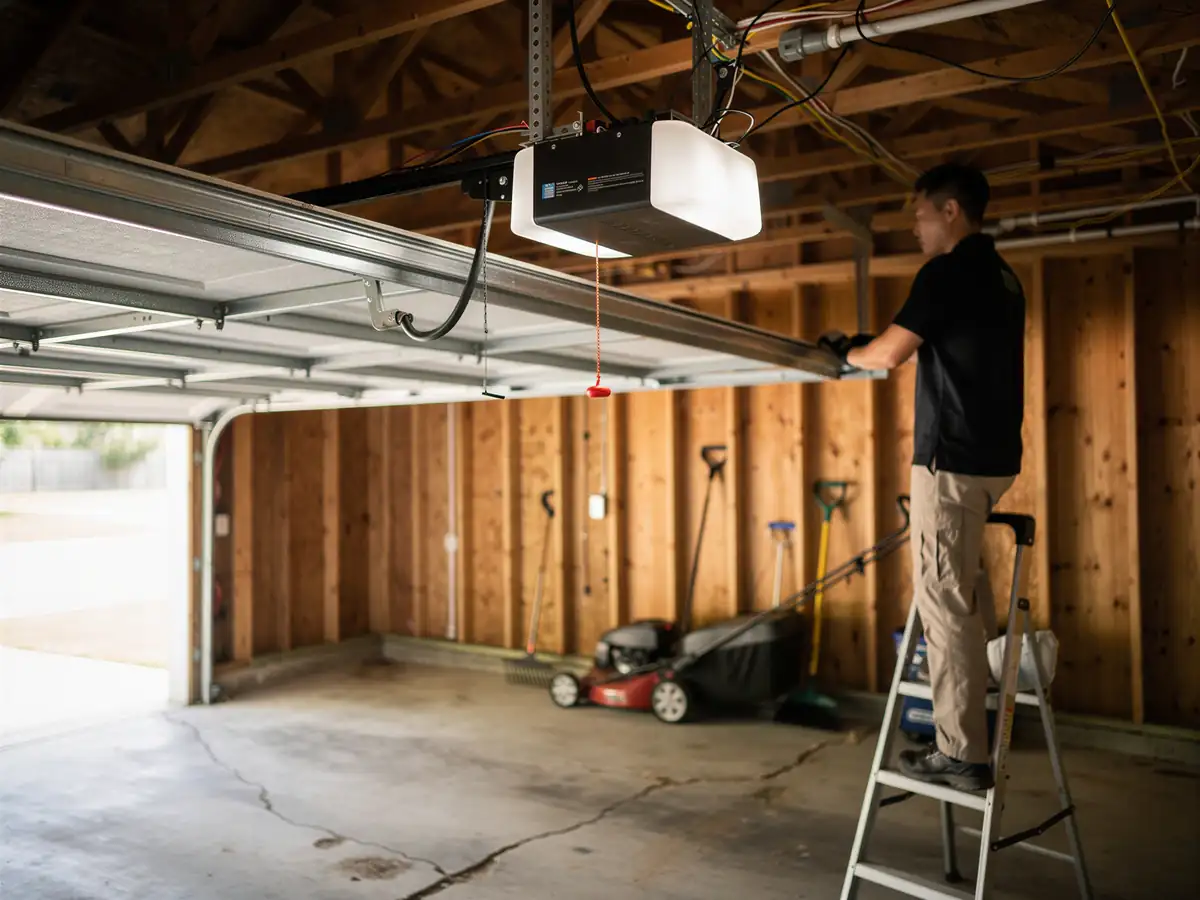
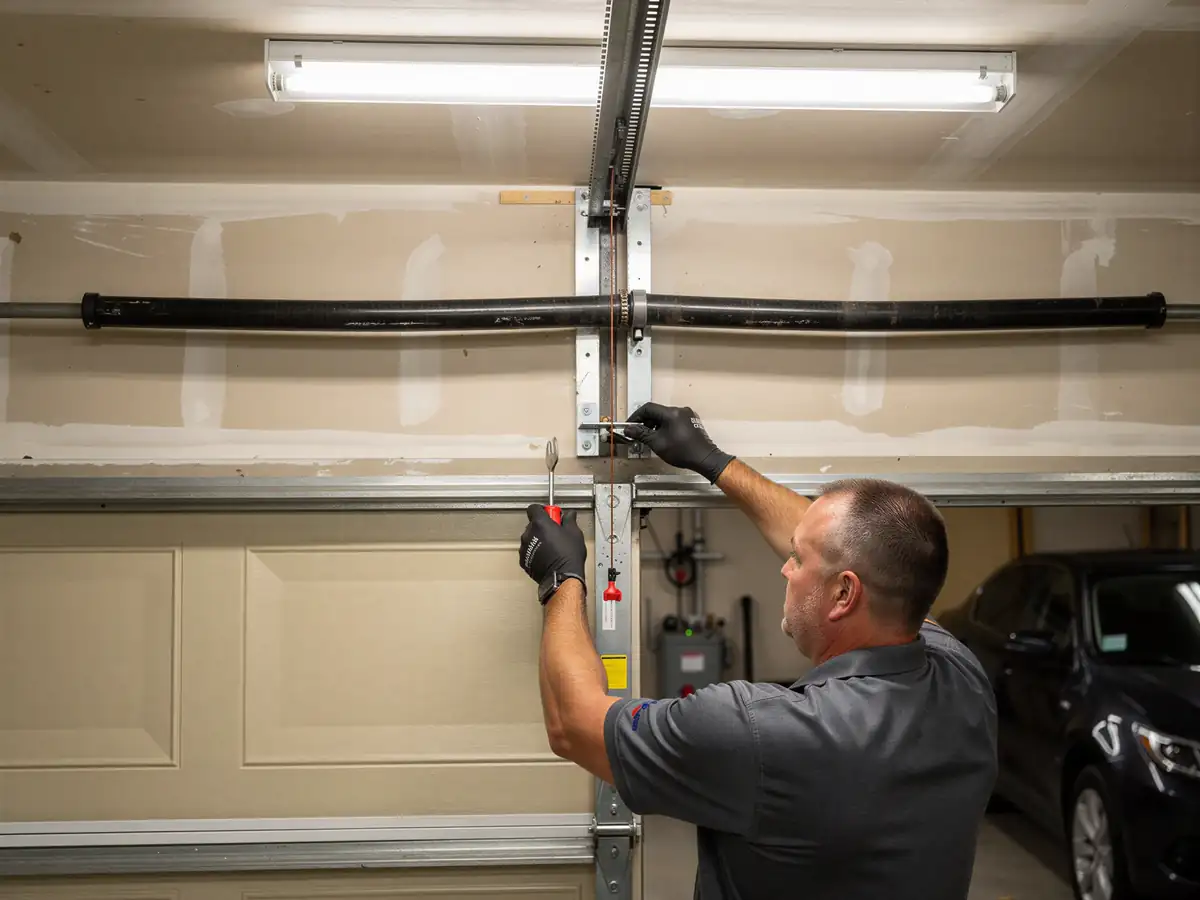
We come from Frederick, about 6 miles up the road, with torsion springs sized for the door weights common to late-90s and 2000s sectional doors, plus the cables, rollers, and drums that go with them. If the opener's the problem - dead board, stripped gear, a travel limit that's drifted - we carry common replacement units and the hardware to remount on existing rail. For a stuck door we check the track alignment and the bottom brackets before touching anything electrical, since a bent track will mimic an opener fault. We don't stock every obscure part for a nonstandard door, so if yours is a custom or imported unit, parts may need to be ordered before the fix is final - we'll tell you that up front rather than string you along.
The Symptom
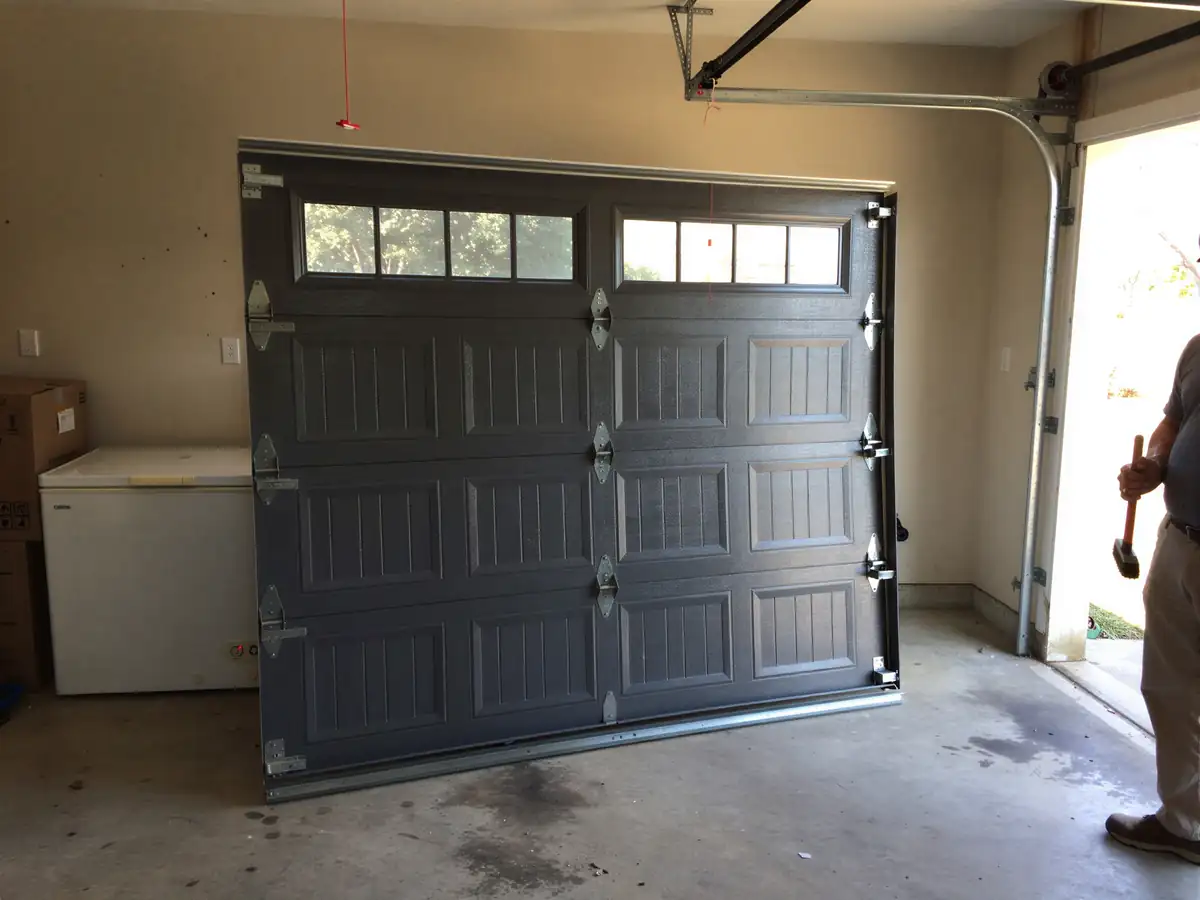
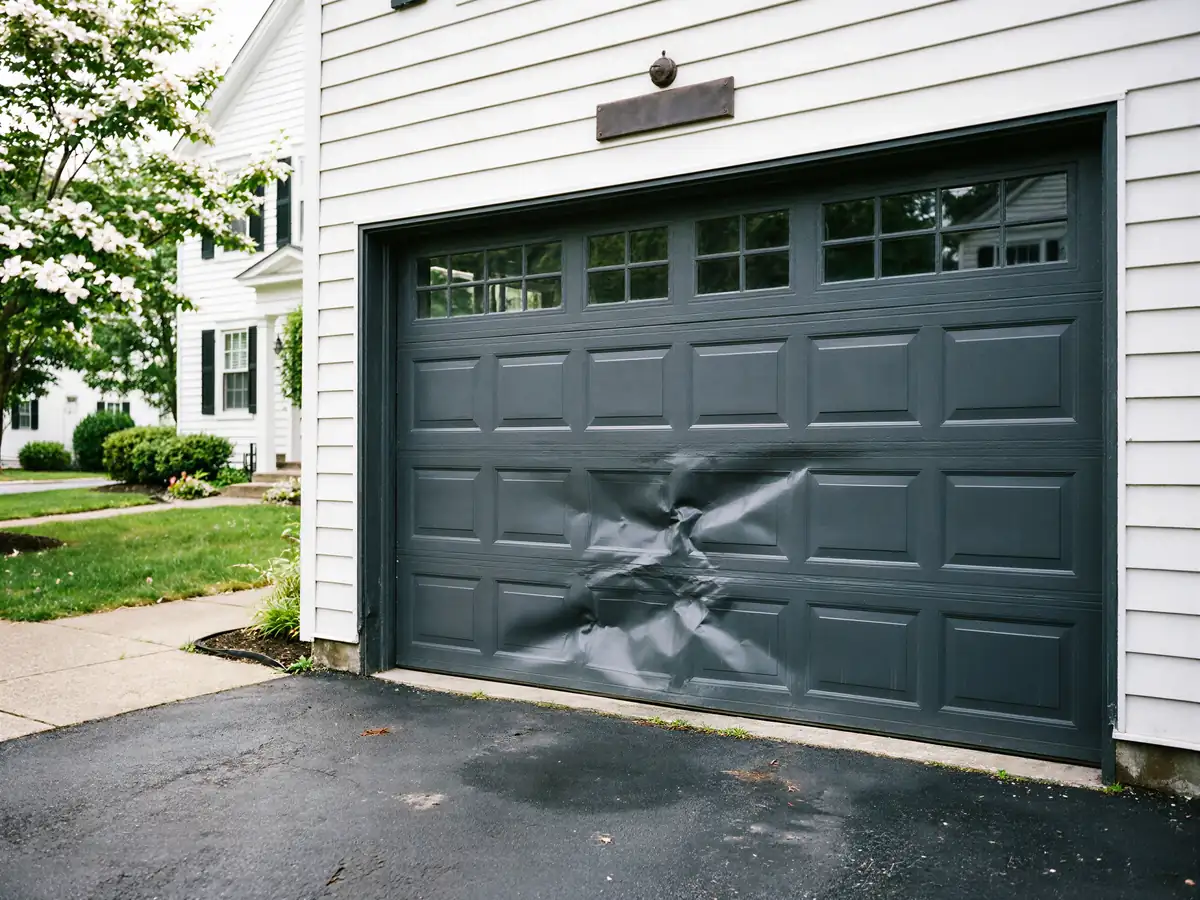
The door that won't budge, that reverses halfway up, or that comes down crooked on one side - those are the calls we get most from this part of the county. A door that slams down fast usually means a broken torsion spring; a door that opens but the opener keeps straining and clicking is more often a worn gear or a capacitor on its way out. If you hear a loud bang from the garage and then the door won't move by hand or by opener, stop pulling on it. A broken spring under tension is the single most dangerous failure on a residential door, and it's not a job to force.
Doing It Yourself
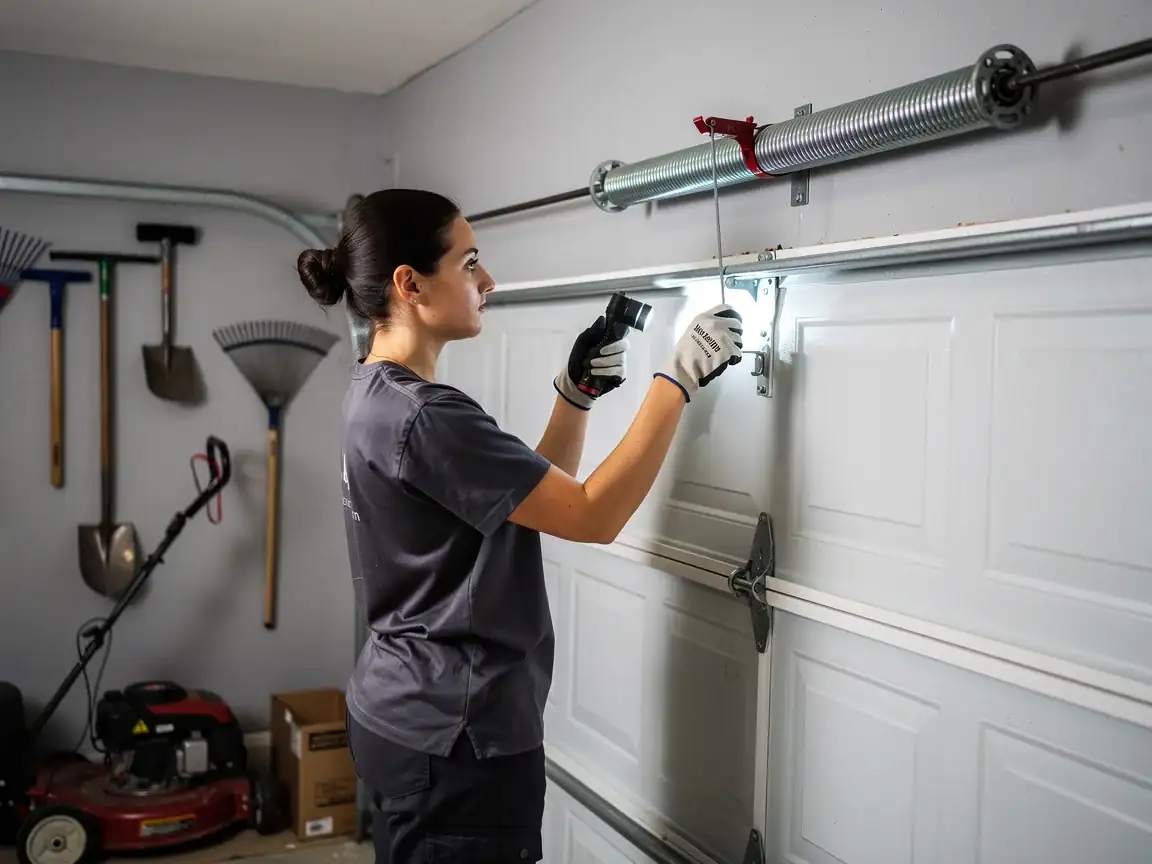
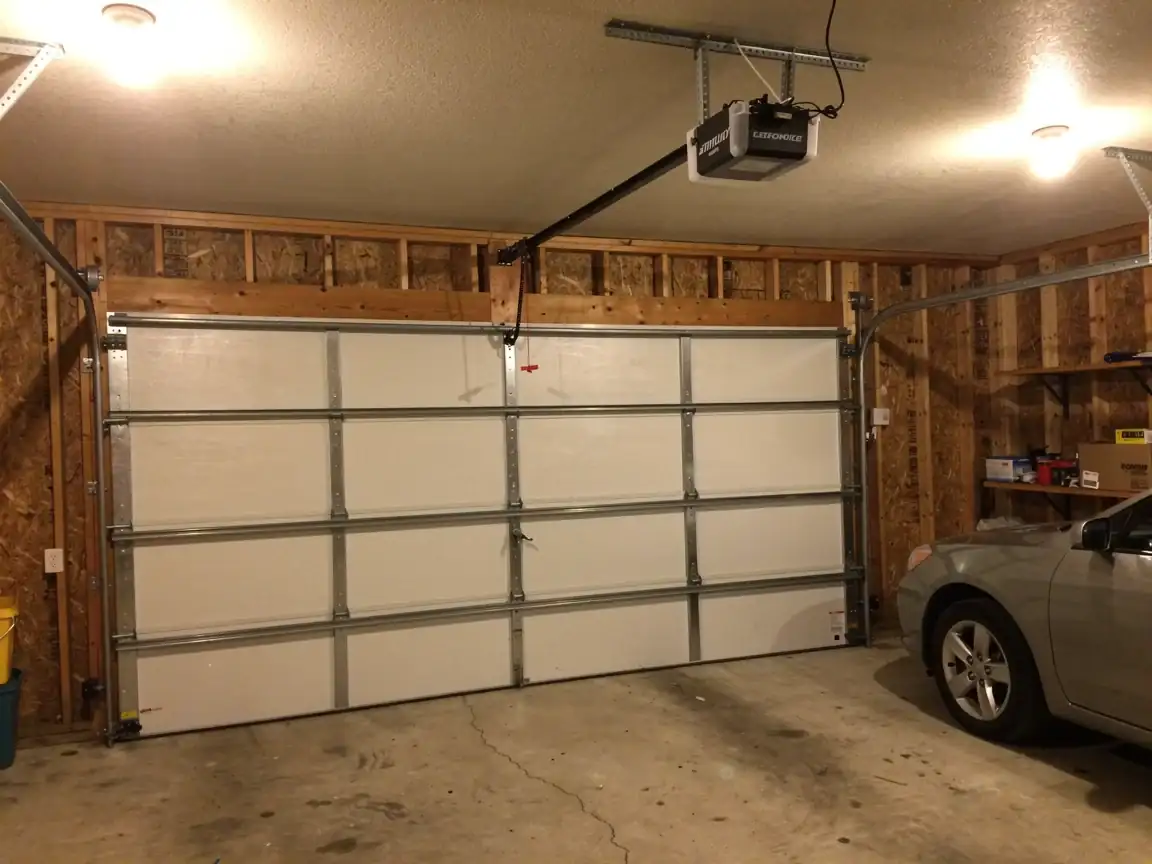
Checking the obvious things costs nothing: make sure the opener's plugged in, check the wall switch isn't stuck, look for anything blocking the photo-eye sensors near the floor. If the door has a manual release cord, you can disconnect the opener and try lifting the door by hand to see if it's a spring problem or an opener problem - a door that's too heavy to lift evenly is telling you the spring's gone. Past that, we'd stop you. Torsion springs store enough force to break bones, and adjusting the bottom brackets on a loaded cable can do the same. That's not a disclaimer for its own sake - it's where DIY on this particular job stops being worth the risk.
What It Costs
We don't have a published price list for this page, so we're not going to invent a number. What a repair runs depends on whether it's a spring, a cable, an opener board, or a full opener swap, and on whether the door itself is original to the house or's already been replaced once. What we can say is that households in this part of the county have a median income noticeably above the wider Frederick area, and that newer doors sometimes use spring or drum sizes that aren't the cheapest stock option - worth knowing before you compare a quote to a number you heard from a neighbor with an older house.
How Long It Takes
A straightforward spring replacement or opener swap is usually a same-visit job once we're on site - no overnight parts order needed for the common sizes. What changes the timeline is the house itself: a 2000s-era door on standard hardware is a faster fix than a custom or discontinued unit, where we may need to order a part before closing it out. We travel from Frederick to reach Middletown, so plan for drive time on top of the repair itself rather than treating this like a walk-in shop.
How it works
From “it’s stuck” to “it’s fixed”
01
Tell us what’s wrong
Describe the symptom - won’t open, loud bang, opener runs but the door won’t move.
02
On-site diagnosis
A technician tests the door under power and by hand and finds what actually failed.
03
Clear, up-front plan
You get the fix that’s needed and what drives the cost - before any work starts.
04
Repaired & tested
The repair is done, the door is set true and tested, and the work area left clean.
Not sure which repair your door needs in Frederick, MD? Describe what it’s doing - every job starts with a diagnosis.
Straight answers about garage door repair in Frederick. Still unsure? Ask us directly.
Why does my garage door spring keep breaking when my neighbor's lasts for years?
Springs are rated by cycle count, not age, and the spring size has to match the door's weight. A lot of Middletown houses went up around the late 90s, so doors installed then are reaching the end of a normal spring's rated life around now. Mismatched or underrated springs wear out faster regardless of the house's age.
Do you have a crew based in Middletown?
No. We work out of Frederick and cover Middletown as part of the surrounding service area, about 6 miles out. We don't keep a branch or depot here, so every call involves a drive, which is worth knowing when you're thinking about timing.
Is it safe to open the door by hand if the opener stops working?
If the opener's the only issue, yes - disconnect the manual release and lift slowly. If the door feels unusually heavy, uneven, or won't stay up on its own, that's a spring or cable problem, not an opener problem, and lifting it manually under those conditions is where people get hurt.
Will cold weather make a garage door problem worse?
This area sits in a severe cold climate band, and cold stiffens lubricant, metal, and plastic parts alike. A spring or cable already near the end of its life is more likely to fail on a cold morning than a mild one, so a problem you've been ignoring tends to show up right when the temperature drops.