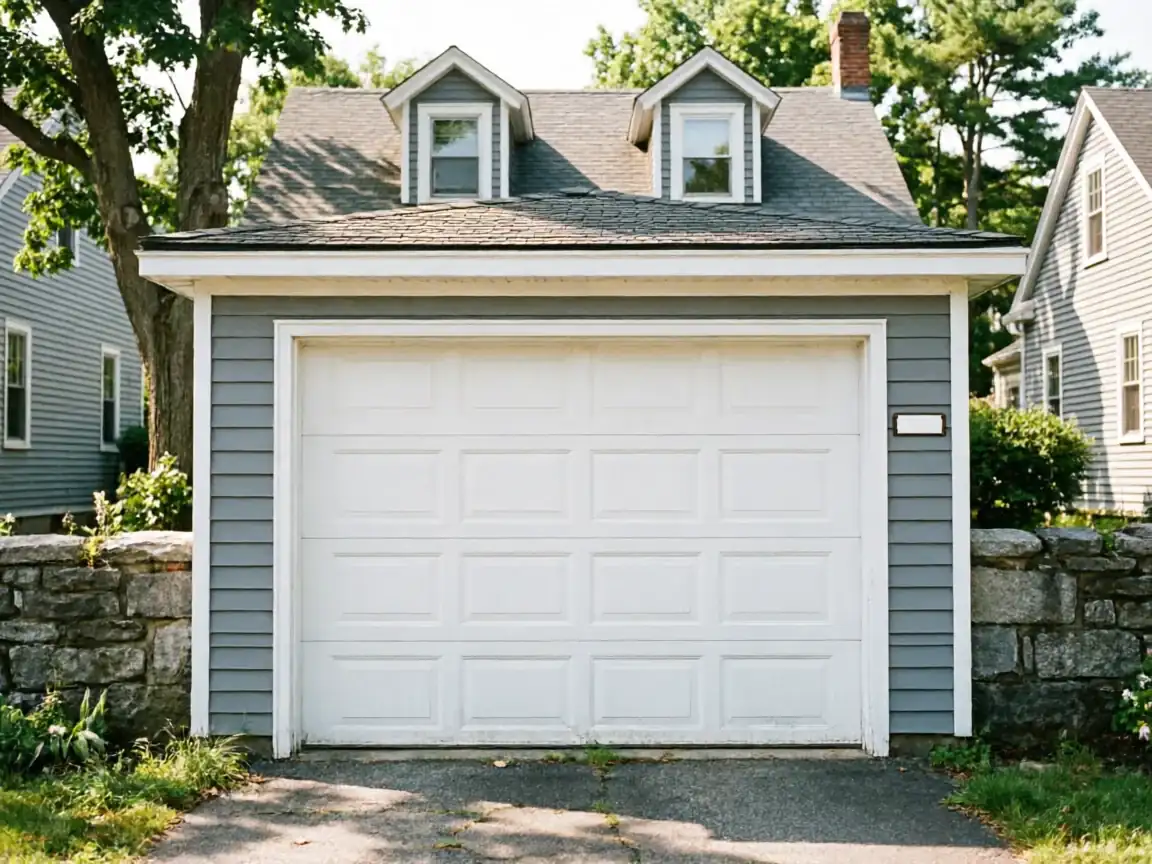
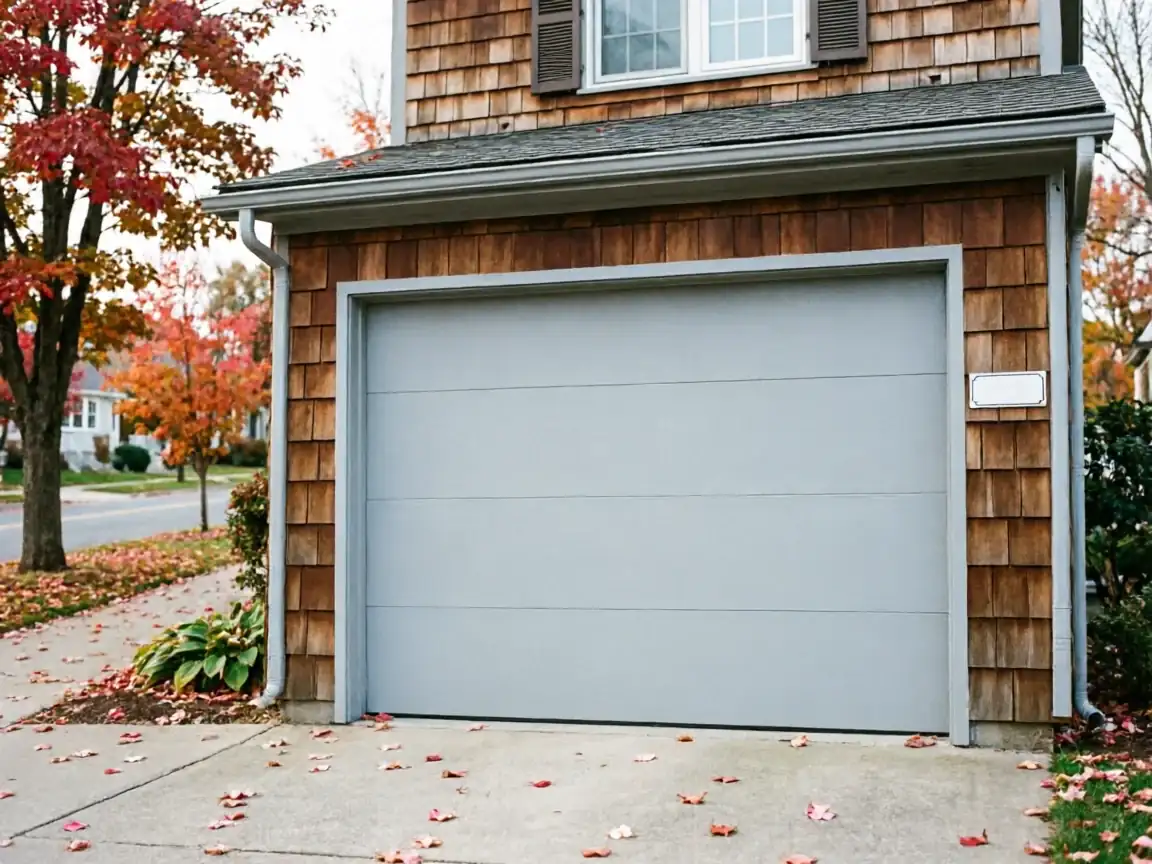
Most houses on this side of Frederick County went up around 1998
Nearly a decade newer than the 1991 median build year across the wider service area. That newer stock usually means builder-grade steel track, hung on lighter brackets than the doors in the older sections farther out. Lighter brackets hold fine on a mild day, but they're not built for repeated stress.
02
And Frederick County winters bring that stress
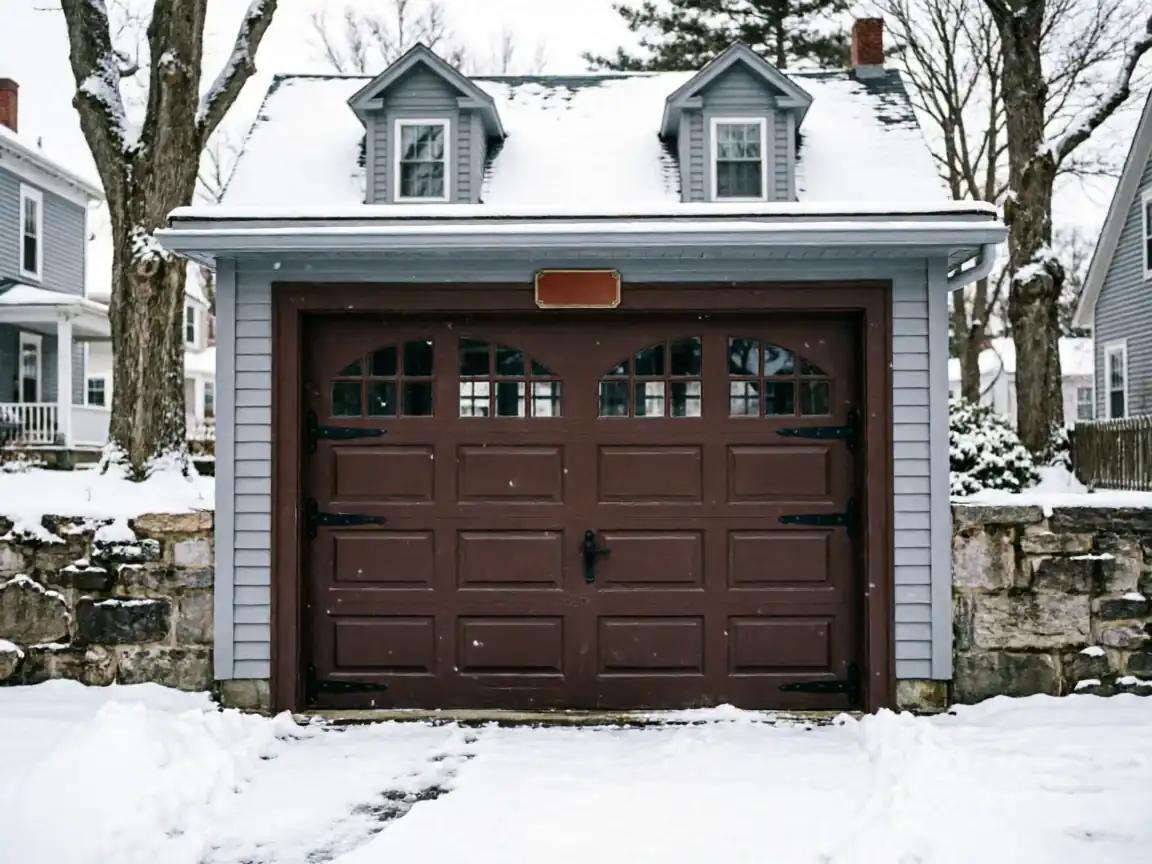
The cold here is classified as severe, with real freeze-thaw cycling through the season. Water gets into the lag screws anchoring the track to the jamb, freezes, expands the wood fiber, thaws, and loosens the hold a little more each time. After a few winters the bracket shifts a fraction of an inch. That's enough for a roller to walk off the lip of the track on a cold morning when the steel has contracted and the tolerances are already tighter than usual. It's rarely one dramatic event - it's a slow give that ends with the door jumping track on the one day you need it to open.
How We Fix It
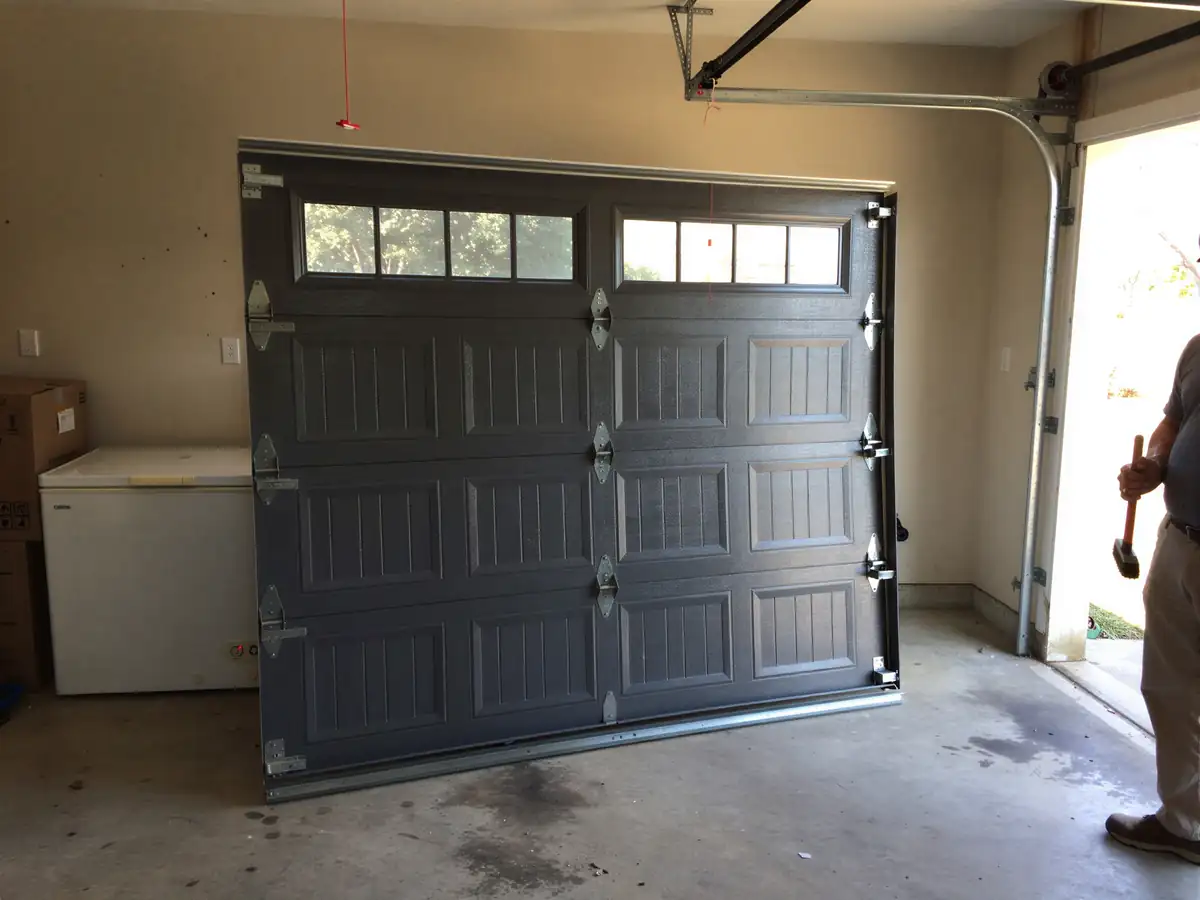
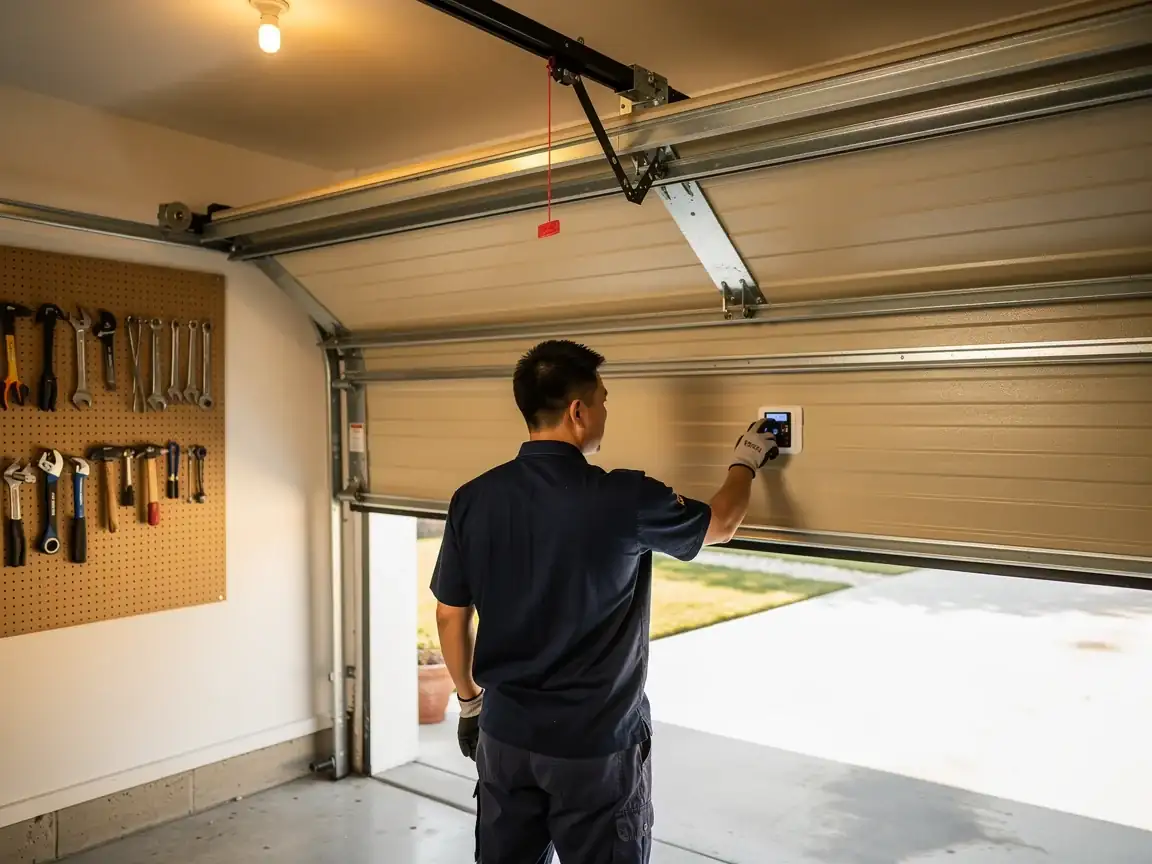
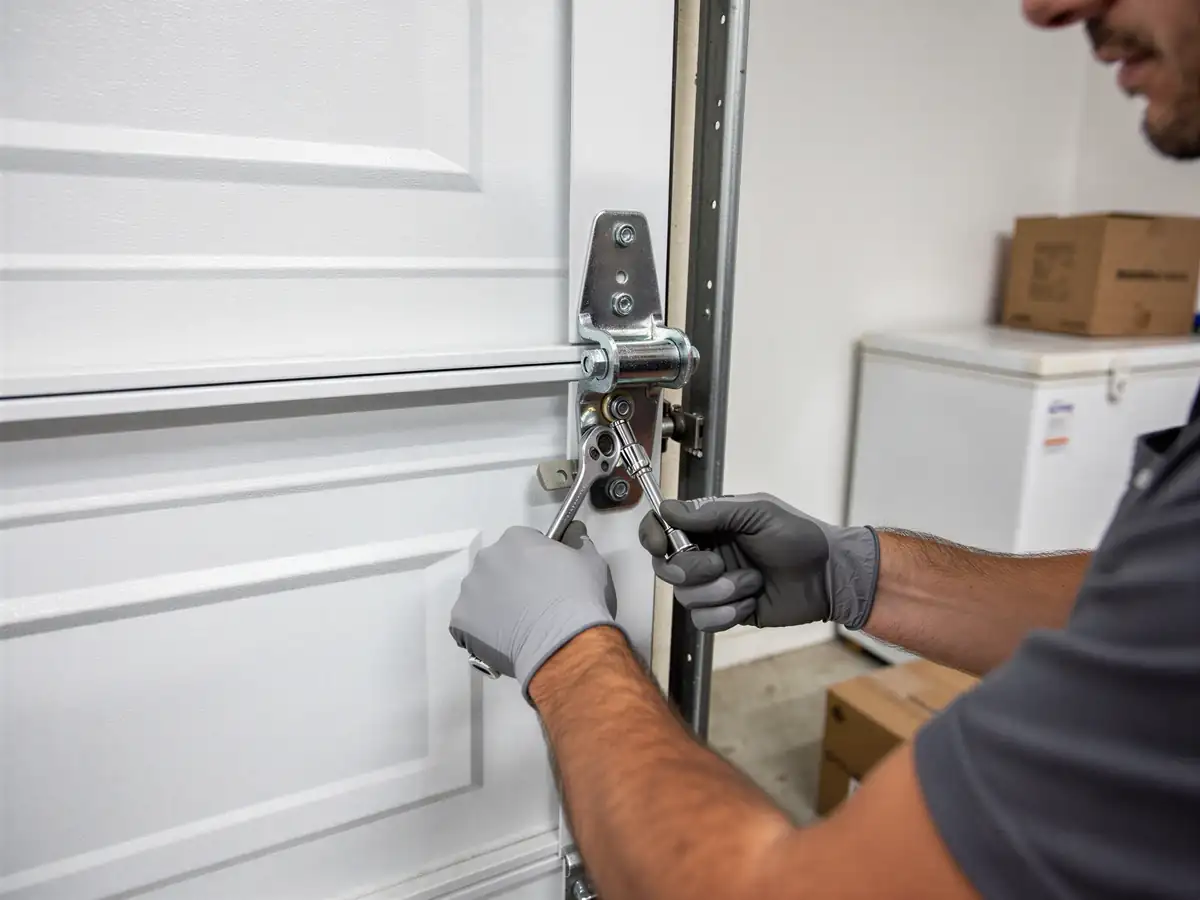
We start by checking whether the track itself is bent or just misaligned - those are two different repairs and it matters which one you have. A door that's merely off its track from a loose bracket usually goes back on with the track re-set, the bracket re-anchored into solid wood, and the roller path checked for square on both sides.
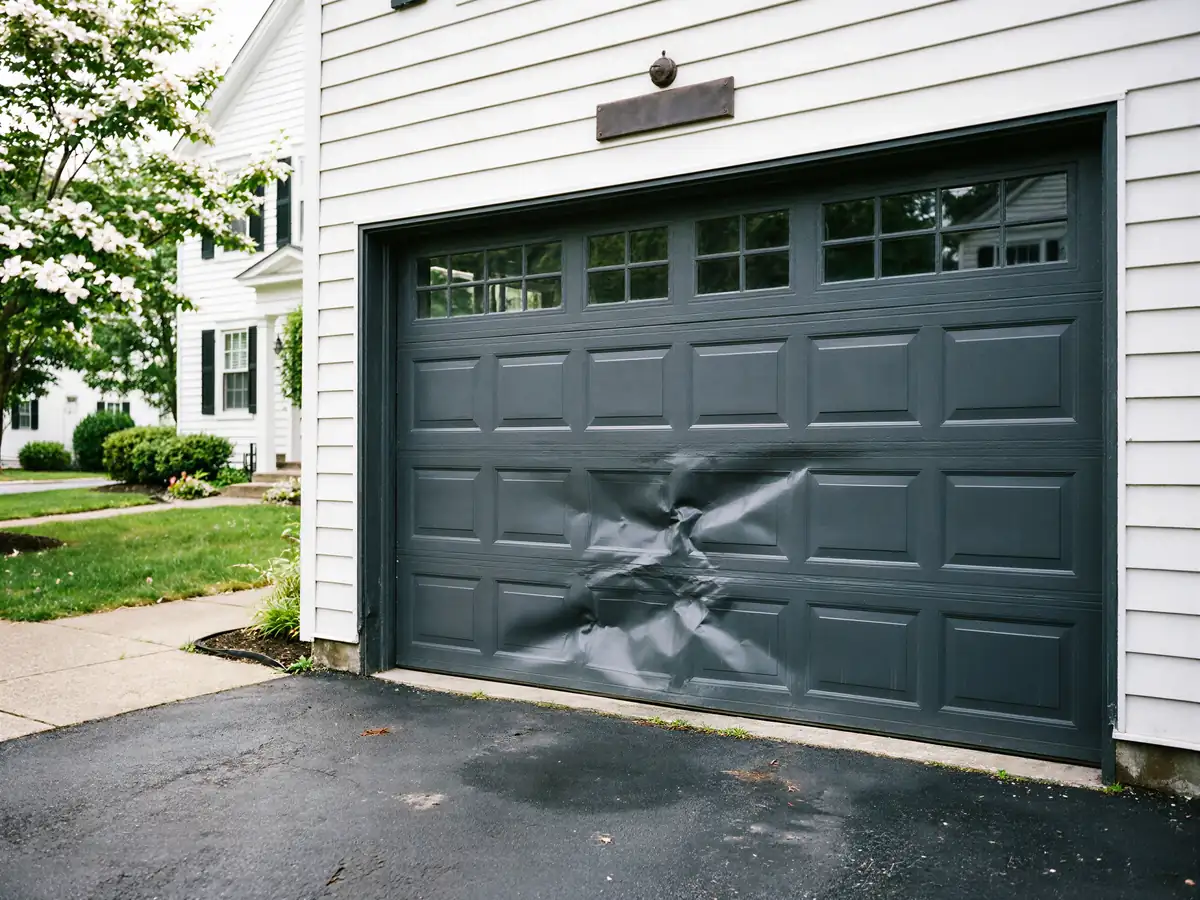
If the track is bent - which happens when a door gets forced back onto a track that's already out of alignment, or when something hits it - that section gets replaced rather than bent back. Bent track that's hammered straight looks fine and fails again within a season.
We travel out from Frederick to reach Middletown, about six miles, so the visit gets scheduled rather than treated as a walk-up call. We check both tracks, not just the side that jumped, since the opposite bracket is usually under the same strain and close to going.
The Symptom
The giveaway is usually visual before it's audible: one side of the door sits higher than the other, or the door hangs at a slight angle in the opening instead of sitting flush. You might also hear a grinding or scraping sound as a roller catches the edge of the track instead of riding inside it.
Sometimes the door stops partway and won't go up or down at all - the opener senses resistance and reverses or cuts out. Don't keep hitting the button. Running the opener against a roller that's off the track puts side-load on the opener's drive mechanism and on the remaining good rollers, and that's how one off-track incident turns into a cracked panel or a snapped cable.
Doing It Yourself
01
You can safely check a few things before calling anyone
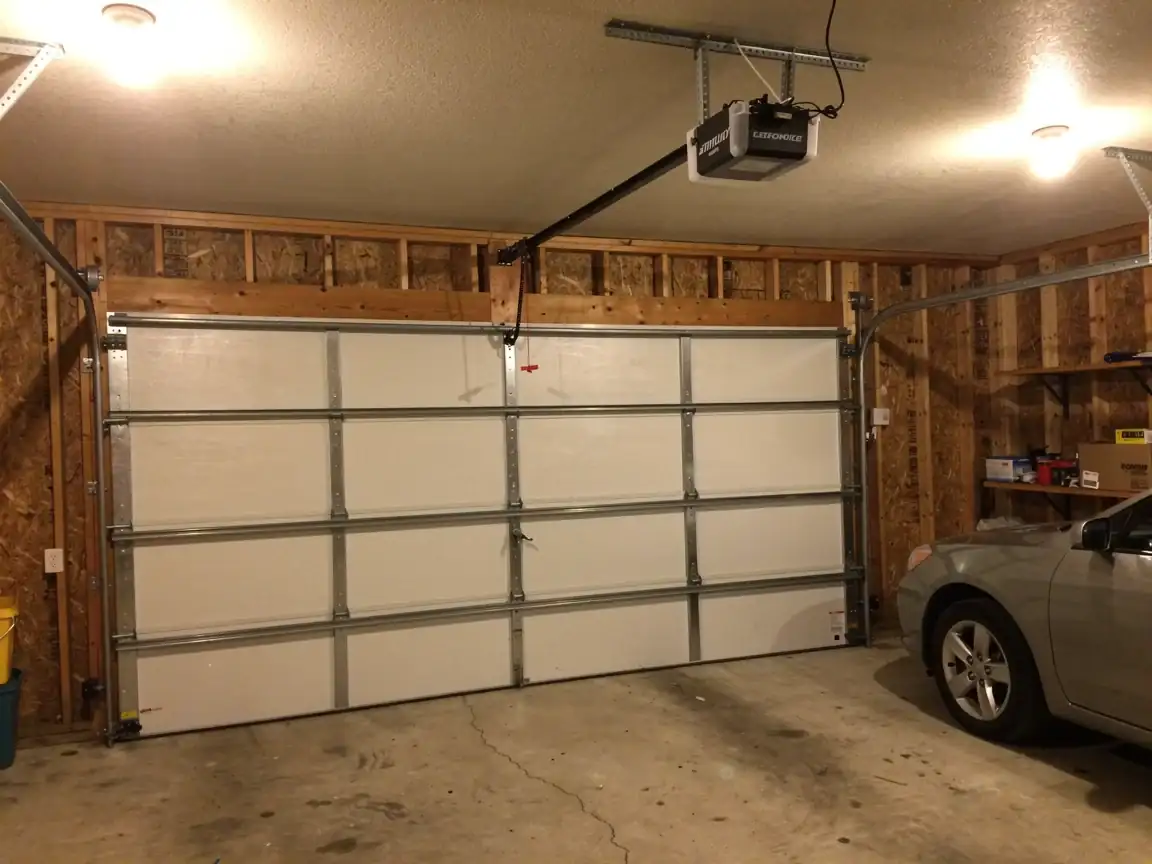
Look at the bottom brackets where the track meets the floor - if they've visibly pulled away from the frame, that tells you the fix involves re-anchoring, not just nudging the door back. You can also look along the track for a kink or a flat spot; a track that's visibly bent needs replacing, not adjusting.
02
What you shouldn't do yourself
Try to force the door back onto the track while it's under spring tension, or disconnect the opener and manually lift a door that's partially off-track. The cables and springs on a door in this state are carrying load unevenly, and that's exactly the setup that causes a cable to whip or a spring to let go under the wrong angle. This is the one honest limit we'll put on it - track and alignment work is not a weekend project, even for a handy homeowner.
What It Costs
We don't have a flat number to quote here without seeing the door - a simple re-track-and-realign job costs a lot less than a bent track section that needs replacing on both sides, and double doors run more hardware than single doors. What we can tell you is what drives the number up: how many brackets pulled loose, whether the track itself needs replacing versus re-anchoring, and whether the rollers themselves are worn enough to replace while we're in there anyway. We'll give you the actual figure after we look at it, not before.
How Long It Takes
A straightforward off-track repair - re-set the track, re-anchor the bracket, check both sides for square - is usually a single visit. If a section of track needs replacing, that adds time but it's still typically done in one appointment once the tech is on site; track sections aren't a special-order part. What affects scheduling more than the repair itself is the trip out from Frederick, about six miles to Middletown, so the appointment window gets set when you call rather than promised as a drop-in. We'd rather tell you a real window than guess.
How it works
From “it’s stuck” to “it’s fixed”
01
Tell us what’s wrong
Describe the symptom - won’t open, loud bang, opener runs but the door won’t move.
02
On-site diagnosis
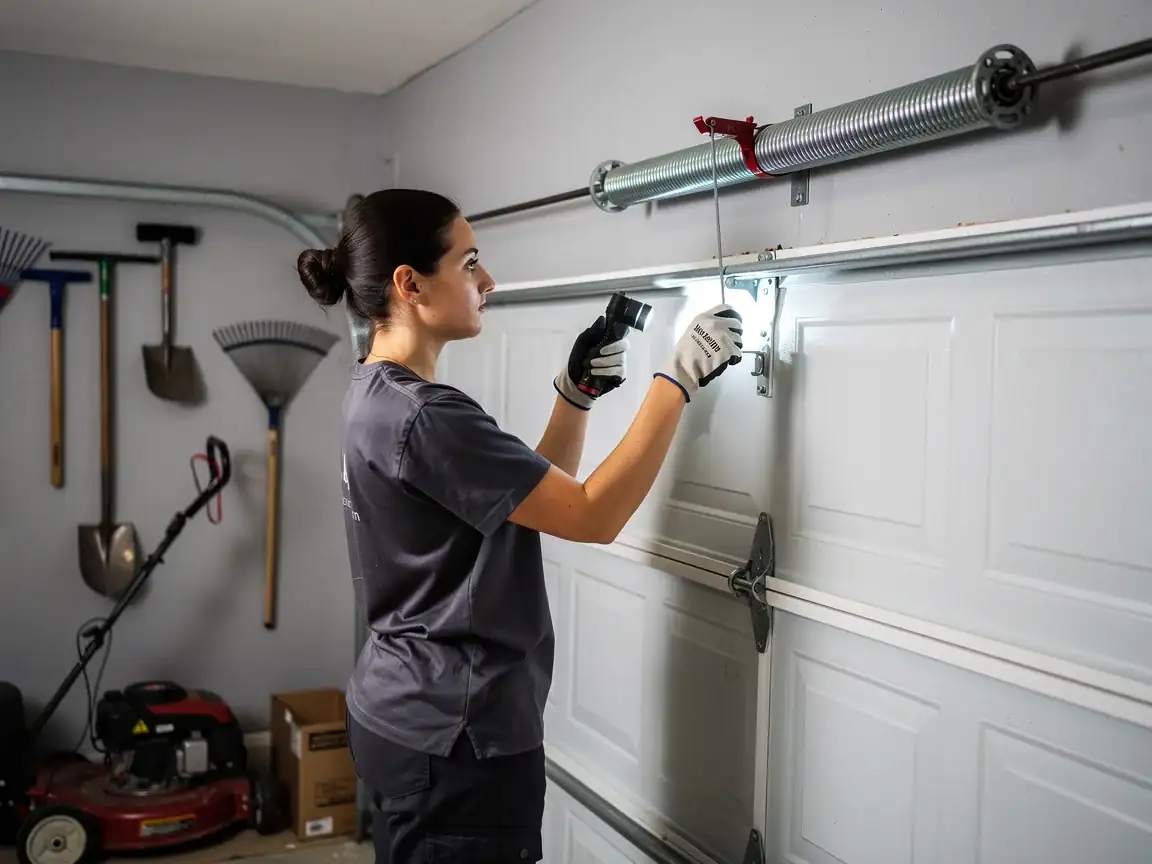
A technician tests the door under power and by hand and finds what actually failed.
03
Clear, up-front plan
You get the fix that’s needed and what drives the cost - before any work starts.
04
Repaired & tested
The repair is done, the door is set true and tested, and the work area left clean.
Not sure which repair your door needs in Frederick, MD? Describe what it’s doing - every job starts with a diagnosis.
Straight answers about garage door repair in Frederick. Still unsure? Ask us directly.
Why did my garage door come off the track in the first place?
In homes around Middletown, built mostly in the 1990s, the common cause is a track bracket that's slowly worked loose from freeze-thaw cycling over several winters. Combined with lighter builder-grade track hardware, it doesn't take much - a cold morning with contracted steel is often when a roller finally slips off the lip.
Can I just push the door back onto the track myself?
No. If the door is off-track, the springs and cables are likely under uneven tension, and forcing it back manually is how a cable snaps or a spring releases unexpectedly. Leave the door where it is, don't run the opener against it, and get it looked at before touching the track.
Does Frederick Garage Door Pros have a location in Middletown?
No, we work out of Frederick and travel the roughly six miles to reach Middletown for calls. There's no branch here, so appointments get scheduled for the trip rather than offered as a same-hour walk-up.
Will a bent track ever just need straightening instead of replacing?
In practice, no - a track that's been bent and hammered straight tends to fail again within a season because the metal's been work-hardened at the bend point. We replace the bent section rather than reshape it, which costs more up front but holds.