Garage Door Repair for Walkersville's 1980s Housing Stock
Walkersville homes went up mostly around 1987, which means steel doors on extension springs that are now past their design life. We come from Frederick, 4 miles out, to fix them.
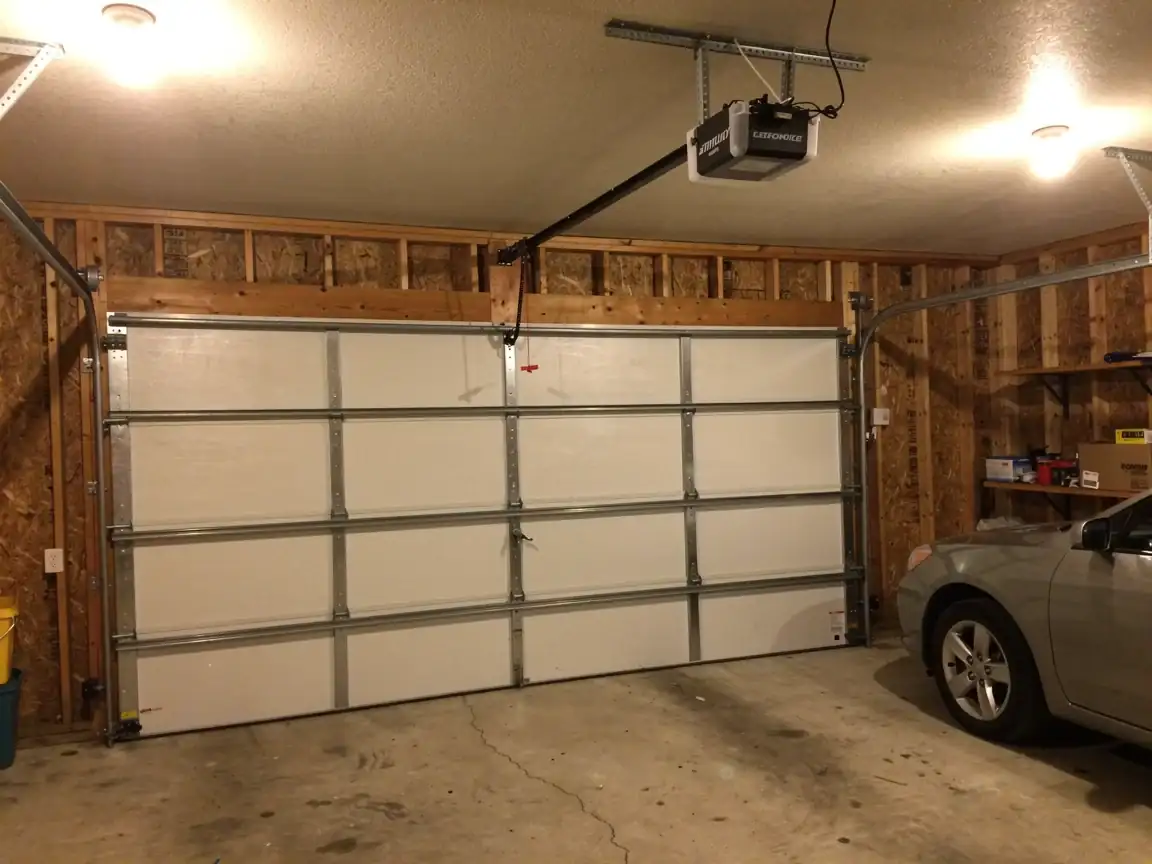
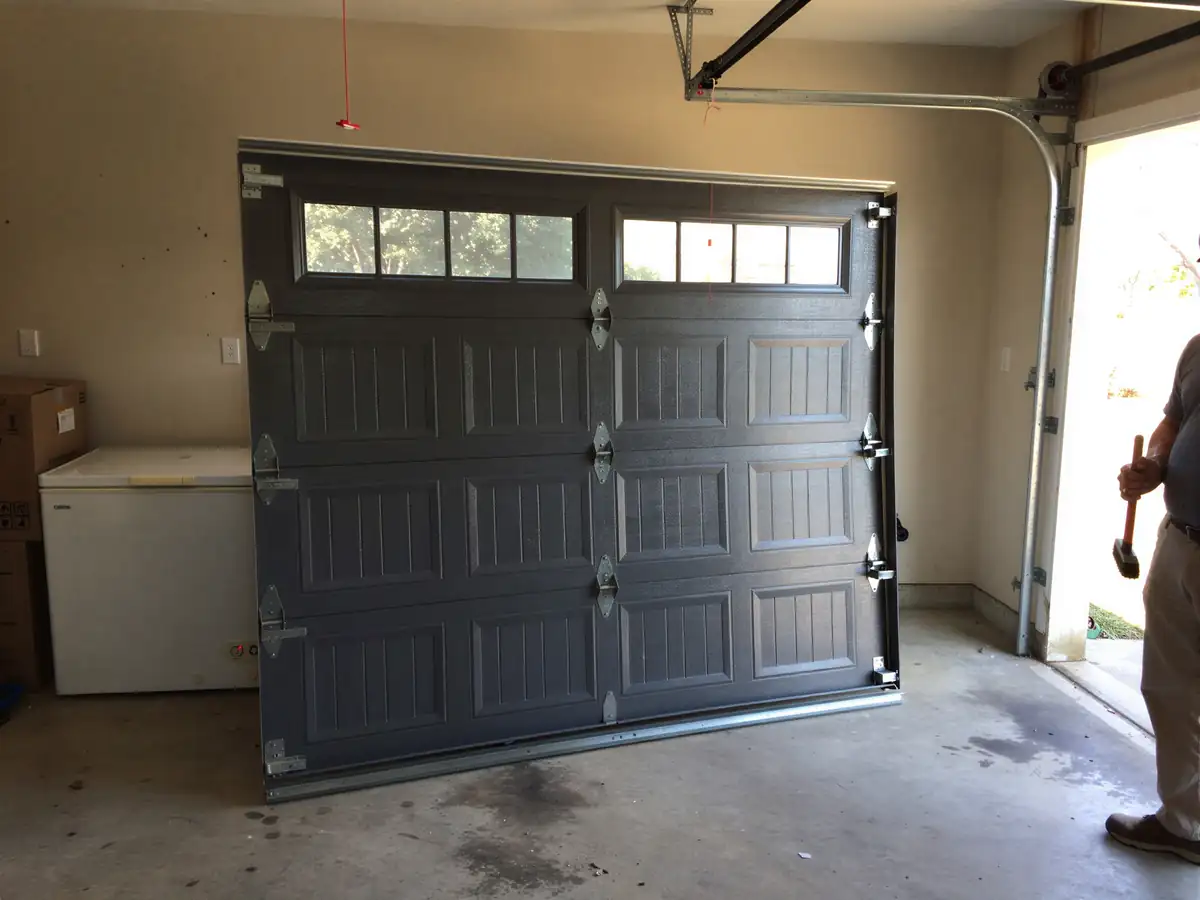
Most garage doors in Walkersville sit on houses built around 1987, give or take a few years either side. That means you're almost always looking at a steel sectional door, 16 feet wide for a two-car garage, hung on a pair of extension springs rather than the torsion setup that became standard in newer builds. These doors were built light for their era and the steel gauge is thinner than what goes up today. After three decades the symptom is predictable: the door shudders a few inches off the floor then stalls, or one side drops faster than the other because one extension spring has stretched out or snapped while its twin is still holding. Rollers on these doors are usually the original nylon, and by this age they've worn enough to bind in the track, which is a second failure riding along with the spring problem. Because Walkersville sits in a cold-climate zone with real winter swings, the steel panels themselves can warp slightly at the seams over the years, which throws off how evenly the door sits on its track even before a spring lets go. If your door is groaning before it moves, or moving unevenly, that's the spring and roller combination from this era talking, not a one-off fluke.
What It Costs
We don't have a Walkersville-specific price list to quote you here, and giving you a number without seeing the door would be a guess, not a fact. What we can tell you is that extension spring replacement on a 1980s-era door is usually a smaller job than the torsion spring work you'd see on a newer build, because the hardware is simpler. Roller replacement often gets bundled in on a door this age, since if one roller's worn the rest are close behind it. Household income in this part of the service area runs well above the regional median, and we mention that only because it tends to mean owners here choose full roller and hinge replacement alongside the spring fix rather than patching the one broken part - it's a judgment call based on what the door needs, not what it costs.
Doing It Yourself
An extension spring under tension can put you in the hospital if it lets go while you're working on it, and on a door this old you often can't tell how much life is left in the spring until you're already loading it. That's not a scare line, it's why we don't walk homeowners through spring swaps over the phone. Where you can do your own work: lubricating the track and hinges, tightening loose bolts on the track brackets, and checking that the photo-eye sensors near the floor are clean and aligned. If the door is binding only on one side, a quick look at whether the track has pulled away from the frame is worth five minutes before you call anyone. Past that - springs, cables, anything that moves the door under load - leave it alone.
How Long It Takes
We're coming from Frederick, about 4 miles out, so travel time to Walkersville is short and doesn't add meaningfully to the job. The repair itself, once we're on site, is usually the longer part of the visit on a door this era - matching old roller tracks and extension spring hardware sometimes takes an extra few minutes of fitting that a newer standardized door wouldn't need. We don't carry a fixed response-time promise to quote you, since that depends on the day's schedule, but the drive itself isn't the bottleneck here.
How We Fix It
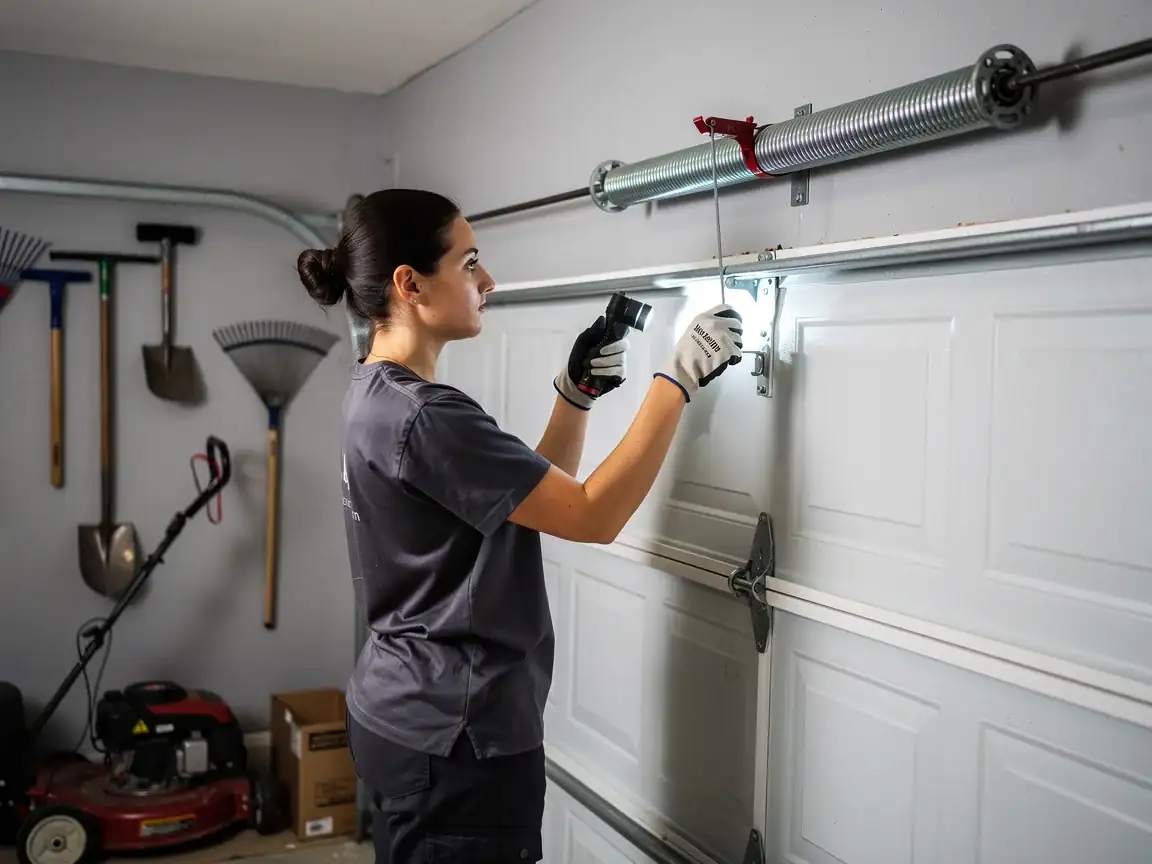
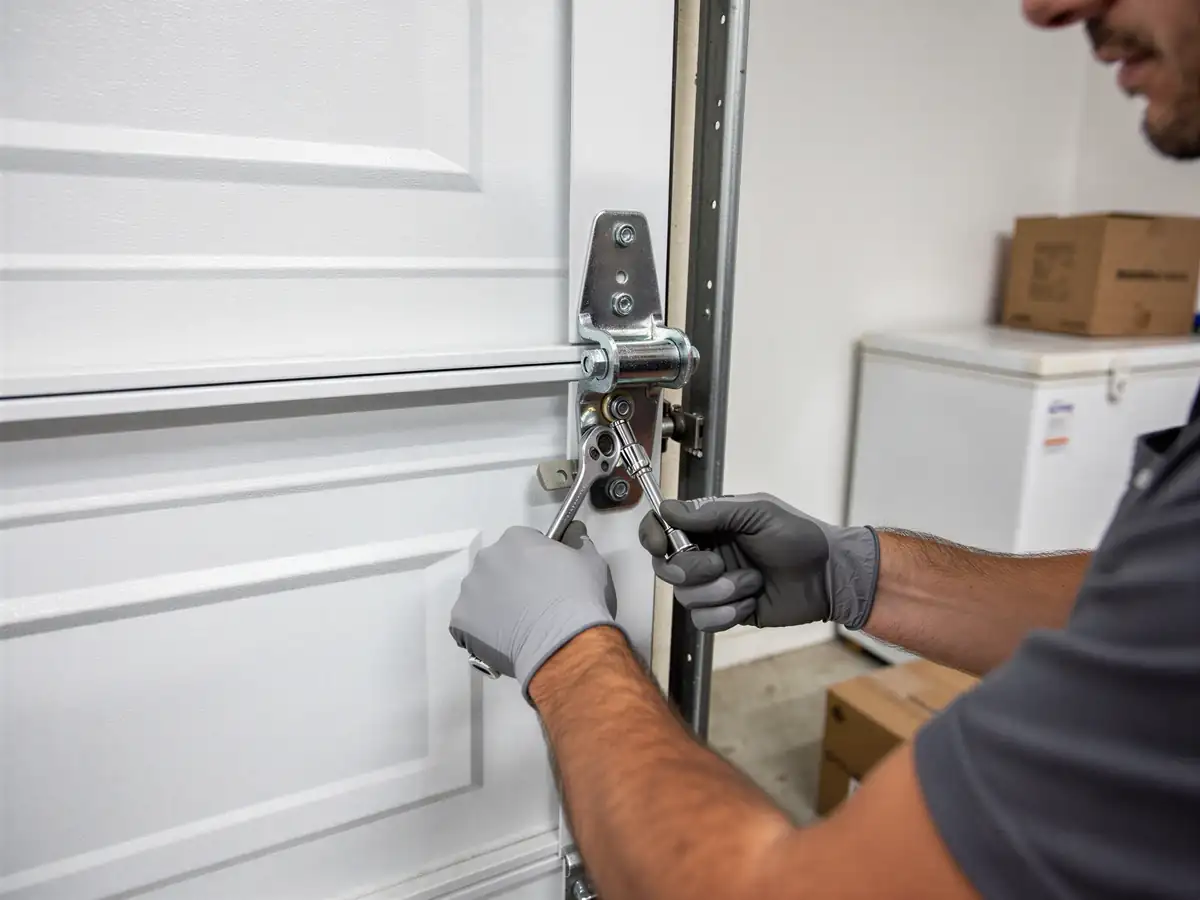
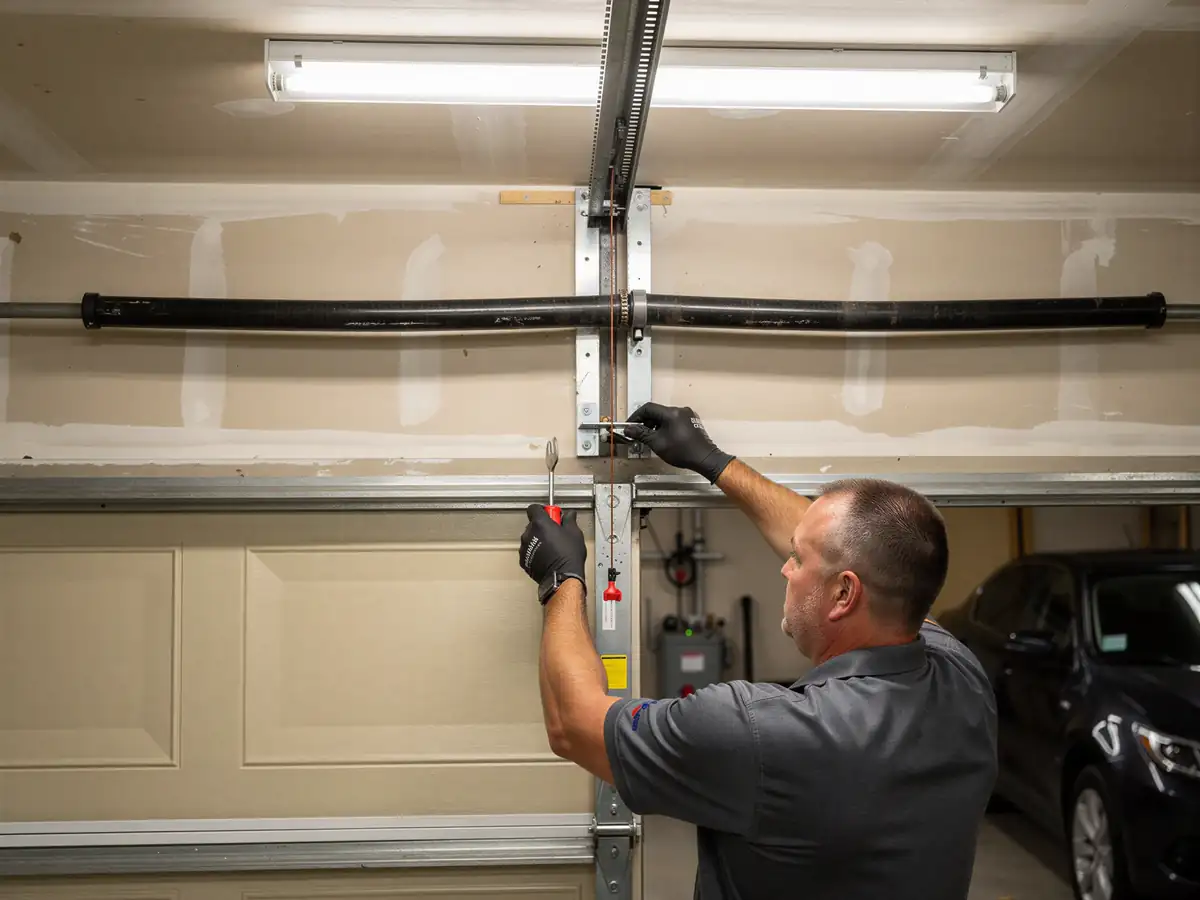
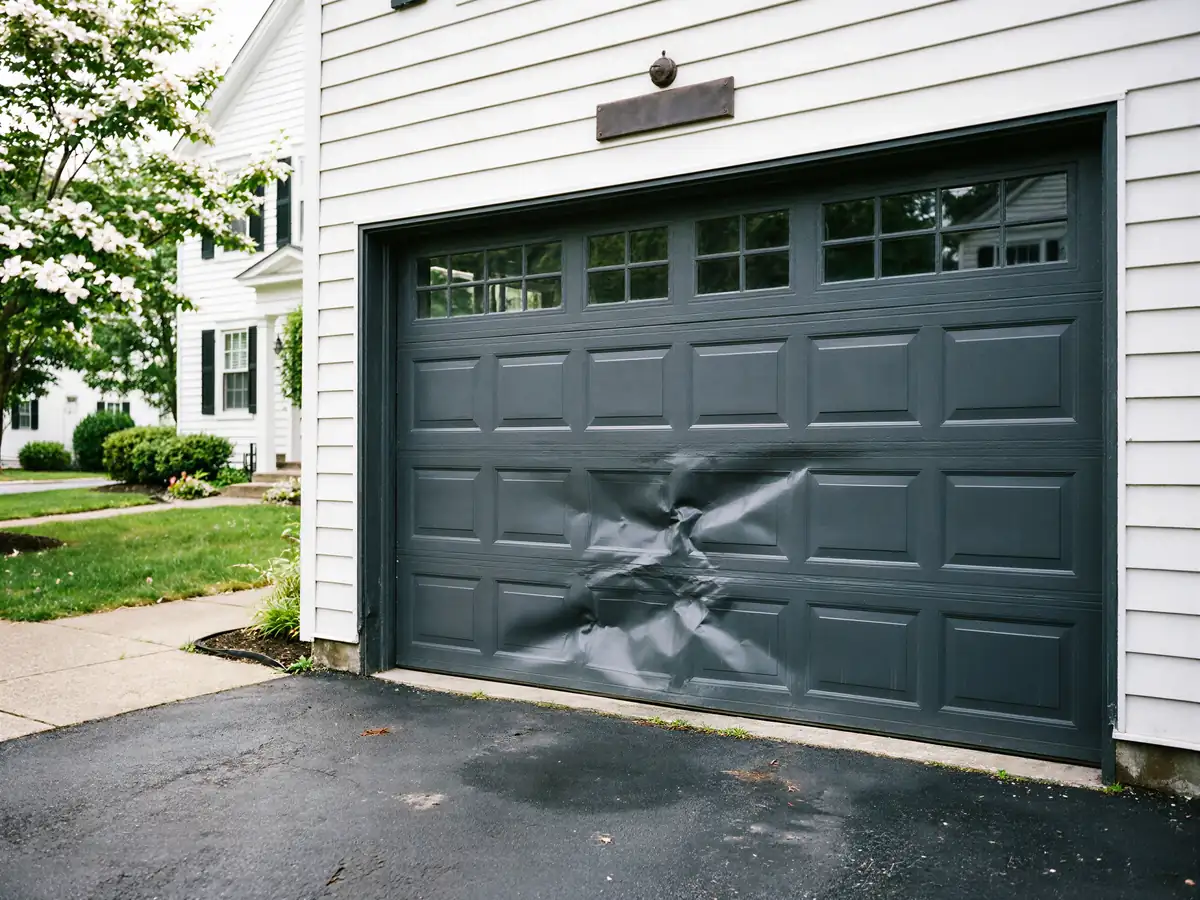
On a Walkersville door from this era, we start by checking both extension springs even if only one has visibly failed, because if they went up together they tend to wear out together. We replace in pairs on these jobs rather than patching one side, since a mismatched pair just means you're back out here in a year for the other one. Rollers get swapped to steel or sealed nylon depending on what the track can take, and we check the track alignment against the frame while everything's open, since steel panels from this age can have shifted slightly over the decades. If the panels themselves are warped beyond what hardware can fix, we'll say so plainly - a door with cosmetic rust pitting or minor warp usually isn't worth replacing, but a door that won't sit flat on the floor seal anymore is a different conversation, and we'll tell you which one you've got before we touch a wrench.
How it works
From “it’s stuck” to “it’s fixed”
01
Tell us what’s wrong
Describe the symptom - won’t open, loud bang, opener runs but the door won’t move.
02
On-site diagnosis
A technician tests the door under power and by hand and finds what actually failed.
03
Clear, up-front plan
You get the fix that’s needed and what drives the cost - before any work starts.
04
Repaired & tested
The repair is done, the door is set true and tested, and the work area left clean.
Not sure which repair your door needs in Frederick, MD? Describe what it’s doing - every job starts with a diagnosis.
Straight answers about garage door repair in Frederick. Still unsure? Ask us directly.
Why does my door shake so much when it opens?
On a Walkersville house from the late 1980s, that's almost always worn rollers riding in a track that's seen three decades of use, sometimes paired with an extension spring that's lost tension. The shake gets worse right before a spring fails outright, so it's worth having it looked at rather than waiting.
Do you have a local branch in Walkersville?
No - we run out of Frederick, about 4 miles from Walkersville, and travel out for every job. There's no separate branch here, just a short drive.
Is it worth replacing the whole door instead of fixing it?
Depends on the panels. If they're still sitting flat and the steel isn't warped, a spring and roller job gets you years more use. If the panels have shifted enough that the door won't seal against the floor anymore, replacement usually makes more sense than chasing repairs.