Opener Installation for Walkersville's 1987-Era Garages
Walkersville homes went up around 1987, mostly on original chain-drive openers. We install from Frederick, 4 miles out, with openers built for cold-climate garages.
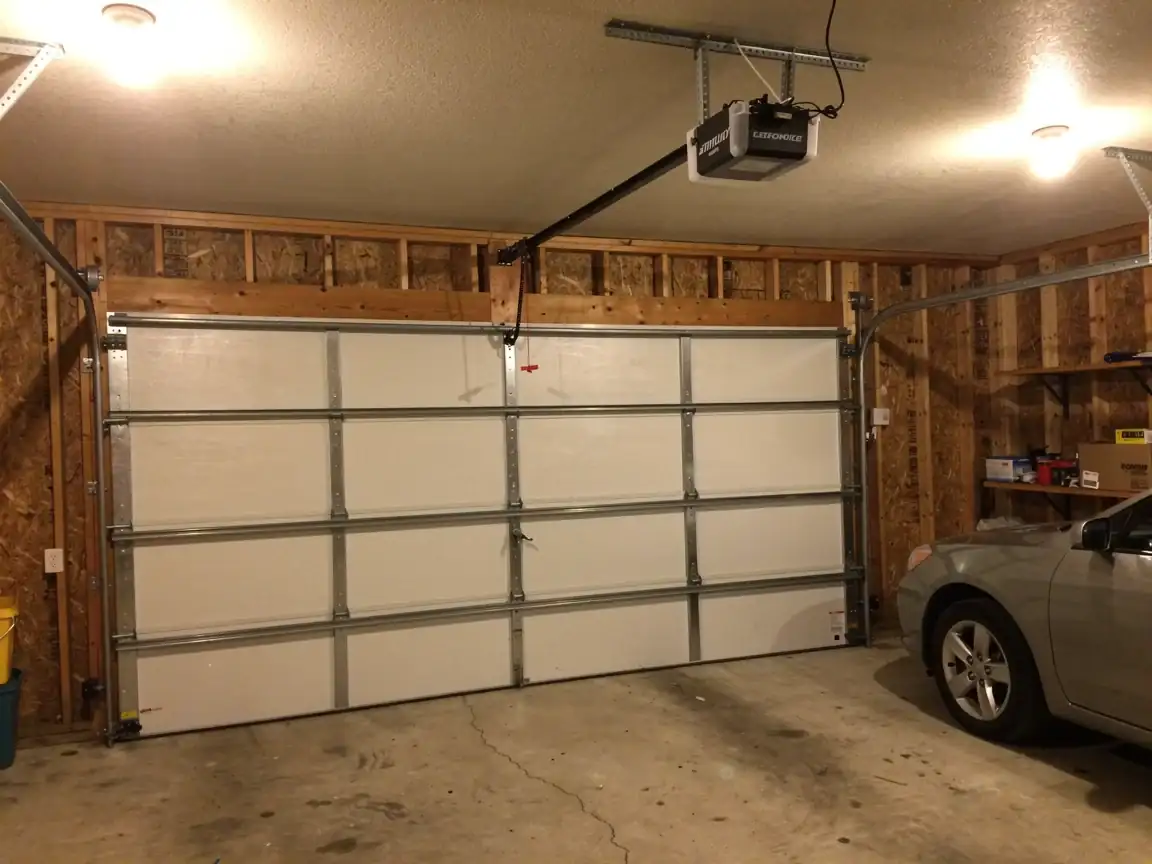
Walkersville's median household income sits at $137,218, well above what most people assume for a town this size, and it shows in how homeowners here treat a failing opener. They don't wait for it to strand a car in the driveway. The symptom usually starts small: the opener groans before it moves, the remote works from ten feet but not from the car, or the unit runs through its full cycle but the light never comes on. Most houses in Walkersville were built around 1987, which puts a lot of original chain-drive openers at 35+ years old. Those units predate the rolling-code remotes and photo-eye safety sensors that are now standard, and the circuit boards in them were never designed to run this long. Cold winters make it worse - old grease on a worn rail thickens, gears bind, and a motor that used to handle it fine starts tripping its own overload protection every time the temperature drops. If your opener hesitates on cold mornings and runs fine by afternoon, that's not a fluke, that's the symptom of a board at the end of its life.
What It Costs
With median income here at $137,218, the math for most Walkersville households tips toward replacement sooner than it would elsewhere - people aren't inclined to keep babying a board that fails once a month. We don't publish a flat price for opener installation because the job changes with the door: a standard single opener swap is a different job than one tied into a smart hub, a keypad, and battery backup for outage protection. What we can tell you is how to think about the line between repair and replace. If the opener is original to a house built in 1987, the motor, gears, and board are all past the point where a single repair buys you more than a year or two. A new unit with modern safety sensors and a backup battery is usually the better spend for a household that isn't going to call us back every winter.
Doing It Yourself
An opener swap is one of the more DIY-friendly garage door jobs, and we'll say that straight out - plenty of handy homeowners pull it off on a newer house with a standard header. Walkersville complicates that a little. Houses from the 1987 era sometimes have headers or jamb framing that wasn't built with today's opener brackets in mind, so the mounting hardware that comes in the box doesn't always sit flush without extra bracing. There's also the safety-sensor alignment, which has to be exact or the unit won't run, and the travel-limit setting, which if wrong lets the door slam down with full force. None of that is impossible to do yourself. It's just the kind of job where a half-inch of misalignment is invisible until the door comes down on something it shouldn't. If you're comfortable with a drill and a level, go for it. If the bracket doesn't sit flat on the first try, that's your sign to call.
How Long It Takes
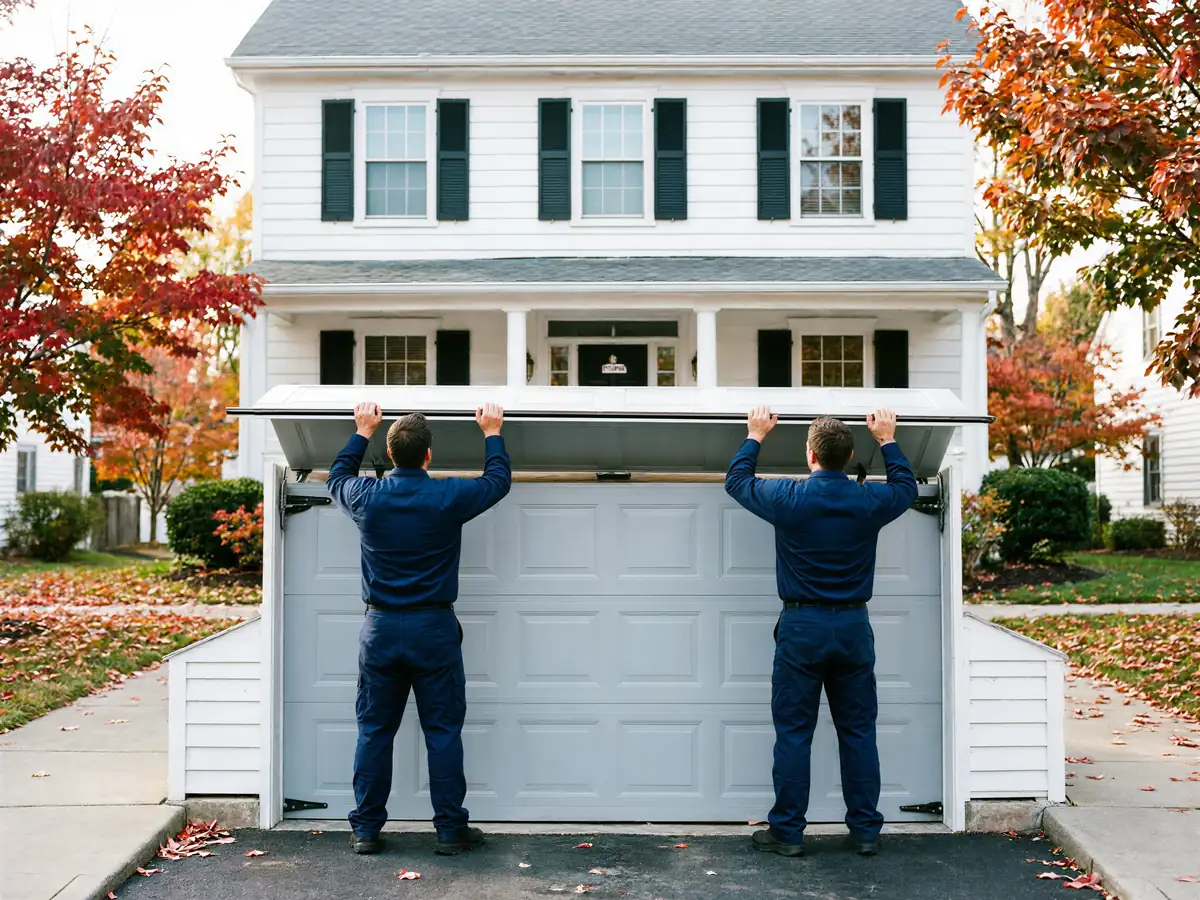
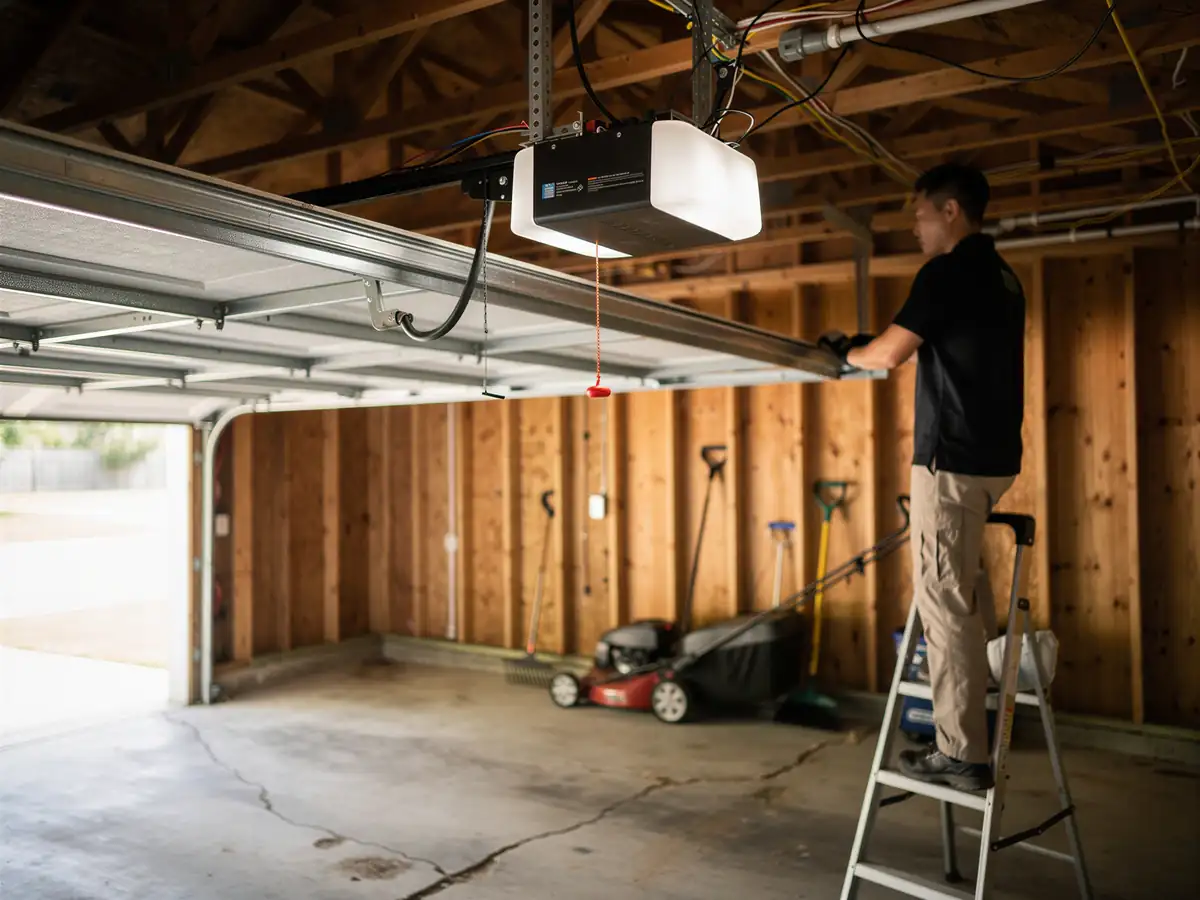
A straight swap - same mounting points, same door, new opener - is usually a half-day job once we're on site. Add a keypad, a smart hub, or battery backup, and it runs longer because we're wiring in extras, not just bolting a motor to the rail. Houses built around 1987 sometimes need extra time if the header needs reinforcing to take a modern opener bracket; we won't know that until we're standing under it. We travel to Walkersville from Frederick, about 4 miles out, so the drive itself isn't the bottleneck - the job length depends on what's actually on your ceiling, not on how far we had to come.
How We Fix It
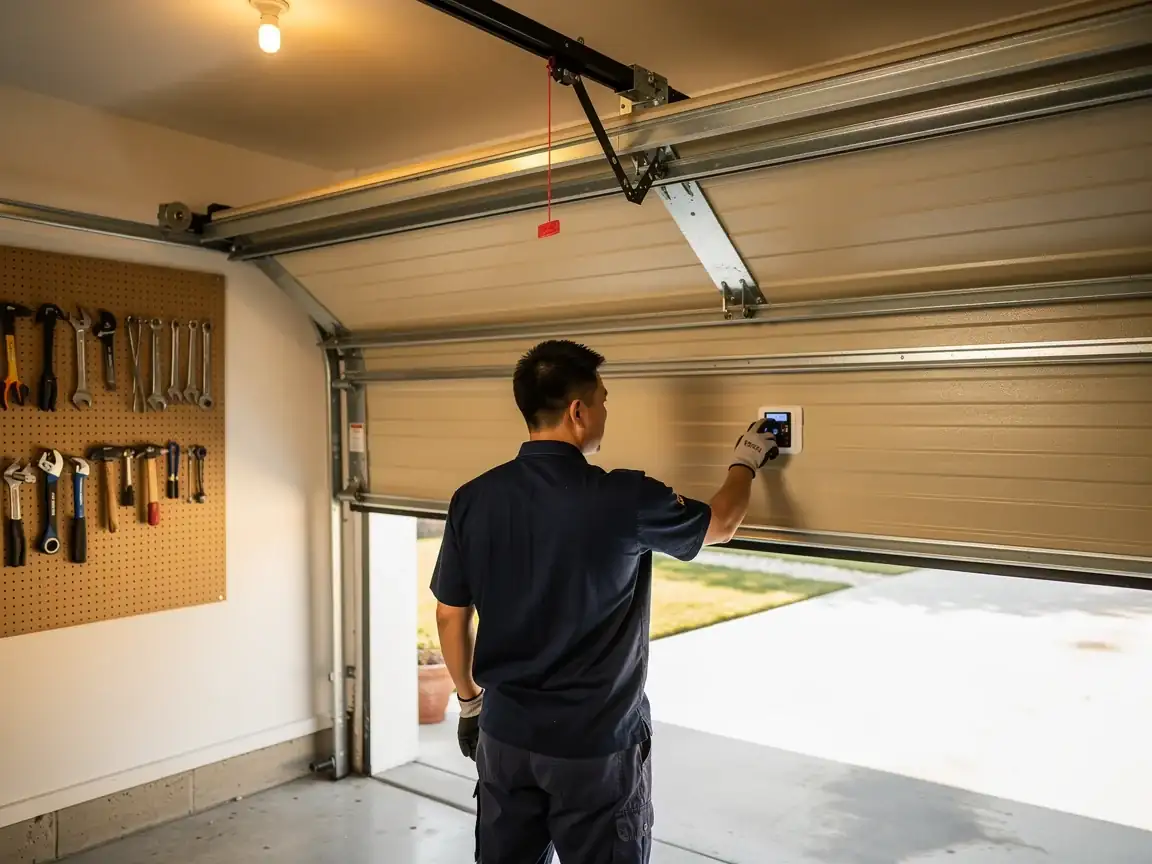
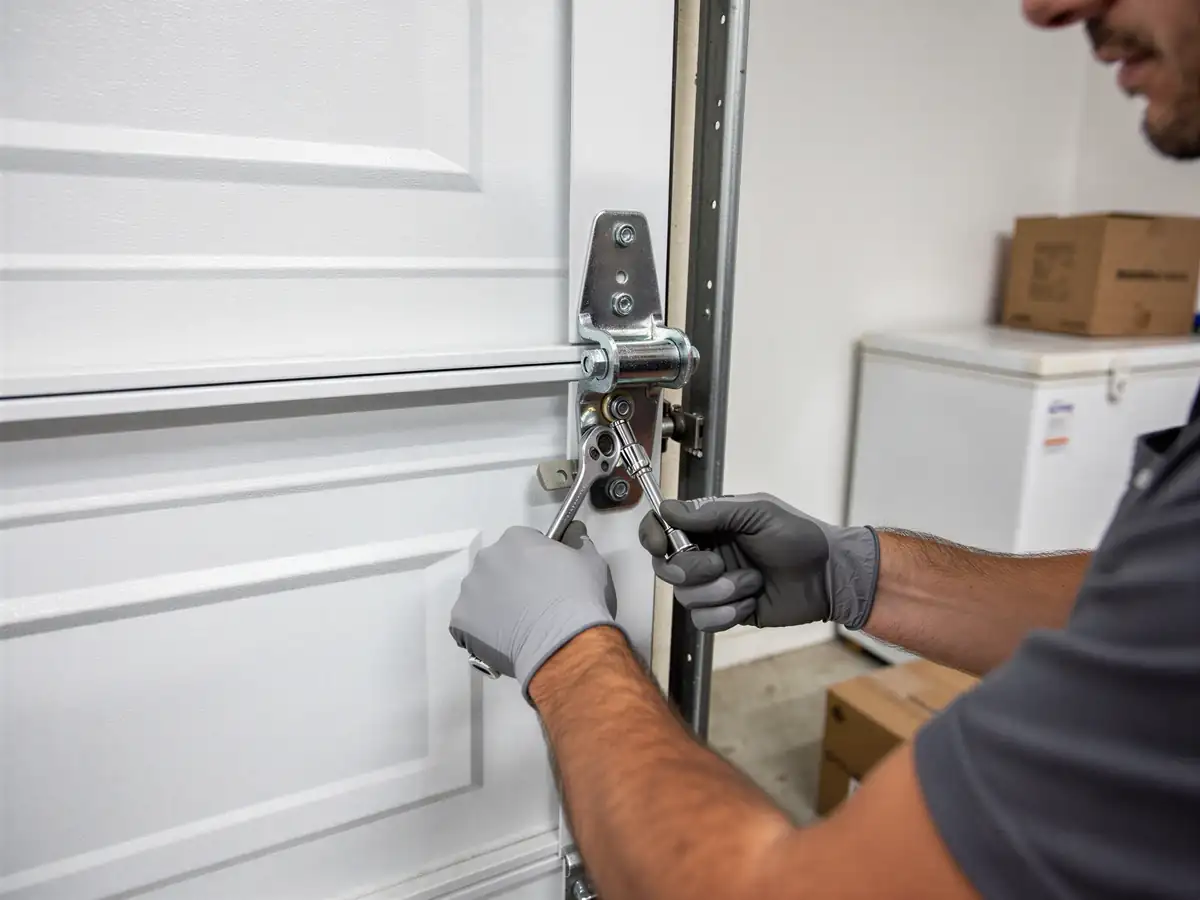
We come from Frederick, 4 miles away, with the opener already matched to what your garage needs rather than guessing on site. For Walkersville's older stock, that usually means a belt or chain unit rated for a cold-climate garage - one that won't bind up when the motor housing contracts in a hard freeze. We pull the old unit, check the header for soft wood or cracked framing before we hang anything new, and set the travel limits and photo-eye sensors by hand rather than trusting factory defaults. If your door itself is original to the house and the opener failure turns out to be a symptom of worn hardware on the door side - track, rollers, cables - we'll tell you before we button it up, not after.
How it works
From “it’s stuck” to “it’s fixed”
01
Tell us what’s wrong
Describe the symptom - won’t open, loud bang, opener runs but the door won’t move.
02
On-site diagnosis
A technician tests the door under power and by hand and finds what actually failed.
03
Clear, up-front plan
You get the fix that’s needed and what drives the cost - before any work starts.
04
Repaired & tested
The repair is done, the door is set true and tested, and the work area left clean.
Not sure which repair your door needs in Frederick, MD? Describe what it’s doing - every job starts with a diagnosis.
Straight answers about garage door repair in Frederick. Still unsure? Ask us directly.
Is it worth replacing an opener that's original to a 1987 house, or can it be repaired?
At that age, the motor, gears, and circuit board are all near the end of their service life together. A repair might buy you a year, but most Walkersville homeowners at this point choose to replace rather than keep calling. We'll look at the specific unit before telling you which way it leans.
Do you keep a truck stationed in Walkersville?
No. We work out of Frederick and come to Walkersville, about 4 miles away, for every job. There's no local depot here, so scheduling runs through our Frederick office.
Will a new opener work with my old garage door?
In most cases, yes - openers and doors are largely independent as long as the door's spring and track hardware are sound. If the door itself is original to a 1987-era house, we'll check the hardware while we're there since worn rollers or a tired spring can make even a brand-new opener struggle.
Why does my opener act up more in winter?
Cold thickens old lubricant on the rail and tightens metal tolerances in an aging motor housing, so a unit that's already near the end of its life tends to show it first on the coldest mornings. It's a symptom of age, not a separate problem.