Off-Track Doors in Ballenger Creek Run on Newer Hardware Than You'd Think
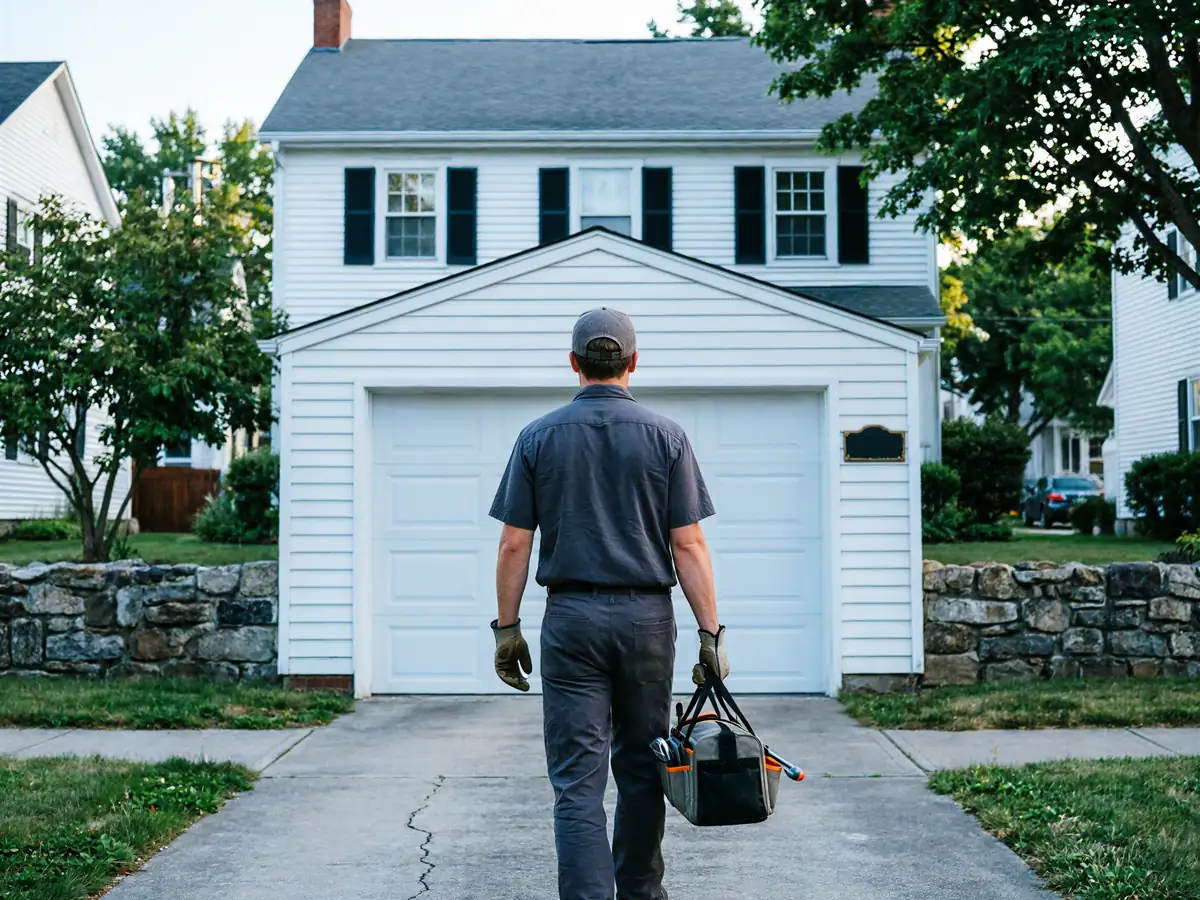
Ballenger Creek homes mostly date to 1998, later than Frederick's citywide median of 1991 - that newer stock means different rollers and track than older city doors. We come from Frederick, 4 miles out.
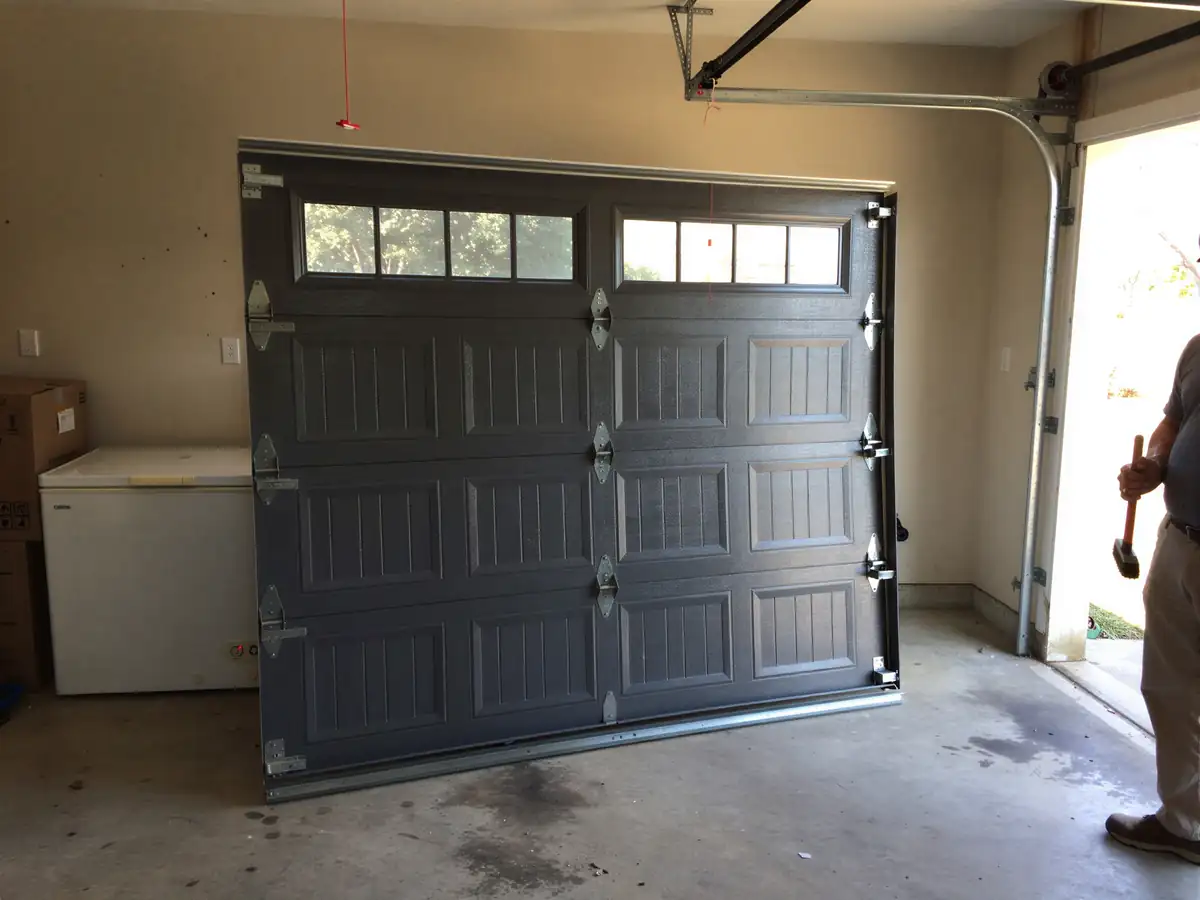
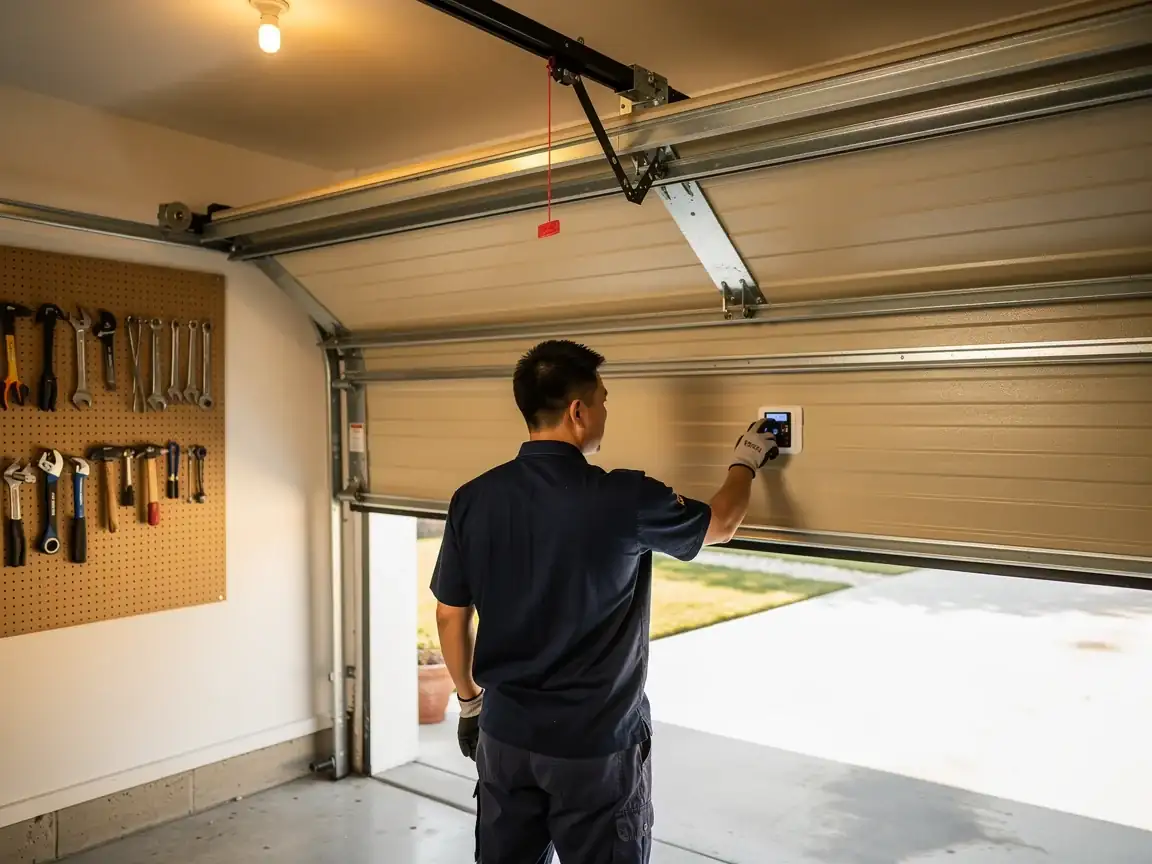
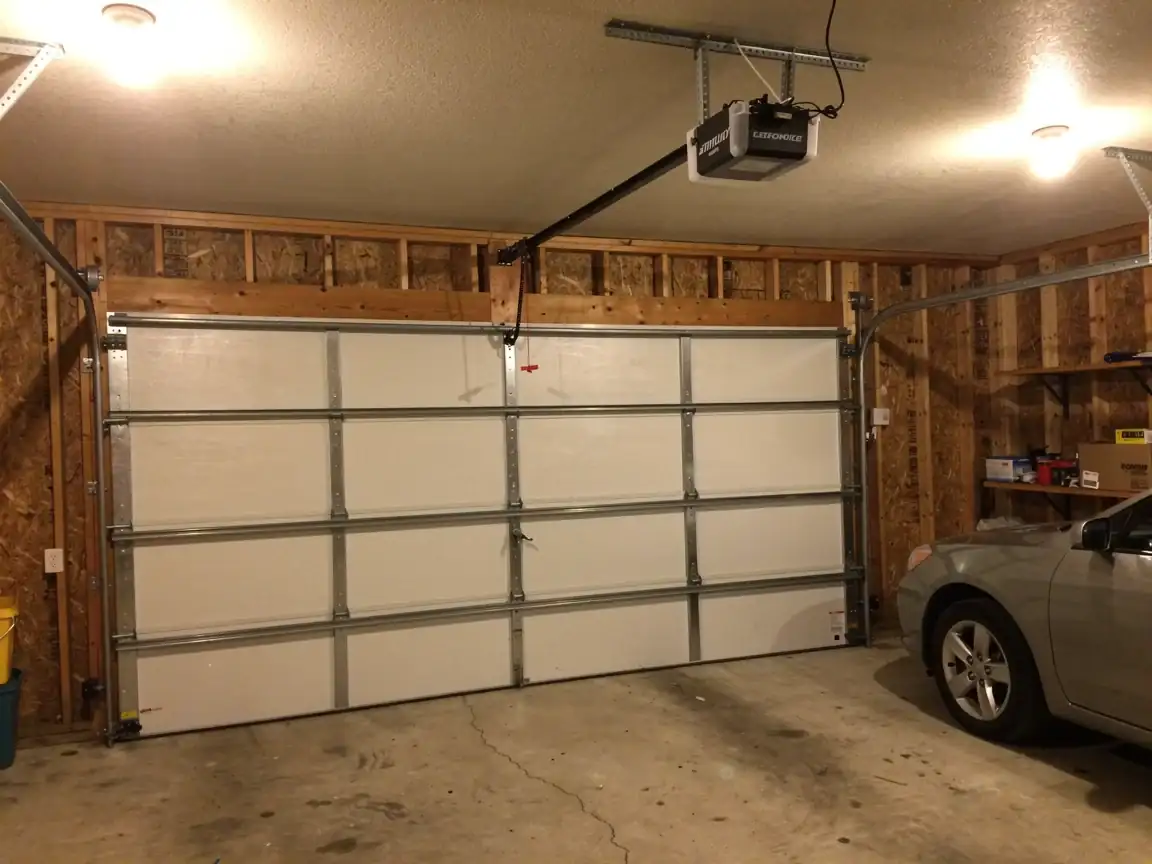
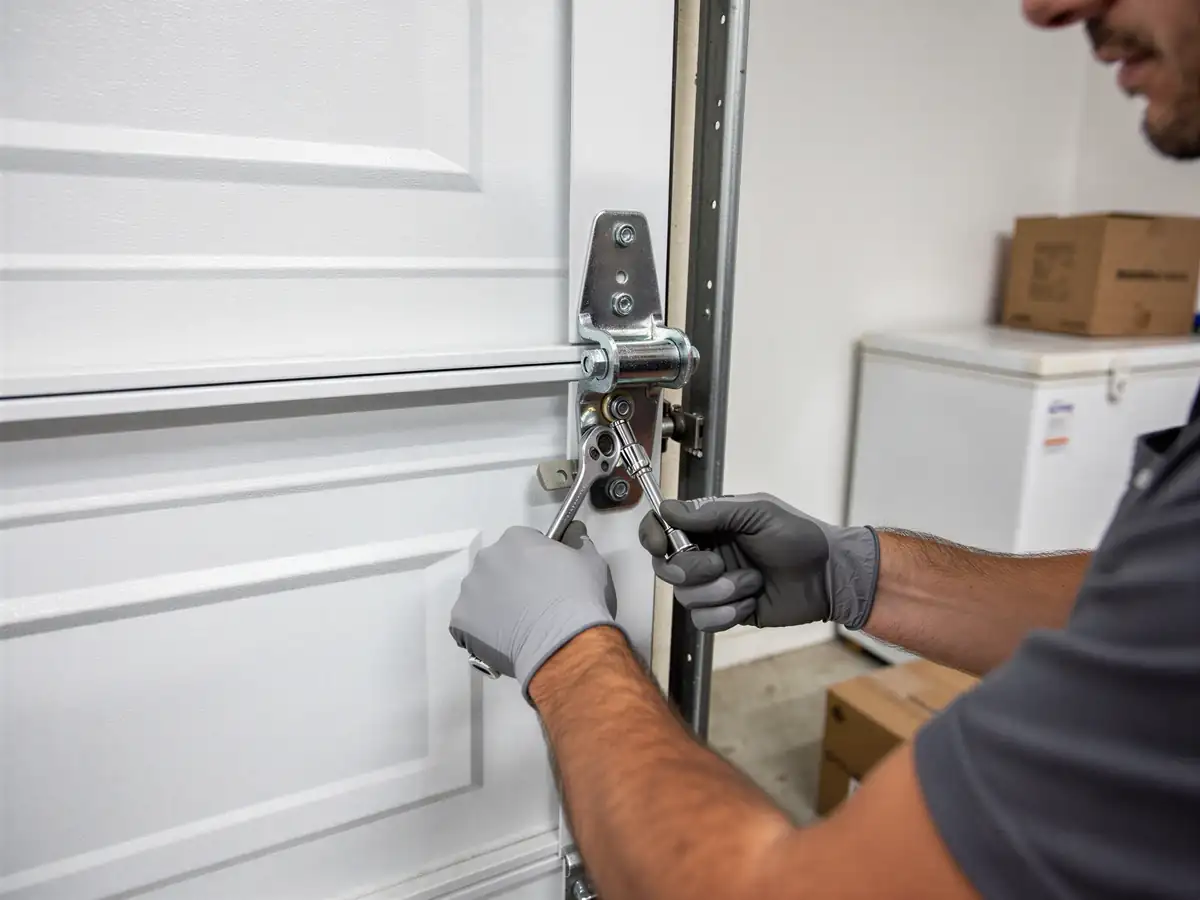
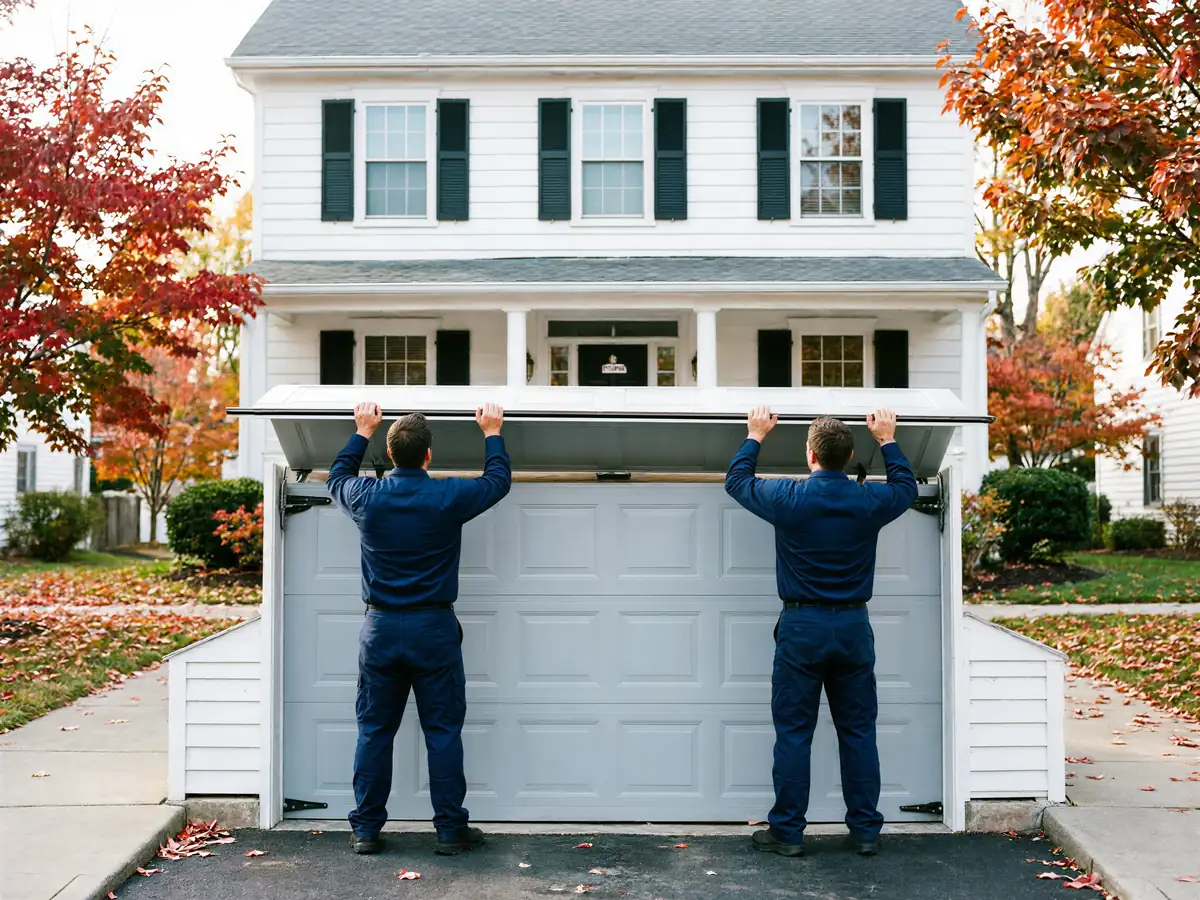
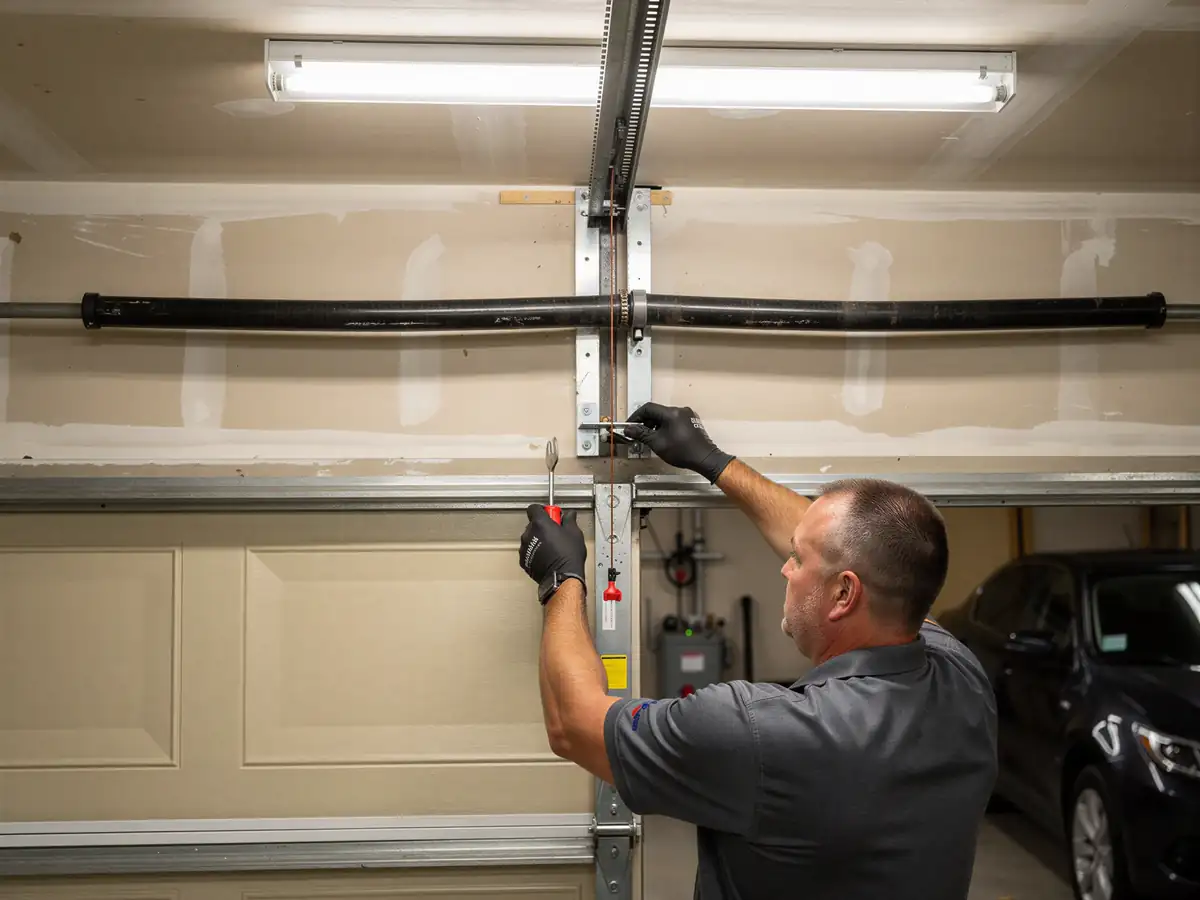
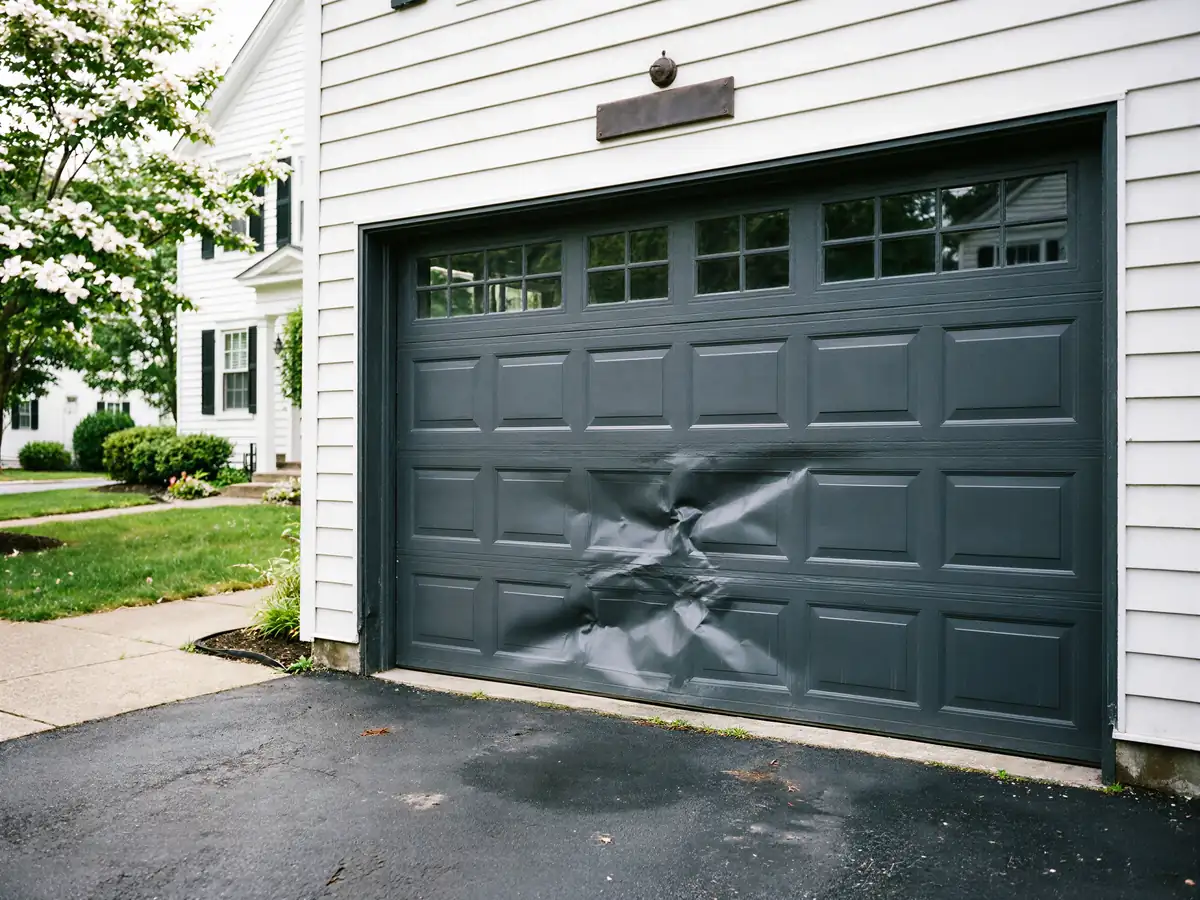
Ballenger Creek's median house dates to 1998, a good seven years newer than Frederick's overall median of 1991. That gap matters on an off-track call. Older Frederick stock built before the early 90s often still runs steel rollers on narrower track with hardware nobody machines anymore. Here, most doors are late-90s builds with nylon rollers on standard-width track and extension or torsion springs that are still in common production. When a door jumps the track in this area, we're usually dealing with a bent track rail from a car bump, a snapped roller stub, or a cable that slipped off a drum - not a 60-year-old bracket fighting us the whole way. We unload the springs first so there's no tension on the door, pull the panel section that's off-track back onto the rail, check the rail for bends with a level, and replace any roller or hinge that's bent rather than trying to re-seat it. If the track itself is bent more than about a quarter inch over a foot, we replace that section instead of hammering it straight - a straightened rail looks fine and fails again in a year.
How Long It Takes
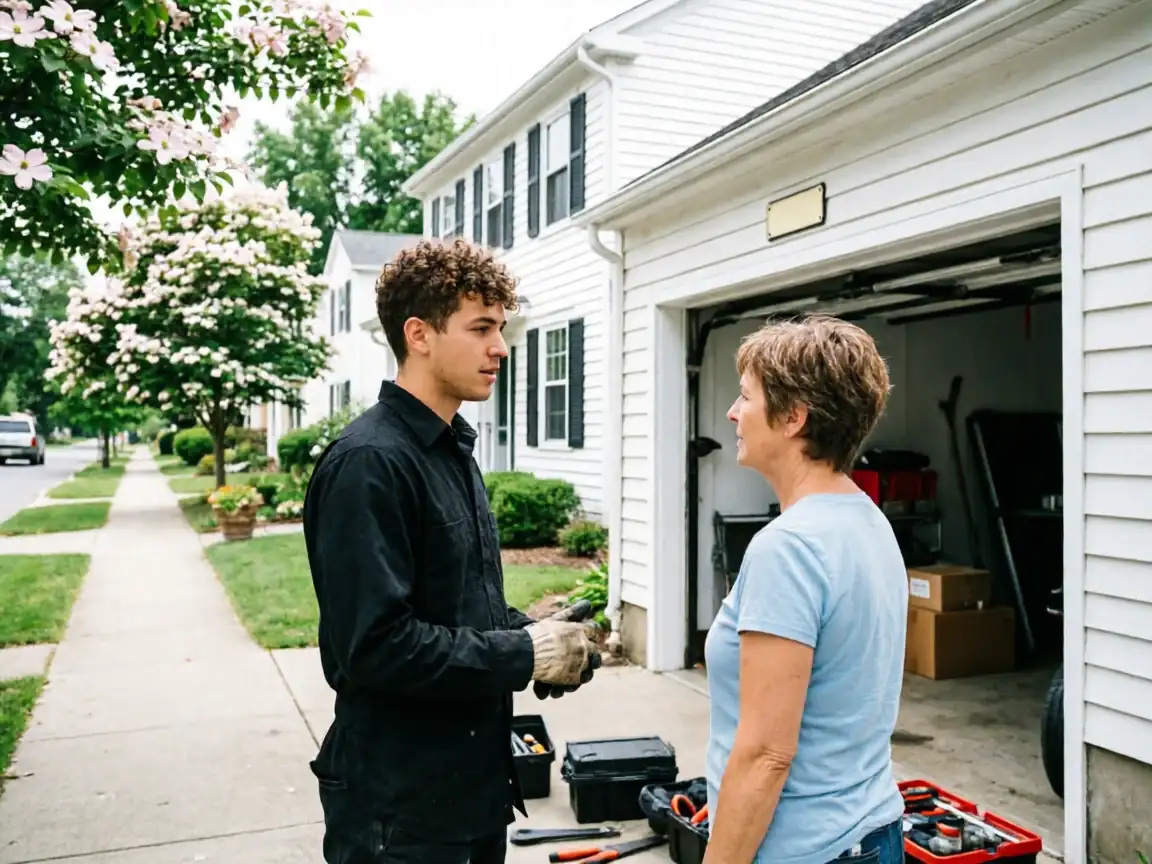
A straightforward off-track repair - one section hopped the rail, nothing structural bent - runs about 45 minutes to an hour once we're on site. If a roller stub snapped and took part of the track bracket with it, add another 30 minutes for the bracket swap. We're traveling the 4 miles out from Frederick for every call here, so plan your window around that drive rather than assuming a same-block response. We don't keep a crew stationed in Ballenger Creek - this is a Frederick-based truck covering the area, and the drive is short but it's still a drive.
Doing It Yourself
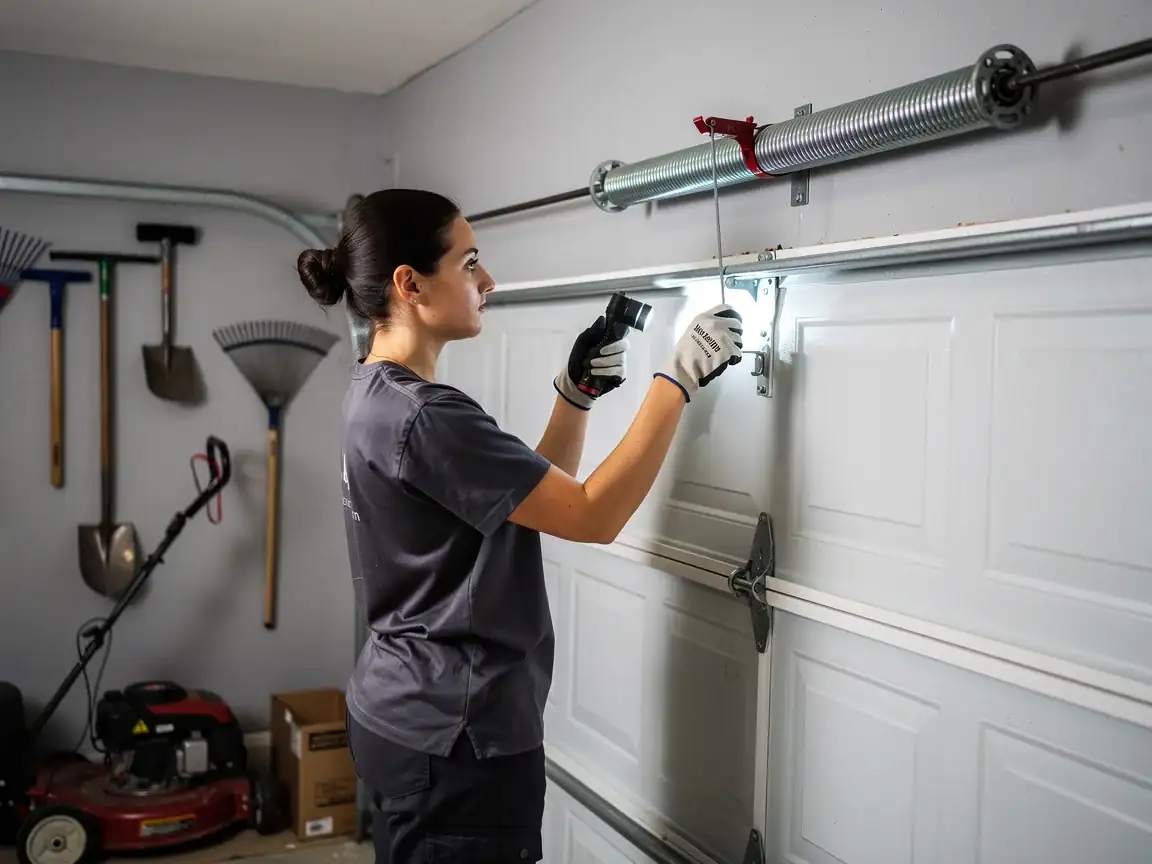
If the door is off-track but the opener is still trying to pull it, unplug the opener first. A motor fighting a jammed door burns out the drive gear or strips the belt, and that turns a track fix into an opener replacement. Beyond that, leave it alone. The springs on a residential door, even the lighter setups common in houses built around the 1998 median here, hold enough stored force to break a hand or worse if a cable slips while you're working near it. If you can get the door to a position where it's not blocking a car and it's not under tension from the opener, that's the safe stopping point until someone looks at it.
Where This Job Goes Sideways
The call that should've been an hour and turns into half a day is almost always a track problem that got ignored. A door that's been grinding off-center for weeks, with nobody addressing it, eventually bends the track enough that a straight section swap won't fix it - both rails need resetting and squaring to the opening, which means checking the jamb brackets too. We also see this on doors where a previous owner or handyman reinforced a bent rail with a clamp or extra screws instead of replacing it; that patch job hides the real problem until the roller finally lets go completely, often with the door open. If your door has been noisy or crooked for more than a week, that's worth a call before it becomes the harder job.
Parts We Carry
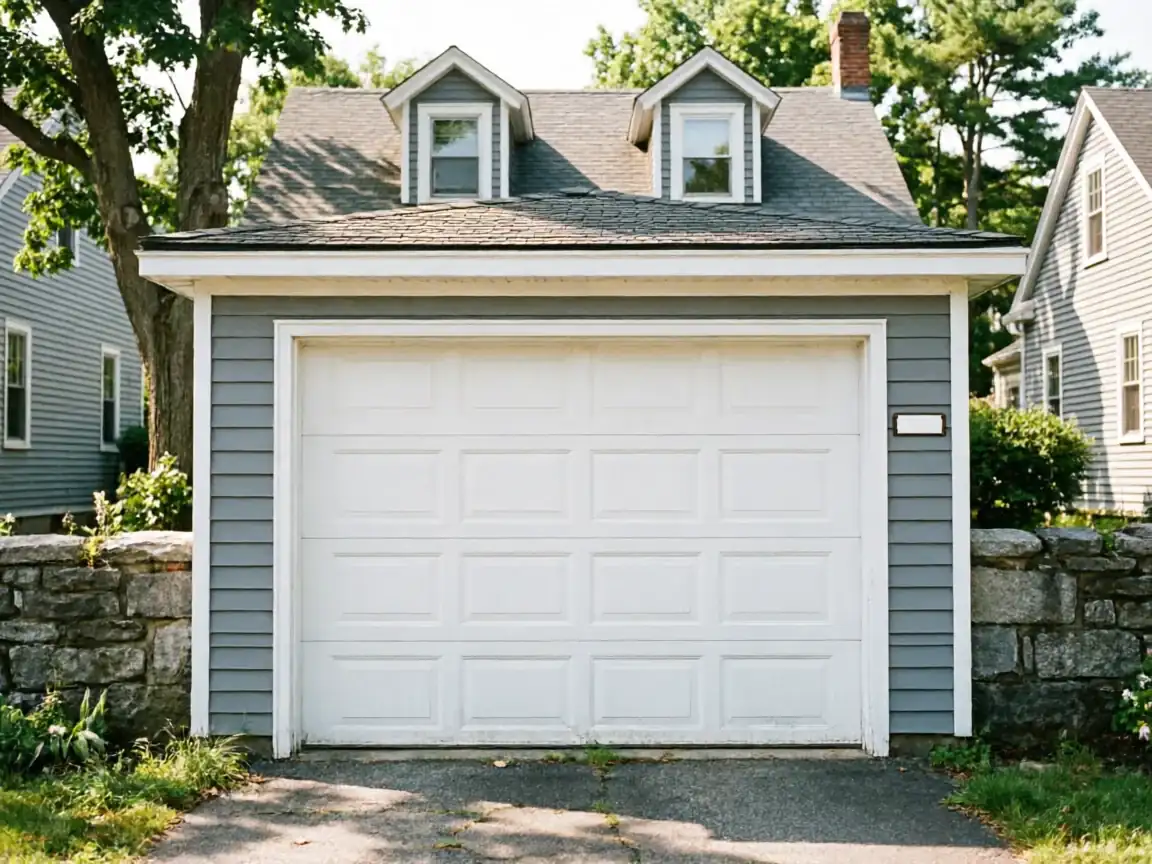
For the hardware common to this area's 1998-median build - standard 2-inch nylon rollers, galvanized track sections in the common residential widths, and extension and torsion springs sized for single and double doors from that era - we carry stock on the truck. What we don't carry on the truck is anything matched to pre-1960s hardware; if a house here happens to still have an older door from Frederick's earlier building stock, that part may need to be special-ordered, and we'll tell you that up front rather than making you wait at the curb while we figure it out.
How it works
From “it’s stuck” to “it’s fixed”
01
Tell us what’s wrong
Describe the symptom - won’t open, loud bang, opener runs but the door won’t move.
02
On-site diagnosis
A technician tests the door under power and by hand and finds what actually failed.
03
Clear, up-front plan
You get the fix that’s needed and what drives the cost - before any work starts.
04
Repaired & tested
The repair is done, the door is set true and tested, and the work area left clean.
Not sure which repair your door needs in Frederick, MD? Describe what it’s doing - every job starts with a diagnosis.
Straight answers about garage door repair in Frederick. Still unsure? Ask us directly.
Why does the age of my house matter for an off-track repair?
Because the track, roller, and spring hardware changed over the decades. Ballenger Creek's median house dates to 1998, which means most doors here run newer roller and track standards than Frederick's citywide median of 1991. Matching the right part the first time means fewer return trips.
Do you have a crew based in Ballenger Creek?
No. We run out of Frederick, about 4 miles away. There's no local depot here, so factor the short drive into your repair window rather than expecting an immediate knock on the door.
Can I push the door back onto the track myself?
Unplug the opener first so it isn't straining against a jammed door, but don't try to force the panel back onto the rail yourself. The springs hold enough force to cause a serious injury if a cable or roller gives while you're working near it.